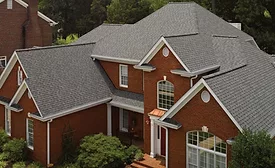
The most critical point of the roof assembly is the roof edge. This juncture is the most susceptible to wind uplift failures and moisture infiltration. The majority of roof damage created by high-velocity winds is initiated at the perimeter or corners of the building and infiltrates throughout the field of the system.
As if the economy and the price of a barrel of oil were not enough to upset the roofing markets this year, we are witnessing a record year for hailstorms
Roofing contractors can benefit from a well-organized service department, and service and maintenance work can become even more important to a company’s profit picture in tighter economic times. Service departments are typically smaller departments that operate independently from a company’s main roofing operations. The service department handles all of the company’s leak repairs and service-related items, such as installing flashing at new curbs and the installation of additional vents and drains.
This is a sensitive and confusing subject for many people, but in light of ramped-up immigration enforcement and random raids by U.S. Immigration and Customs Enforcement (ICE), we must address this issue. On April 17, 2008, 311 undocumented workers were taken into custody by ICE from five different Pilgrim’s Pride plants in Texas, West Virginia, Florida, Arkansas and Tennessee.
If our economy had been growing at a rate of 20 percent a year for the last decade or so, most of us would be luxuriating in hog heaven right now. That’s apparently where a lot of heavy equipment thieves reside because that’s been the growth rate for heavy equipment thefts since 1996, according to the Insurance Services Office. ISO reports theft accounts for more than half of all insurance claims for heavy equipment - more than the combined totals from fire damage, collisions, vandalism, natural disasters and whatever else.
Most state civil judiciaries legally consider roofing within the “inherently dangerous” occupation category. When you consider the steep pitches, heights to grade, surface traction conditions, material handling tasks, bulk material weights, environmental factors of wind and weather and the perpetual force of gravity on the worker’s center of mass, it is no wonder that falls from or through roofs cause more construction and demolition injuries and deaths every year than any other occupations, except steel erection.
With a slower market, more contractors are calling me asking for advice. Having been in the business a while and having gone through several slowdowns, I would like to offer answers to some of the common questions that contractors ask and issues they might face.
When it comes to sales, you may be affected by social consciousness in more ways than you realize. While it’s easy to recognize that job pressures shape your performance - for example, the struggle to meet corporate expectations and uncompromising customer demands at the same time - what’s not so apparent is that your behavior is also shaped by social pressures and often is reinforced by movies, literature and television.
A little off topic this month since the main purpose of this column is to offer up the announcement that our Best of Success conference scheduled for October 2008 has
Section 1507.2 of the International Building Code (IBC) covers the requirements for the application of asphalt shingle roof coverings. The section states that asphalt roof coverings shall be applied in accordance with the standards set in this section and the manufacturer’s installation requirements. The following text provides a brief interpretation of these codes.
 RSS
RSS