Storm Watch
Hurricane Isaias Tests a Quiet 2026 Roofing Storm Market
Verisk data shows roofing claims down nearly 12% through August, but a late-season hurricane highlights how quickly storm demand can change
Key Takeaways
- Roofing claims are down sharply in 2026. Roofing-related claims fell 11.9% through August, while roofs exposed to hail of at least 1 inch declined more than 7%, according to Verisk.
- Hurricane Isaias shows how quickly demand can change. The Category 2 storm could generate $1 billion to $2 billion in insured property losses, demonstrating that one major event can reshape an otherwise quiet storm season.
- Contractors are adapting to fewer insurance leads. Some roofing companies are putting greater emphasis on retail replacements, financing, repairs and existing-homeowner marketing rather than relying heavily on storm-driven insurance work.
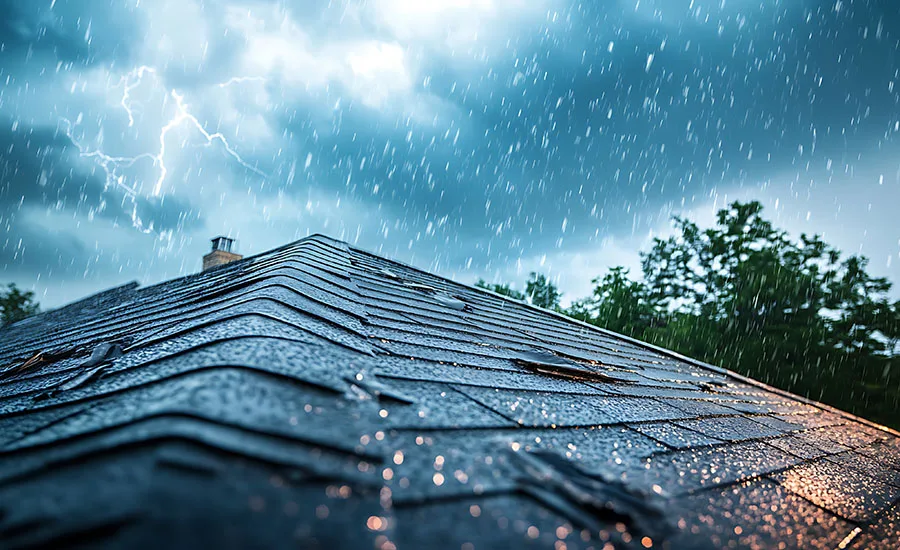
For roofing contractors accustomed to chasing hail, wind and hurricanes, 2026 has delivered a considerably different storm market. Then Hurricane Isaias arrived. The Category 2 hurricane struck the Florida Panhandle on Oct. 9 with sustained winds of 105 mph, causing widespread wind damage across portions of the Southeast.
Verisk estimates insured property losses from the storm could reach $2 billion, with wind accounting for the vast majority of the damage.
The hurricane interrupted what had been a historically quiet Atlantic season and underscored how quickly a single event can change regional roofing demand.
Through August, roofing-related claims were down 11.9% compared with the same period in 2025, according to Verisk's XactInsights. The number of roofs exposed to hail measuring 1 inch or greater also declined by just over 7%, according to Verisk Respond data.
Verisk said hail and severe wind remain the primary drivers of residential roofing damage, but their impact has varied dramatically by geography. While hail impacts declined across the Plains, Southeast and Mid-Atlantic, other markets moved sharply in the opposite direction. Illinois, for example, recorded a 130% increase in residential roofs impacted by hail of at least 1 inch compared with the same period last year. Texas, traditionally one of the country's most active hail markets, experienced a 31% decline. The result is a 2026 storm season defined less by widespread roofing-loss activity and more by localized pockets of demand.
"Storm-related demand has been quieter, but the bigger story for us is the broader slowdown in residential roofing," said Ryan Westfall, president of Westfall Roofing in Fort Lauderdale, Fla. "Homeowners are watching their spending, and competition for available projects has increased. We're focused on responding quickly, following up consistently, and explaining the value of a properly installed roof."
One Storm Changes the Picture
Isaias became the first hurricane of the 2026 Atlantic season, ending an unusually long stretch without a hurricane. The storm made landfall in the Florida Panhandle on Oct. 9, then weakened as it moved inland.
Verisk identified some of the most significant wind damage west of the landfall location, particularly in Santa Rosa and northeastern Escambia counties. Damage reports included affected roofs and structures, fallen trees and widespread debris. Additional wind damage and power outages occurred in Alabama and Georgia.
Verisk estimates insured industry losses to onshore property will range from $1 billion to $2 billion. The estimate includes wind and privately insured storm surge losses affecting residential, commercial and industrial properties, along with automobiles. It is not a roofing-specific loss estimate. Still, Isaias illustrates a warning Verisk shared with RC before the hurricane developed.
While the Atlantic hurricane season was expected to finish well below average, Verisk cautioned that it takes only a single impactful storm to create significant losses and roofing demand. Historically, hurricane activity can substantially change fourth-quarter claims volume.
According to Verisk's XactInsights, wind and hurricane-related claims have represented as much as 10% of annual claim volume during some hurricane-intensive years, compared with approximately 2% to 3% during quieter seasons. Whether Isaias will meaningfully narrow the year-over-year decline in roofing claims remains to be seen.
A Tale of Two Storm Markets
Few states illustrate the contrast in 2026 better than Texas and Illinois. Texas saw roofing claim volume decline 43.5% year over year through August, according to Verisk. The state's 31% decline in roofs impacted by hail of at least 1 inch contributed to the drop.
Illinois went in the opposite direction. With 130% more roofs exposed to hail of at least 1 inch, roofing claim activity increased 61.2%. Illinois also recorded the most hail-impacted roofs in the country through August. Major hail and thunderstorm-wind events in the Chicago area and elsewhere in the Midwest helped drive that activity.
Some western states, including Utah and Idaho, also recorded large percentage increases in hail impacts. Verisk cautioned, however, that those increases started from relatively low baselines, meaning the actual number of affected roofs remained well below totals in the country's major hail markets.
Nicholas Riley of Driftwood Builders Roofing in Austin, Texas, experienced firsthand how quickly a single storm can change the picture.
"Overall, it's been about 50% lower until the recent hail in Converse and Schertz, Texas," Riley said.
Riley joined Accuserve, a managed repair platform that connects restoration contractors with insurance carriers, in January and said he went more than nine months without an assignment. Following the Sept. 11 hailstorm, however, he received 22 inspection assignments over five days. Riley said he would have estimated activity was about 50% lower a month earlier.
"On every inspection I've recently done in the Converse area, I've seen 2-inch hail, so time will tell how much work comes out of that," he said.
Fewer Roofing Claims in the Mix
The slowdown is also showing up in the composition of property claims. Roofing accounted for approximately 39% of all assignment volume through August, according to Verisk's XactInsights. Since 2023, roofing has typically accounted for about 44% of assignment volume. Verisk said that indicates roofing-related claims activity has declined more sharply than overall property claims activity so far this year.
Whether a storm becomes a meaningful roofing event, however, depends on much more than hail size or wind speed. Population density, the concentration of buildings in a storm's path, roof materials, building practices, vegetation and insurance policy terms can all affect how weather ultimately translates into claims and reroofing demand. A severe storm over a sparsely populated area may produce relatively little roofing work, while a less-publicized storm hitting a dense residential market can generate substantial losses.
"Our roofing business is still fairly new and growing, so a straight year-over-year comparison would not tell the whole story," said Aleks Krylov, founder and president of Stern Roofing & Gutters in New Jersey. "What I can say is that storms are producing a noticeable number of inspection and repair calls. Many of those calls aren't for storm-destroyed roofs."
His crews are finding lifted or missing shingles, branches on roofs, clogged gutters, damaged fascia and smaller leaks. The storm often exposes a weak spot that was already there.
From Storm Chasing to Retail Sales
For some roofing companies, the quieter storm market isn't simply reducing lead volume. It's changing how they sell roofs.
Mighty Dog Roofing, an Omaha-based franchise with locally owned locations nationwide, has seen leads decline about 30% this year, according to Brand President Mark Stanek.
"The weather's just been really quiet," Stanek said. "Last year we had a great run but this year's been a grind"
Mighty Dog has responded by shifting away from a heavy reliance on insurance work. Retail projects now account for about 65% of its business, Stanek said. Insurance delays and rising deductibles are among the factors driving that shift. We went from a heavy insurance split to mostly retail work now, Stanek said. Financing has become increasingly important in generating replacement work, with the company emphasizing monthly payment options.
Even so, Stanek said some homeowners use free drone inspections to spot individual leaks and choose smaller repairs to buy more time before replacing their roofs. The company has also changed how its sales team pursues business.
"We stopped chasing storms," Stanek said.
Instead, Mighty Dog is marketing to homeowners in established neighborhoods, using tools such as its curb appeal visualizer to show what a replacement roof could look like on a home. For the fourth quarter, the company is returning to leads it didn't close earlier in the year and promoting zero-down and deferred-payment options.
Stanek said he hasn't laid off office or sales employees despite the slowdown. "Keeping enough work flowing to subcontractors through the winter is another priority. If we don't keep them busy, they'll go work for somebody else, he said. And we can't start next year short on workers."
The Geography of Roofing Costs
Storm frequency isn't the only factor separating one roofing market from another. Material requirements, building codes, labor availability, contractor capacity and local cost structures can make the economics of storm repairs considerably different from one city to the next.
NumeralQ's 2026 National Roofing Cost Index illustrates the differences. Roofing costs in Miami are running 22% above the national median, followed by Denver at 12% above and Atlanta at 4% above. Dallas is 3% below the national median, Houston 8% below and Tulsa 14% below.
That means contractors responding to wind damage in Florida may face a substantially different cost structure, code environment and material mix than those replacing hail-damaged roofs in Colorado or Texas.
Combined with Verisk's claims data, the differences reinforce a central theme of the 2026 storm season: where storms hit can matter as much as how many occur nationally.
Looking for a reprint of this article?
From high-res PDFs to custom plaques, order your copy today!