Roofing Resiliency
Why Roof Resilience Has Become a Business Decision
The risk management of severe weather is now a business decision for roofing contractors
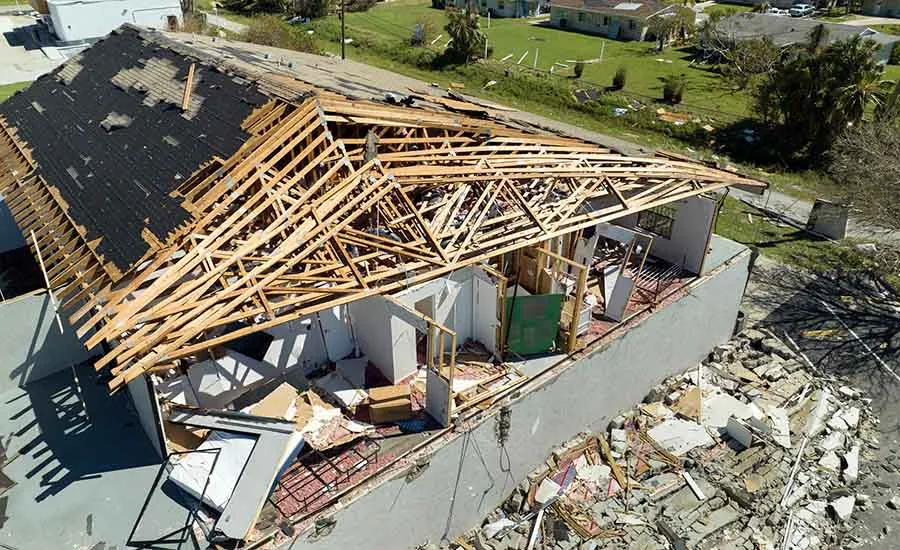
In 2025, Climate Central reported that there were 25 separate billion-dollar weather disasters, totaling more than $115 billion in damages. The usual suspects are part of this list: hurricanes, hail, flooding, tornadoes, wildfires, and high winds.
The question is no longer whether severe weather is increasing; it's whether we’re still designing roofs as though it isn’t. Every reconstruction project represents an opportunity to reduce future losses. Yet too often, buildings are restored to essentially the same level of vulnerability they had before the storm. At what point does choosing the cheapest option become the riskiest option?
The roofing industry has become incredibly sophisticated in calculating installed costs, labor costs, schedules, budgets, and ROI. Why do we not also calculate repair cost, downtime cost, insurance increases, business interruption, and repeat construction?
We’ve become experts at calculating first costs; it’s time we become equally skilled at calculating failure costs. Let’s reframe resilience as a business decision rather than an environmental one.
For years, the pitch has been “use this product because it’s more sustainable.” We spend months discussing appearance, finishes, homeowner amenities, and aesthetics. Meanwhile, resilience measures drop to meaningless line items. Let’s switch the pitch to “use this product because the alternative may cost you exponentially more.” This is a conversation that roofing contractors, architects, building owners, and insurers can all participate in and get behind. Because, ironically, the products that are the least visible after construction might have the greatest influence on how well a building or home performs during the next severe weather event.
To date, adoption of resilient building products has been slow. Why is that? A few ideas:
The benefits aren’t immediate. While most contractors will incur the added costs today, it’s beneficial to look ahead to the hard-core benefits: even if you will most likely never personally experience the potential product failure, heading it off at the pass is a tactic to consider.
Another potential reason: success is invisible. Nobody dances in the street celebrating the roof that didn’t fail. Resilient products often receive attention only when neighboring systems do fail. Additionally, insurance hasn’t necessarily caught up. While insurance companies recognize resilient construction, incentives remain inconsistent.
The good news is that resilience in roofing construction is no longer a future concept. Roofing manufacturers continue to develop innovative products specifically intended to improve roof system performance under increasingly demanding conditions.
The conversation is changing from the old conversation – choose sustainable products to help reduce environmental impact – to the new: resilient products may help reduce future financial losses. This is a simple twist that appeals to and can be understood by everyone, be they roofing contractors, owners, developers, or insurance companies.
So, what’s next in the world of resilient building products? Perhaps instead of predicting products, we can start predicting decision-making. A few potential trends on the horizon: lifecycle assessments becoming more standard and common; exploring the future return on investment at the end of a product as opposed to the installation investment. With more knowledge sure to come in the next few years, it would be nice to see resilience affecting purchasing decisions: the fact that a product can help protect a building against severe weather begins to weigh more heavily in the decision equation than the product's current installation cost.
We’re already seeing the rise of performance-based design in products like coverboards specifically designed – and tested and approved – to help roof assemblies withstand severe weather conditions nationwide. The more roofing products that enter the performance-based design arena, the better off homes and buildings will be.
When severe weather strikes, we need to see harder questions being asked during the follow-up. What products failed, and could those failures have been prevented by choosing a more resilient product?
Buildings and homes constructed today will almost certainly experience weather events that exceed historical assumptions. That reality is reshaping how the industry thinks about value: no longer is it simply about the lowest installed cost, but it’s about the ability of a key roofing product to continue performing when conditions become extreme.
Every billion-dollar disaster raises the same question: Are we rebuilding what failed, or building something more capable of withstanding and surviving the next storm? The construction industry has spent decades refining how efficiently it builds. The next challenge: determining how effectively those buildings and homes can withstand. As severe weather becomes a more frequent risk, resilience is no longer simply an engineering objective: instead, it’s becoming one of the industry’s most important financial decisions.
The real question we need to be asking isn’t “how much does this roof cost today?” It’s “what will this roof cost over its lifetime?” That’s a discussion the industry is increasingly ready to have.
Looking for a reprint of this article?
From high-res PDFs to custom plaques, order your copy today!