Workforce Development
How a Pre-Apprenticeship Pipeline Delivers Roofing Recruits
An Illinois native discovered union roofing through HIRE360's Climate Works program and launched a career with Roofers & Waterproofers Local No. 2.
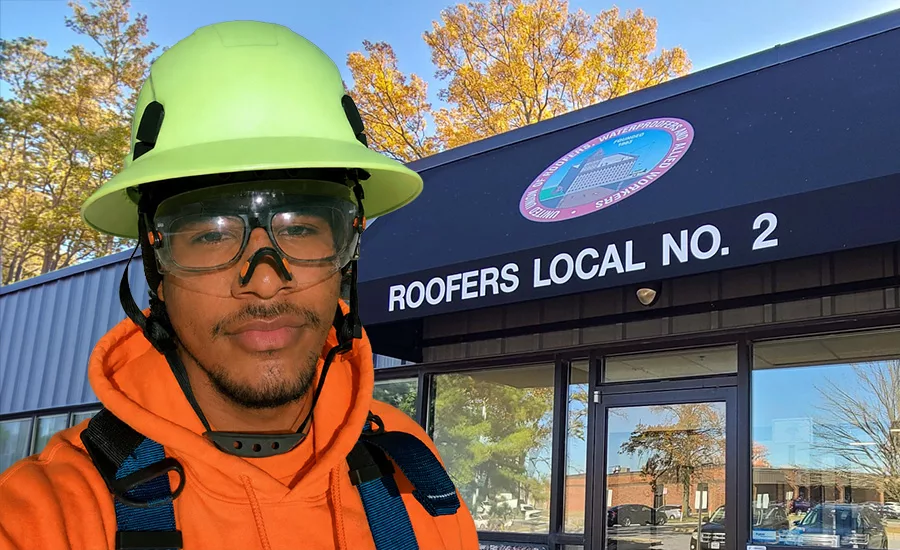
After a year as a personal trainer and years bouncing through dead-end jobs, 26-year-old Keith Perry discovered an unexpected path: the trades. The Alton, Ill., native had never considered it accessible to someone like him—until now.
"I really didn't have a path of going anywhere," Perry said. "I was just confused, because I kept working multiple regular jobs and didn't really have a set path."
Today, Perry is building a career in union roofing through the Roofers & Waterproofers Local No. 2, working on commercial projects across Missouri and Illinois. He got there through HIRE360's Climate Works pre-apprenticeship program at Lewis and Clark Community College, where he connected with union apprenticeship opportunities and discovered a long-term trade that changed what he believed was possible for himself.
A Career at a Crossroads
Perry enjoyed personal training, but he felt the profession offered limited opportunities where he lived.
"It was a good career, and I did enjoy it, but it's kind of on the decline because of AI and technology," he said. "In the area I live in, there just weren't many opportunities."
What he missed most was the personal connection.
"Getting to know them, meeting a new person and helping a person. It was really nice."
But enjoying the work wasn't enough. Perry had heard about the benefits of union trades but never understood how to get started. Programs like Climate Works help bridge that gap by introducing people to construction careers and connecting them with apprenticeship opportunities.
As HIRE360 puts it, many young people are never exposed to construction careers. "If you don't see it, you won't be it."
A Facebook Ad and a Presentation
The turning point arrived in his social media feed.
"I saw an ad on Facebook for the Climate Works program at Lewis and Clark," Perry said. "I'd always heard people say, 'Get into the trades and get into the union, because it's worth it.' So I was like, let me go ahead and check it out."
He reached out and enrolled. During the program, a representative from the roofing union gave a presentation that immediately caught his attention.
"I was already feeling it," Perry said. "I prefer being outdoors, and I enjoy working with my hands."
He followed up with the union and learned about available contractors.
What impressed him most about Climate Works was its commitment to helping participants enter the trades.
"It was the overall aid they established they'd do to get you into the field — and how they were going to try the hardest to help you get there," he said. "That's what latched me onto them."
The experience also changed his perception of the trades. Touring union halls and training centers showed him how apprentices are trained and supported throughout their careers.
"I really enjoyed going out to the multiple union halls, doing tours around their schools, and learning about the programs and how they train you for the trade you're going to be in," he said. "It was really a unique experience."
Related: Roofing’s Future Depends on Winning Over Gen Z
Getting the Call
The union pointed him toward contractors that were hiring, and Perry applied to several in Illinois.
Kevin Martinez, apprentice coordinator for the Roofers & Waterproofers Local No. 2, said the union is actively recruiting apprentices as experienced workers retire and demand for skilled roofing labor remains strong. Programs like Climate Works help introduce new workers to the trade and connect them with career opportunities in roofing.
"I was kind of afraid that none of them was going to reach back," Perry said.
A few weeks later, one did. After an interview, he was hired into flat roofing.
"And I enjoy it," he said.
Martinez said Perry stood out because of his "strong work ethic, willingness to learn, and positive attitude," along with a genuine interest in the trade.
Those are the same qualities the union looks for in candidates with no roofing experience.
"Previous construction experience can help, but it's not required," Martinez said. "We value attitude and effort over experience."
Learning the Roof
Today, Perry works alongside a foreman performing repairs on commercial roofs.
"It's a lot of white," he said. "Especially with the sun, you have to wear sunglasses, because of how white the roofs are."
He's also worked with larger crews, helping lift and measure TPO membrane.
"Everybody's doing something different, but we're all doing it together," he said. "It was nice to feel like I was part of a team."
As a new apprentice, he's learning roofing materials, installation methods and repair techniques.
"PVC and TPO look the same, but they're different," he said. "You can't weld PVC onto TPO."
He's also learning how proper insulation placement directs water toward drains and gutters instead of allowing it to pool on the roof.
Perry said he's being trained for about six months before taking on more responsibility, combining hands-on experience with classroom instruction. Martinez said apprentices typically begin contributing within their first few weeks on the job, but often need several months to build the skills and confidence to work more independently.
He heads to his first week of apprenticeship schooling in August.
"I'm pretty stoked to go out to those schools," he said. "Get the overall view of how it all goes down."
His first day on the roof was intimidating.
"It was scary at first, and I was confused," he recalled. "But over time I've grown with my foreman, to the point where now I know what to grab and what we're bringing to the sites."
Related: Attracting Gen Z to the Trades
A Path Forward
What excites Perry most is knowing he's finally on a path forward.
"I'm in a career path now," he said. "The more you work, the more you'll earn, and the more you'll see the growth with the company."
The union structure includes regular pay increases, which Perry sees as a major benefit.
"I definitely see it being a really good thing financially," he said.
Asked where he sees himself in a decade, he doesn't hesitate: a foreman with his own company truck, either running repairs or leading a crew.
His advice for others considering roofing is simple: "Stay hydrated," he said. "Don't let the heights intimidate you, and don't let the weather intimidate you. As long as you ask your foreman questions, over time you'll definitely start learning. Always ask questions."
A year ago, Perry saw the trades as a world he couldn't access. Today, he's building a future on the roof.
Looking for a reprint of this article?
From high-res PDFs to custom plaques, order your copy today!

.webp?height=740&t=1781278983&width=auto "KEE(2).png")