2026 Metal Special Section
The Importance of Roof Edge Metal
While many roofers do quality work, there are significant advantages to sourcing edge metal from the roofing system manufacturer instead.
Key Takeaways
- Edge metal is critical to low-slope roof wind resistance because failures at corners and perimeters can quickly compromise the membrane, insulation and building interior.
- ES-1 and GT-1 establish project-specific wind-resistance requirements for edge systems and external gutters and are incorporated into applicable editions of the International Building Code.
- Sourcing compliant edge metal and gutters from the roofing system manufacturer can reduce installation risk, support warranty coverage and save contractors time compared with field or shop fabrication.
A low-slope roof’s perimeter is no place to cut corners. Edge metal is a roof’s first line of defense against high winds, and when it fails, the rest of the roofing system often follows (and quickly). Protecting the roof – and, ultimately, the entire building – starts with installing the right edge metal.
This article explores why edge metal is so important, the key standards related to it, and the reasons contractors should purchase it from the roofing system manufacturer.
The Importance of Edge Metal
According to a report from commercial property insurer FM, roofing system failures accounted for approximately 80% of wind loss dollars paid by the company in a recent 10-year period, with an annual cost of roughly $520 million. The report goes on to say, “Protecting commercial roofing systems is the single most effective way to reduce windstorm loss” and “The most important component of a roofing system is the metal-edge flashing, which secures the roof cover to the edge of the building.”
Why? Edge metal holds the entire roofing system in place. Most roof failures in high-wind events are not the result of how the roof is secured; they happen because the metal edges fail. Wind likes to attack the perimeters and corners of buildings; according to the FM report, wind forces can be more than 2.5 times greater at the corners and more than 1.5 times greater along the perimeter than in the roof’s interior. If wind loosens the flashing, other components of the roofing system, including the roof covering and insulation, can quickly and easily be compromised. Water can then infiltrate the roofing system and, potentially, enter the building’s interior.
Standards for Edge Metal
Two key standards govern the wind resistance of a low-slope roof’s perimeter: ES-1 and GT-1.
ANSI/SPRI/FM 4435/ES-1 “Wind Design Standard for Edge Systems Used with Low Slope Roofing Systems” addresses the ability of edge metal to resist wind. It covers such products as metal fascia, gravel stops, drip edges and coping systems.
ANSI/SPRI GT-1 “Test Standard for External Gutter Systems” speaks to the ability of external gutter assemblies to withstand wind. This includes gutters, brackets or hangers, fasteners, and attachment to the supporting structure. While gutter systems are not edge metal, GT-1 is important to this discussion because improperly specified gutter systems can lead to edge metal failure. If a gutter is lifted in high winds, the edge metal it is connected to rises, too ... the first step in a potential roof failure.
ES-1 and GT-1 are not “certifications” per se, as ANSI and SPRI do not test products. Manufacturers submit their products to an independent laboratory for testing. The standards outline the testing methods to be used and set the wind resistance requirements that must be met for a product to be compliant. The requirements are not a universal “blanket,” but are project-specific based on such factors as a building’s Zip code, the building’s height, the potential risk should the roof fail (1 = low hazard to human life to 4 = the facility is essential in emergencies) and the building’s exposure (urban/suburban, scattered obstruction, or open water).
Both ES-1 and GT-1 are part of the International Building Code (IBC) – ES-1 since 2003 and GT-1 since 2021. As such, any project governed by an edition of IBC that includes them, or by state or local codes that adopt an edition of IBC that includes them, must use products that comply.
Benefits of Working with the Roofing Manufacturer
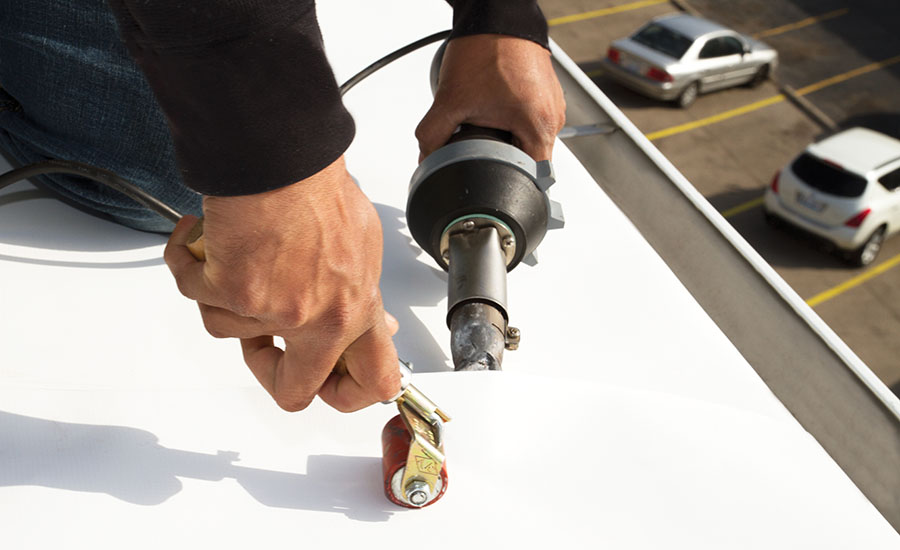
Photo: MuleHide Products
Many contractors fabricate their own edge metal and gutters, either on the jobsite or in their own shops. While many of them do quality work, there are significant advantages to sourcing these products from the roofing system manufacturer instead.
You can’t match quality. The products are produced to exacting specifications in a controlled manufacturing environment without the variabilities that cannot be avoided when fabricating on a jobsite. This promotes consistency and reduces the chance for errors.
These products are guaranteed to be standard-compliant. Some contractors invest the considerable time and expense to have their shop-fabricated edge metal and gutters tested for compliance with ES-1 and GT-1. The majority, however, do not. Most contractor-fabricated products, therefore, are not compliant.
A roofing manufacturer’s compliant products have undergone and passed the standard-specified testing in an independent laboratory. The contractor, specifier and building owner know, therefore, that the products are rated to stand up to the required wind pressures based on the building’s location and design.
By using edge metal and gutters from the roofing system manufacturer, the contractor can offer the peace of mind that comes with an edge-to-edge system warranty. Most system warranties require that all components come from or are approved by the manufacturer. If the contractor fabricates the edge metal, that protection is not available unless the manufacturer approves its use in writing.
Even under materials-only warranties, the contractor can take on significant risk by fabricating their own metal. If the metal fails and allows water to infiltrate the roofing system, they – not the roofing manufacturer – may be responsible for the damage.
Edge metal is not a one-solution-fits-all proposition; certain profiles work best in particular situations. Roofing system manufacturers offer a wide variety of choices to suit different circumstances, needs and price points.
It also eliminates guesswork. The roofing system manufacturer can provide support and tools to prevent errors and ensure the contractor has everything needed to do the job right. Representatives can come to the jobsite to assess the situation and recommend the appropriate solution. They can use high-tech equipment to take precise measurements to determine the sizes needed for such products as drip edges and coping caps.
Manufacturers’ websites also offer a wealth of information to help contractors choose the right products and then install them correctly. Using online calculators, contractors can enter a building’s ZIP code and provide some details about the project and get a list of the edge metal or gutter products needed to meet ES-1 or GT-1 requirements. Estimating worksheets make creating bids easier. Details, videos and other guides provide step-by-step installation instructions.
And manufacturers’ territory managers and technical experts are only a phone call, text or email away, ready to answer questions and provide guidance.
Fabricating edge metal and gutters in the shop or at the jobsite is time- and labor-intensive. Using prefabricated products from the roofing manufacturers frees up crew members to focus on other parts of the job … and move on to the next job sooner.
Manufacturers also offer a variety of edge metal products and features that are designed to make installation faster and easier. Examples include pre-punched fastener holes that ensure precise placement and speed up the process, snap-on fascia that eliminates the need to strip in the edge metal, and TPO- or PVC-clad edge metal that is weldable and is even available with the membrane skirt already attached.
No Place to Cut Corners
Wind likes to attack the corners and edges of low-slope roofs. If the edge metal holding the roof in place fails, the entire roofing system can quickly and easily follow suit. It is no place to cut corners. Using edge metal and gutter products that comply with ES-1 and GT-1 helps ensure the roof will stand up to Mother Nature over the long haul. Sourcing those products from the roofing system manufacturer helps ensure quality, guarantees compliance with the standards, takes the guesswork out of specification and installation, and saves considerable time.

Looking for a reprint of this article?
From high-res PDFs to custom plaques, order your copy today!