The First Line of Defense
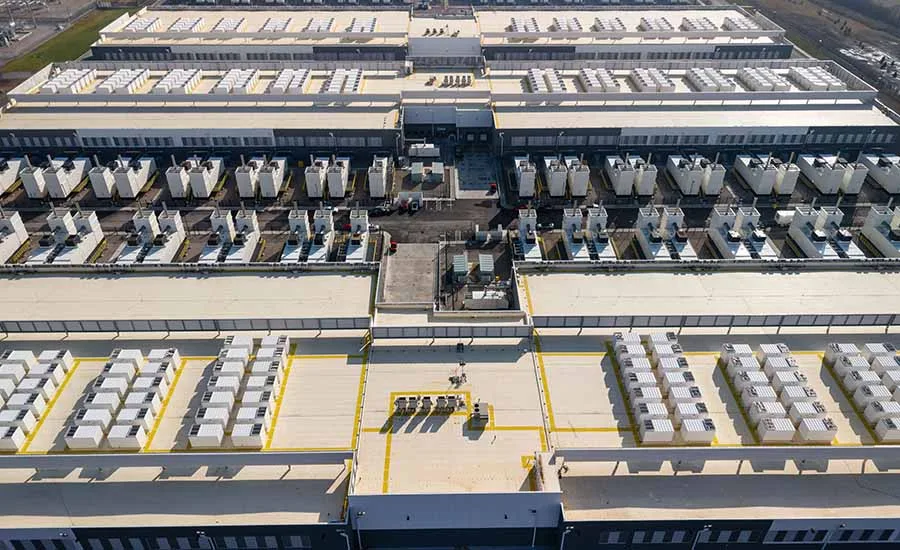
Why Data Center Energy Management Starts on the Roof
The rooftop is often overlooked, but critically important to the energy equation of sustainable data centers.
Key Takeaways
- Cooling is often the single-largest operating expense for data centers, accounting for up to 40% of a facility’s total energy consumption.
- Proper thermal management of a facility’s roof can create major energy savings.
- Roofers can show ROI with reduced stress on HVAC systems, compressors, and chillers that can extend the lifespan and defer major capital expenditures.
- Liquid-applied roof coatings can help ensure mission-critical infrastructure stays intact.
The conversation surrounding data center construction is largely dominated by what happens inside the building. As facilities race to meet the global demands of AI, cloud computing, and vast data storage, energy managers are rightly focused on high-density rack configurations, chip efficiency, and multi-megawatt power strings.
But there is an equally critical component of the energy equation that is often overlooked: the building envelope, and more specifically, the roof.
For roofing contractors and facility managers, this oversight presents a massive opportunity. The roof is not just a passive weatherproofing necessity; it is an active, first line of defense in a data center's energy management strategy. By specifying high-performance option contractors can directly influence a facility’s Power Usage Effectiveness (PUE), reduce cooling loads, and provide vital protection against extreme weather.
The Energy Equation: Cooling Costs and PUE
Cooling is often the single largest operating expense for data centers, accounting for up to 40% of a facility’s total energy consumption. In the push for a lower PUE, construction teams look inward to optimize airflow and liquid cooling loops. However, one of the most effective ways to manage heat gain is to prevent it from entering the building in the first place.
Dark roofing membranes can act as massive thermal sponges by absorbing solar radiation and transferring that heat directly into the structure. This forces the HVAC system to work overtime to maintain the delicate temperature balance required for server health.
White silicone coatings, designed to create a "cool roof" environment, do the exact opposite. By providing a bright, seamless surface with high Solar Reflectance Index (SRI) values, these coatings maximize both solar reflectance and thermal emissivity.
The financial implications of this thermal management are impressive:
- Surface Temperature Reduction: High-solids, white silicone coatings can lower roof surface temperatures by up to 30°C compared with dark membranes.
- Cooling Energy Savings: By significantly lowering the ambient thermal load, these coatings can reduce cooling energy expenses by an estimated 10% to 50%, depending on local conditions.
- Bottom-Line ROI: For a large-scale facility, this translates to a direct 7% to 15% reduction in annual overall cooling costs.
- CapEx Deferral: Reduced thermal stress on HVAC systems, compressors, and chillers can extend the lifespan of existing equipment, allowing operators to defer major capital expenditures.
Defending Against Water and Extreme Weather
In the data center industry, downtime is the ultimate threat. A single water leak above a server hall can cause catastrophic damage and data loss—halting operations until a fix can be made. Traditional sheet-applied membranes rely on glued or welded seams, which naturally become points of failure over time when exposed to standing water or extreme weather events.
Liquid-applied silicone roof coatings create a monolithic, seamless barrier. Because the coating is applied as a liquid, it actively fills cracks and completely covers seams, ensuring the mission-critical servers below remain secure. Furthermore, because silicone is inorganic, it is inherently resistant to long-term UV degradation. It remains flexible for decades, expanding and contracting with the building without cracking or delaminating.
Closing the Solar Lifecycle Gap
As data centers increasingly integrate on-site solar panels to offset their carbon footprints and move toward Net Zero, a logistical challenge has emerged: the lifecycle gap.
Solar arrays are designed to last around 25-30 years, while standard commercial organic roofs often need replacing or repairing every 7-10 years. This mismatch creates a logistical nightmare where the solar system has to be dismantled to replace or repair the failing roof beneath it.
A fluid-applied silicone roof coating can solve this problem and help to prevent a number of other issues.
Solar roofs are subject to high stress from racking systems that constantly vibrate in the wind and expand or contract with thermal changes. While traditional, rigid roofing materials will eventually fatigue and crack around these mounts, silicone is built to flex; its inherent flexibility allows it to move without losing adhesion or cracking under stress. By aligning the warranty and lifespan of the roof coating with the solar technology, the roof and the power plant function as a unified, long-term asset.
Case Study: Restoring Efficiency for a Major Data Centre Provider
The real-world value of this "cool roof" approach was recently demonstrated at a sprawling 170,000-square-foot data center operated by a major infrastructure provider in a subtropical region of Mexico.
The facility’s existing single-ply PVC waterproofing system was only six years old but had already begun to fail prematurely due to intense, constant UV radiation and severe hail damage. This presented a dual threat: an immediate risk of catastrophic water leaks and a critical loss of thermal regulation. In a climate where precise temperature control is vital for server stability, compromised thermal performance meant increased cooling costs.
The project team needed a solution to make the vast roof watertight and restore its thermal properties, but with a critical caveat: zero downtime. Traditional roof tear-offs are highly disruptive, creating dust and vibration—two of the greatest enemies of sensitive server equipment.
The solution was to apply a high-performance 100% silicone roof coating, Enduris 3525 Silicone Roof Coating. Using thermographic studies to precisely identify compromised areas, the contractor installed approximately 16 tons of white silicone coating over the massive surface area.
The results transformed the building envelope:
- Restored Thermal Performance: The white finish restored the roof's high solar reflectivity, helping to maintain the strict internal temperatures required by the servers and keep cooling costs down
- Seamless Waterproofing: The liquid-applied silicone created a durable, seamless barrier against future water ingress, effectively repairing the hail-damaged PVC.
-
Zero Disruption: By choosing restoration over replacement, the facility remained fully operational, safeguarding the clients' mission-critical data without exposing the interior to dust or water.
Restore Rather Than Replace
Replacing a roof creates massive waste; restoring it with silicone keeps tons of old roofing material out of landfills, directly supporting a facility's ESG, BREEAM and LEED goals. Because silicone coatings are compatible with almost all roof types—including metal, single-ply, and bitumen—contractors can apply the system directly over the existing roof. This minimizes disruption, requires no heavy demolition machinery, and saves considerable time and labor costs.
In an era where data centers are being built and expanded at a record pace, the roof can no longer be viewed as just a shell over expensive circuitry. It is a performance-enhancing component.
White silicone roof coatings represent a highly strategic investment that provides vital protection against water and extreme weather, better aligns building infrastructure with solar lifecycles, and helps to reduce cooling energy spend from day one. As we design and maintain the next generation of data centers, reflective silicone is the definitive critical design choice for a resilient, future-proofed facility.
Looking for a reprint of this article?
From high-res PDFs to custom plaques, order your copy today!
.webp?height=740&t=1781278983&width=auto "KEE(2).png")