News Analysis
Trump 2.0 — Where Does Roofing Stand One Month In?
Since returning to the White House, the administration has been busy freezing regulations, cutting the government workforce and musing about tariffs

SInce the start of President Donal Trump's second administration in January, there have been at least 30 executive orders signed, ranging from trade issues and foreign policy to energy production.
Image: Flickr
*Updated at 9:56 p.m. EST.
Since reentering office on Jan. 20, 2025, President Donald Trump’s second term has pulled no punches, introducing sweeping policy changes that could significantly impact industries like roofing and manufacturing.
In a statement to Roofing Contractor, the National Roofing Contractors Association acknowledged the impacts of executive actions on roofing and the broader construction industry remain fluid:
"We continue to monitor, provide input on, and advocate for the roofing industry's priorities in response to the administration's executive orders and legislation moving through Congress. For example, trade policy could meaningfully affect the price of steel, aluminum, copper and the availability of raw materials.
"Other actions could make it easier and less costly for our members to run their businesses, such as regulatory relief and tax reform.
"We have also noticed a variety of executive actions being challenged in court, which could dramatically change the trajectory of any effect on the industry — whether positively or negatively.
"During this dynamic period, companies should [proactively] advance and protect their interests."
Recognizing the uncertainty, RC examines orders and priorities most relevant to industries operating within the building envelope, offering insight into how the proposed changes may affect our readers.
Tariffs loom on the horizon
One of the administration’s earliest measures was implementing a 25% tariff on all goods imported from Canada and Mexico to bolster domestic production.
Initially set to take effect Feb. 1, the across-the-board levies had been suspended until Thursday when the White House announced their implementation would begin March 4. Canadian energy products like oil and electricity will be taxed at 10%.
An additional 10% tariff will be placed on all Chinese goods, effectively doubling the rate and also taking effect next Tuesday.
The late-day announcement spooked the stock market as the S&P 500 index fell 1.6% Thursday, as first reported by the Associated Press.
The S&P 500 is now just 1.4% higher than it was after Trump won the election in November, giving up almost all of the gains the president once cited as evidence of an economic revival.
When pressed on the fact that tariffs are primarily paid for by consumers and importing companies, Trump dismissed the statement, telling the AP “It’s a myth.”
While economists say the U.S. dollar's relative strength could offset some of the price hikes, the president's statement is false on its face. By nearly every yardstick and consensus, tariffs are passed down from the importer to the end user, meaning the consumer.
Jacob Jensen, a trade policy analyst at the American Action Forum, a center-right think tank, told the AP that the 25% tariffs on Mexico and Canada would amount to a tax increase on the U.S. public of somewhere between $120 billion to $225 billion annually.
The additional China tariffs could cost consumers up to $25 billion.
Contractors could face rising material costs and supply chain disruptions affecting everything from metal flashings to roofing shingles. An oft-referenced example of just how integrated North American trade has become is the automotive industry.
The average automotive part in the United States crosses the borders between Canada, the U.S. and Mexico eight times. The overall cost becomes substantial when considering 25% retaliatory tariffs on each crossing.
“Tariffs were a prominent part of Trump’s economic strategy on the campaign trail; one he said would ‘make us rich as hell.’ We’re about to find out,” said Anita Mahamed, a CPA with Wipfli, a Wisconsin-based consultancy group, highlighting industry apprehension.
Metal-mania
 Copper
The White House says America’s reliance on copper imports has surged to 45% of consumption in 2024, which it believes heightens risks to supply chain security.
On Tuesday, the president signed an executive order requiring the Commerce, Defense, Interior and Energy Departments to investigate why domestic copper production has declined.
Beyond its integrated use within roofing systems, copper is also widely used for flashing, gutters, downspouts, and roof accents.
The Financial Times reported that if evidence of dumping is found, the administration will likely retaliate with tariffs or quotas.
Steel
On Feb. 10, Trump issued an executive order restoring the full 25% tariffs on steel imports, which had been first imposed on all countries in 2018. During his first term, U.S. steel producers celebrated the stiff levy.
Those celebrations were short-lived, however, as the president cut deals with various countries, relaxing or lifting the trade penalty; his successor followed suit.
“If you look at [Section] 232 as it came out in 2018, it had a really significant effect on industry, in terms of investments that followed, and its implementation resulted in increased capacity and capabilities in the US steel industry,” Christopher Weld, a trade policy attorney at Wiley Rein in Washington, D.C., told Fastmarkets in an interview last week.
However, downstream manufacturers worry about higher costs, outdated pricing, supply chain issues, and the burden ultimately passed on to consumers.
Downstream imports made with U.S.-produced steel are exempt from the rate rise, though disparities in competition remain a concern, particularly with imports from Canada.
Aluminum
 On Feb. 11, the president signed an executive order raising the current 10% rate on aluminum and derivative aluminum articles to 25%.
Affected countries include Argentina, Australia, Canada, Mexico, the EU and the United Kingdom.
In the order, the White House noted that domestic aluminum production decreased by 30% from 2020 to 2024, and U.S. smelter capacity use dropped to 52% last year.
Steel and aluminum tariffs are set to take effect beginning March 12.
Downstream effects
“[Producers] may be upbeat with the four aluminum smelters in the U.S., or the very few steel mills that will immediately increase their prices by 25%,” Doug Watts, CEO at Metalworking Group, told Fastmarkets. “For them, this ruling will be the ‘toast of the town.”
However, imported metals have become so integrated into the U.S. supply chain that domestic roofing product fabricators relying on copper, steel and aluminum will quickly see their manufacturing costs rise.
“[F]or the thousands of manufacturers that are downstream from those mills, and who are buying their products, it is decidedly not ‘upbeat,’” Watts argued. “We will be faced with increased costs, obsolete pricing to our customers, and possible supply chain issues.”
Several economists predict affected manufacturers will not absorb the increased costs but instead lead to higher prices for roof system materials. It seems unlikely contractors would be willing to eat those price increases either.
As Watts said, “…we will be unable to absorb those costs and [instead] pass them along to our customers, who will, in turn, pass them along to the U.S. consumer, who will, unfortunately, be left holding the ingot.”
This means U.S. consumers will likely pay more for their roofs, among the countless other items made using aluminum, steel and possibly copper.
Regulations on ice
Alongside trade policy, the administration has imposed a regulatory freeze, halting pending rules on environmental standards and labor regulations.
Many Biden-era initiatives — from electric vehicle adoption policies to deep-sea drilling restrictions — have been rescinded.
While streamlined regulations may lower compliance costs and speed up project timelines, they also inject uncertainty into projects that rely on stable environmental guidelines.
“Trump’s administration is reversing many Biden-era regulations, potentially easing environmental and labor restrictions for construction projects but also creating uncertainty as new policies take shape,” noted the Florida Building Material Association.
The purse is closed
Federal funding adjustments, including impounding — an action where the executive branch withholds congressionally approved funding — complicates the landscape.
A temporary halt on many federal assistance programs, particularly those tied to diversity, equity and environmental initiatives, has forced construction companies to reassess financial strategies.
For example, a recent Department of Housing and Urban Development funding freeze, which temporarily halted Section 8 housing vouchers and community development block grants, has bled uncertainty in the broader housing market, potentially affecting urban residential construction projects.
Help is needed, but some need not apply
Tighter immigration policies are adding strain to an already limited construction labor market. With foreign-born workers making up roughly 30 percent of construction trade jobs, stricter immigration measures could further shrink the labor pool, extend project timelines and drive up wages.
“Stricter immigration policies may worsen labor shortages in construction,” warned the Florida Building Material Association.
Industry leaders continue focusing on workforce development, vocational training and apprenticeships to address shortages. However, as RC has reported extensively, the deficit in roofing labor is profound.
The National Association of Home Builders estimates around 723,000 workers are needed annually to both meet market demands and fill positions left by retirees. More than 60,000 new hires are required monthly over the next few years to close the gap.
Within that yawning figure, most open positions are for lightly skilled general labor, traditionally filled by migrants, many of whom are in the country without proper credentials.
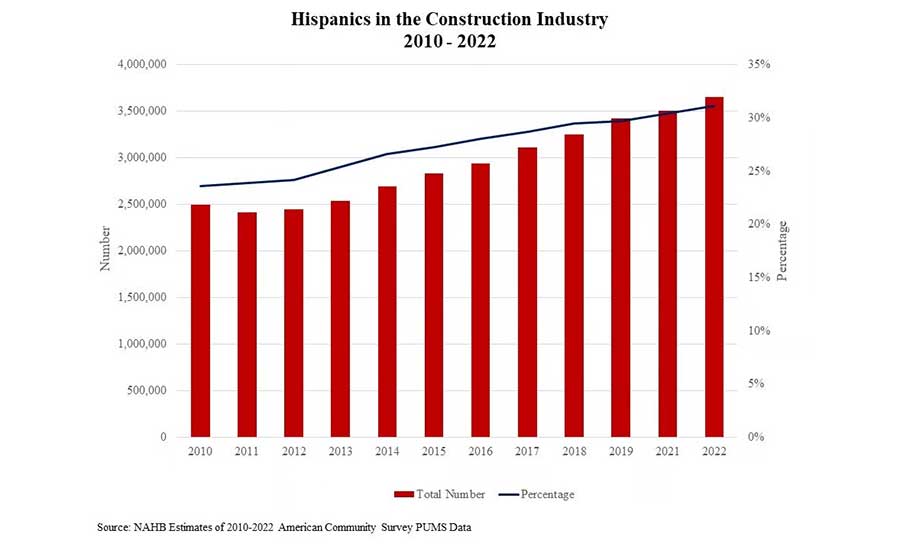
As of July 2024, the Urban Institute, a center-left think tank, says that industry groups reported 248,000 construction jobs remained unfilled despite high unemployment in some areas. These groups expect the construction sector to need nearly 454,000 new workers on top of normal hiring to meet demand in 2025.
The Center for Migration Studies estimates that 54% of foreign-born construction workers are undocumented. The mass deportations promised by the Trump administration could cause the U.S. to lose between 1.7 and 1.8 million undocumented construction workers.
Tax relief
The clock is ticking on the benefits provided by the 2017 Tax Cuts and Jobs Act, which is scheduled to sunset at the end of 2025 if no action is taken; the implications for many contractors could be sizable.
For example, bonus depreciation for equipment will drop from 100% to 20% by the start of 2026; the 20 percent pass-through business deduction also expires on Dec. 31.
Changes to interest deductibility could complicate project financing, leaving many contractors bracing for higher tax burdens if Congress does not introduce new incentives.
To that end, The U.S. House of Representatives passed the president's proposed budget on Tuesday in a narrow 217-215 vote but faces headwinds as it heads to the Senate for reconciliation.
The Senate's budget proposal differs from the House's version in key areas:
- Tax Cuts: The House budget includes $4.5 trillion in tax cuts, aiming to make the 2017 tax cuts permanent. The Senate's proposal excludes tax cuts and focuses on other policy areas, as noted in an analysis by auditing firm PwC.
- Spending Cuts: The House plan proposes $2 trillion in spending reductions, impacting programs like Medicaid and food assistance. The Senate's version suggests more modest cuts, with some members expressing concerns about the depth of the House's proposed reductions, according to The Wall Street Journal.
- Debt Ceiling: The House resolution includes a $4 trillion increase in the federal debt limit, while the Senate proposal does not address it.
- Legislative Approach: The House passed a "one-bill" strategy, merging tax cuts and spending changes into a single bill, whereas the Senate supports a "two-bill" approach, separating tax reforms from other policy areas.
Navigating a shifting landscape
These sweeping policy changes present challenges and opportunities for roofing and exterior contractors.
Industry experts advise companies to stay informed by closely monitoring regulatory updates and diversifying funding sources as federal programs evolve.
5 takeaways from month No. 1
- Tariffs – The administration’s proposed tariffs on Canada and Mexico may drive up material prices and disrupt supply chains, particularly for metal and roofing products.
- Regulatory Freeze – Trump’s orders aim to lighten the compliance load on construction companies by pausing or rolling back regulations. Fewer rules around environmental and labor standards could lower operational costs, especially for firms working on federal contracts.
- Federal Funding – Withholding funds for housing and infrastructure programs forces companies to reassess financial strategies and may slow urban development. However, the president's affinity for public-private partnerships could open up opportunities for contractors to bid on large-scale projects with less red tape.
- Labor – Stricter immigration policies threaten to reduce the construction workforce, potentially delaying projects and raising labor costs.
- Tax Incentives – Upcoming changes to tax deductions and depreciation rules could increase the financial strain on contractors if Congress does not introduce new incentives — that process is ongoing.
Expanding workforce development initiatives and embracing new technologies — such as advanced project management software and drone-based inspections — could help mitigate labor shortages and improve efficiency.
As the president’s second term unfolds, construction companies must review financial strategies, invest in sustainable labor solutions, and prepare for a dynamic regulatory environment.
In a rapidly changing market, adaptability and proactive planning will be critical to capitalizing on opportunities while managing rising costs and uncertainty.
Looking for a reprint of this article?
From high-res PDFs to custom plaques, order your copy today!

Bryan Gottlieb is the online editor at Engineering News-Record (ENR).
Gottlieb is a five-time Society of Professional Journalists Excellence in Journalism award winner with more than a decade of experience covering business, construction, and community issues. He has worked at Adweek, managed a community newsroom in Santa Monica, Calif., and reported on finance, law, and real estate for the San Diego Daily Transcript. He later served as editor-in-chief of the Detroit Metro Times and was managing editor at Roofing Contractor, where he helped shape national industry coverage.
Gottlieb covers breaking news, large-scale infrastructure projects, new products and business.

email gottliebb@enr.com | office: (248) 786-1591
.webp?height=740&t=1781278983&width=auto "KEE(2).png")

.webp?height=200&t=1738624248&width=200 "Trade-War-(3).jpg")