Roofing and Solar Panels
Why Metal Roofing Outperforms Other Roof Types for Solar
Metal roofing’s longevity can greatly reduce the likelihood that reroofing interrupts the useful life of the solar installation
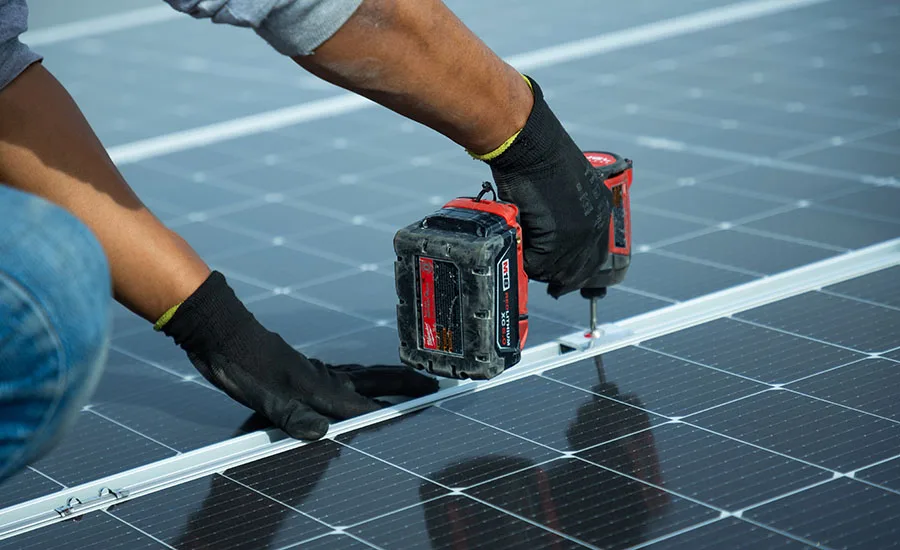
Engineered clamps attach solar mounting systems directly to standing seams without penetrating the metal roof panels.
Key Takeaways
- A PV system expected to remain in service for decades needs a roof beneath it that can keep pace. Metal roof outperforms many other materials in extreme conditions.
- In standing seam metal roofing, the seams can effectively function as solar rails, reducing the amount of materials and time needed for contractors.
- In snow-prone regions, snow loads on rail-system solar modules can increase the forces transferred to the rail attachment points.
- Metal roofing offers long service life, resistance to ultraviolet degradation and weathering, and low maintenance requirements.
Rooftop solar has raised the stakes for roof type selection. Once the solar array is installed, the roof becomes part of a larger system, not just the weather-shielding surface beneath it. The roof and photovoltaic (PV) system are interdependent assets, and decisions made about one directly affect the performance, cost and longevity of the other.
A PV system expected to remain in service for decades needs a roof beneath it that can keep pace. When the two have significantly different service lives, rooftop solar's real economics can change dramatically.
Metal roofing has a distinct advantage here.
Matching the Life of the Roof to the Life of Solar
Perhaps the most important consideration is service life.
A Metal Construction Association field and laboratory study indicates a service life of approximately 70 years for coated steel standing seam roofing. By comparison, many other commercial roof systems typically require replacement much earlier.
Solar presents a different timeline. According to a U.S. Department of Energy National Laboratory Berkeley study, a PV system's service life is between 28 and 37 years, averaging 32.5 years. That creates a fundamental issue when solar is installed over a roof with substantially less remaining life.
If the roof needs replacement while the PV system is still productive, generally the solar array must be removed.
This leads to costly decommissioning of the system, removing modules and mounting components, completing the reroof, reinstalling the equipment and recommissioning the array. There may also be replacement wiring or damaged components, along with lost electricity production while the system is offline.
The long life of a metal roof can greatly reduce the likelihood that reroofing will interrupt the useful life of the solar installation. In new construction, a newer standing seam roof will remain in service throughout the life of the first PV array and potentially a replacement array as well.
Even an existing metal roof can be a candidate for solar when its condition and remaining service life are properly evaluated to exceed solar service life.
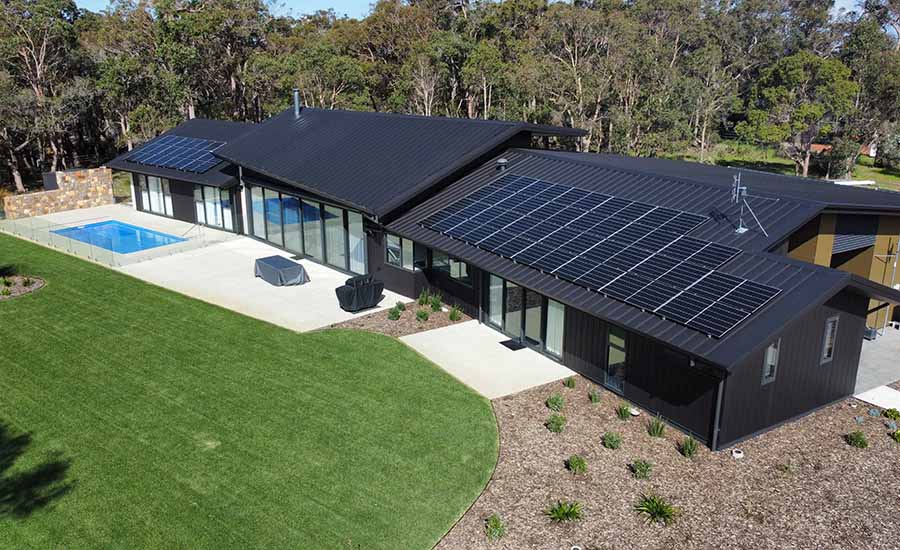
A rooftop solar array installed over a standing seam metal roof pairs the PV system with a durable, long-service-life roofing system.
Photo: S-5!
Solar Attachment Without Compromising the Roof
Service life is only one part of the equation. How PV is attached also matters.
Every roof type requires a mounting method compatible with the roof’s design and construction. Rooftop PV is subjected to wind, snow, rain, hail and, depending on geography, seismic forces. The attachment system must transfer those loads safely without undermining the roof's function.
Instead of drilling through the roof to the structure beneath, properly engineered clamps can secure PV directly to the standing seams without penetrating the roof panels, preserving the roof’s primary weathering surface.
Avoiding unnecessary roof penetrations reduces interfaces that must be properly detailed, installed and maintained over time. For exposed-fastened, ribbed roof systems, a properly designed bracket attachment with proven long-term weatherproofing can address the challenge differently.
The Roof Can Become Part of the Mounting System
Another advantage, unique to metal roofing, is that the roof itself can perform part of the function traditionally assigned to solar racking.
Conventional rail-mounted PV typically uses continuous aluminum or steel rails secured above the roof. Modules are then attached to those rails. It is a familiar approach, but it adds material, weight, shipping, installation steps and additional components to the rooftop assembly.
On metal roofs, modules can instead be direct-attached.
With standing seam roofing, the seams can effectively function as the rails. On exposed-fastened metal roofing, attachment can similarly be made at the roof ribs using brackets specifically designed for that roof profile. The result eliminates the continuous rail and many of its associated components.
The difference is substantial.
A rail-less mounting approach can impose as little as 15% of the collateral load associated with conventional rails. Eliminating rails also reduces material that must be manufactured, packaged, transported to the jobsite, moved onto the roof and in many cases field-cut.
Lower Profile, Lower Loads
The mounting configuration also affects the loads transferred to the roof.
A traditional rail system generally positions modules farther above the roof surface. That added height can increase the moment arm at attachment points as wind and snow loads act on the array.
In snow-prone regions, snow loads on the modules can increase the forces transferred to the rail attachment points.
The greater the distance between the module and the roof, the greater the moment arm effect. Snow load, roof slope and mounting height all need to be accounted for during engineering.
Direct-attached systems sit closer to the roof plane, reducing that offset while distributing loads across the roof attachment points.
This does not eliminate the need for project-specific engineering, but it greatly reduces in-service forces. Wind uplift, snow loads, roof geometry, panel profile, substrate, structural capacity and attachment strength must all be evaluated for the individual project.
Metal roofing gives roofing contractors and project teams multiple ways to address those forces while minimizing unnecessary material and rooftop weight.
A Better Starting Point for Solar-Ready Design
The best time to consider solar is during the design phase. Early coordination allows roof orientation, structural loads, penetrations, equipment locations, access pathways and usable solar area to be addressed before construction begins.
Structural design should also account for the PV system's added weight. Modules add about 2.5 pounds per square foot, and conventional rail mounting can add even more.
For roofing contractors, involvement during the design phase can be especially valuable. Roofers understand roof geometry, drainage, panel systems, flashing, attachment conditions and long-term weathering in ways that can help the broader project team make better decisions before solar is installed.
Durability Matters Beyond Solar
Metal's suitability for solar begins with the qualities that make it a durable roof in the first place.
Metal roofing offers long service life, resistance to ultraviolet degradation and weathering, and low maintenance requirements. It is also highly recyclable, with steel recycled at a rate of 98%, reducing the likelihood that roofing materials will enter the waste stream during the life of a building.
Think Beyond the Initial Installation
The question should not simply be, How much will it cost to put solar on this roof?
A better question is: What will it cost to own the roof and solar together over their entire service lives?
That calculation includes the roof itself, mounting materials, installation labor and structural considerations. It should also account for whether the roof will require replacement during the life of the solar array.
For roofing contractors, solar contractors and building owners, this broader view changes the equation.
A metal roof provides the durability to better align with the expected life of PV, while also offering attachment options that can reduce penetrations, mounting materials, rooftop weight and installation complexity.
When you consider the roof and PV system as a single asset, metal is the natural choice.
Looking for a reprint of this article?
From high-res PDFs to custom plaques, order your copy today!