Residential Outlook
Housing Starts Drop, But Rising Permits Have Roofers Cautiously Optimistic
Declining single-family construction points to near-term pressure on new-home roofing demand, while higher permit activity offers a brighter signal for the pipeline.
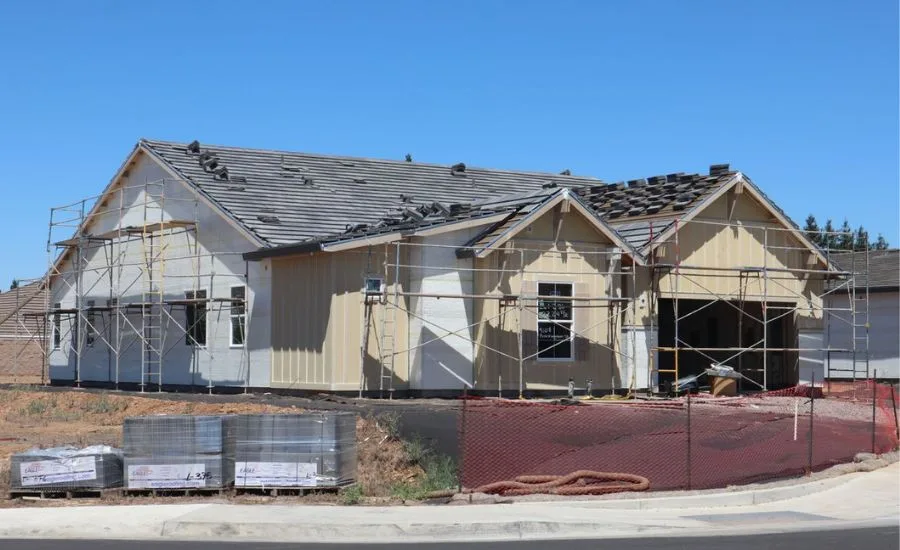
U.S. residential construction slowed sharply in July, but an increase in building permits is giving roofing contractors reason to believe more projects could be coming even if few are ready to adjust their businesses based on the numbers just yet.
Privately owned housing starts fell to a seasonally adjusted annual rate of 1.239 million in July, down 12.4% from June's revised rate and 13.5% from July 2025, according to data released Aug. 18 by the U.S. Census Bureau and Department of Housing and Urban Development. Single-family starts declined 9.9% month over month to 808,000.
The pipeline offered a more encouraging signal. Building permits increased 5% from June and 3.1% year over year to a 1.443 million annual rate. Single-family permits rose 2.5% from June to 894,000. Housing completions, meanwhile, declined to a 1.212 million annual rate, down 9.1% from June and 16.8% from a year earlier. Single-family completions fell 5.8% to 878,000.
For residential roofing contractors around the country, the conflicting numbers reflect what many are seeing in their own markets: opportunities are still there, but projects are taking longer to materialize, and contractors remain reluctant to make hiring or purchasing decisions until demand is firmly on the books.
"In N.J., we've seen new construction become a little less predictable this summer, so we are being more deliberate about how far ahead we hire and commit to purchasing materials," said John Caselli, operations manager at Velocity Roofing. Caselli views the improvement in single-family permits as encouraging but said his company wants to see those permits become actual roofing projects before changing its approach.
"We are pretty hopeful about demand later in the year, but we would rather scale with a backlog than get ahead of the market based on one data point," he said.
Homeowners Taking Their Time
Austin, Texas, roofing contractor Nick Riley, owner and CEO of Driftwood Builders Roofing, said the July numbers closely match what he has observed this summer. Homeowners are beginning to make plans for new homes and pull permits, he said, but projects are progressing at a significantly slower pace than they did during the pandemic-era construction boom.
Riley, who owns a 20-year-old residential roofing company, pointed to one customer who has spent roughly four months planning two new barndominiums and a new home on recently purchased property in Lockhart, Texas.
"During COVID, homeowners would move roughly five times faster on building new construction than they are now," he said. "But we're still seeing slow movement, which is slightly increasing every month."
That gradual improvement is enough to make Riley optimistic about the remainder of 2026. Since the beginning of the year, he said his company has received more inquiries from homeowners planning to build homes.
Replacement Roofing Provides a Buffer
For contractors concentrated on existing homes, declining construction starts may have considerably less impact. Mike Tellone, president of Best Roofing Westchester in N.Y., said his company has seen little evidence of a broader residential roofing slowdown. The company's demand is up about 32% year over year, he said.
"Most of our work is replacement roofing on existing homes," Tellone said. "We're not as tied to new construction starts as some contractors are."
He called the increase in permits encouraging but said one month of data is not enough to alter the company's strategy.
"We're definitely keeping an eye on it, but so far demand in Westchester has remained strong," Tellone said.
Andre Kazimierski, co-owner and president of HomeHero Roofing in Chicago, also sees some slowing in new-construction roofing, although he said the Chicago suburbs and broader Midwest appear to be doing better than other areas of the country in terms of new construction and related roofing work.
At the same time, HomeHero is seeing more roofing work unrelated to new construction. Kazimierski said homeowners are replacing existing roofs with more weather-resistant materials such as metal because of concerns about extreme weather. He also pointed to sustainability upgrades, including sealants and reflective coatings, as increasingly popular elective projects as homeowners consider the economy, weather threats, and the effect those threats can have on insurance costs.
"I would say that overall I remain pretty optimistic about residential roofing demand because of all of that," Kazimierski said. "The industry, just like any other industry, is always going to ebb and flow, and roofing needs as a whole will never go away."
In Florida, Weather Can Outweigh Permits
Few markets illustrate the disconnect between national construction numbers and roofing demand better than Florida. Ryan Westfall, president of Westfall Roofing, said he has seen fewer bidding opportunities from custom home builders this summer, although the speculative-home market appears steadier.
Because Westfall Roofing primarily focuses on residential reroofing and replacement, however, the decline has not had a significant impact on its backlog, hiring or roofing material purchases. Instead, weather has become one of the biggest variables affecting demand.
Westfall said Hurricane Milton in October 2024 produced an extraordinary surge in homeowner calls, followed later by an extended period of heat and drought that caused demand to fall. Recent rainfall has reversed that trend as previously unnoticed leaks and damage have become apparent. At one point during the dry period, Westfall said the company was scheduling roughly 20 jobs per day. Following recent rains, that figure climbed to nearly 60.
"That kind of volatility makes it difficult to forecast demand based solely on construction permits," Westfall said.
Weather could remain an important factor in the months ahead. The National Oceanic Atmospheric Administration's Climate Prediction Center said Aug. 13 that El Niño is strengthening and is expected to continue strengthening through the end of the year, with a greater than 90% chance of a very strong event during the Northern Hemisphere fall and winter. For Westfall, those changing conditions reinforce the need to maintain flexibility in staffing, purchasing and backlog management.
"As a Florida contractor, we pay very close attention to weather patterns because a change in conditions can have a much more immediate impact on our business than a change in the construction pipeline," he said.
Looking for a reprint of this article?
From high-res PDFs to custom plaques, order your copy today!