Green Roofing
Three Reasons to Pitch Green Roofing During Heat Wave 2026
Heat waves, heat domes, and hot weather alerts put roof sustainability at the forefront this summer.
Green or vegetative roofing has been around for decades and continues to be an area of innovation in the roofing space. But this summer’s extreme heat wave is potentially creating opportunities for roofing contractors at the ready. Temperatures have soared from coast to coast across the United States and much of North America over the past 6 weeks. The current heat wave is also exacerbated by a major surge in humidity that lingers in the lower atmosphere, creating a ‘dome’ effect.
Compounded by an emerging El Niño, the ‘heat-dome’ reportedly impacted more than 180 million people from the Midwest to the Northeast and South. Major cities from Atlantic City and Boston to Washington, D.C., and Raleigh, N.C., reported record highs exceeding 100 F during that time. Last month, New York Mayor Zohran Mamdani issued an executive order instructing city departments to distribute heat-safety guidance for all outdoor workers.
One way roofing contractors can try to combat the heat is through green or vegetative roofs. The evolving roofing technology offers good alternatives for urban centers because the shade they provide extracts heat from the air, and can reduce overall temperatures in what’s often referred to as a heat island.
Here are three reasons roofers can capitalize on this summer’s extreme heat, whatever roofing market they serve.
One: Attitude Shift
Severe warming trends here and in Europe are pushing major urban centers like New York, and other major population hubs to shift away from viewing green roofs as a luxury aesthetic. Instead, they’re treating sustainable roofs as essential, energy-saving infrastructure.
Another deadly summer in Europe may accelerate the cause. Public health experts in Europe said the heat wave caused more than 9,000 deaths directly tied to record heat conditions across several countries. Urban planners and climate engineers are pushing for a rapid overhaul of how European roofs are built and maintained.
Two: Solar Boost
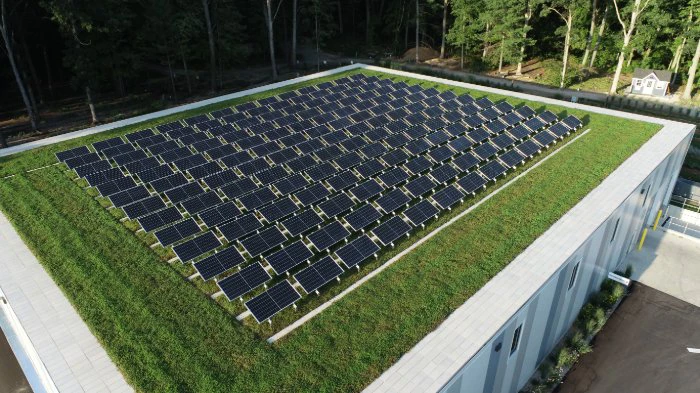
Government incentives or not, many modern architectural designs for urban settings now feature biosolar roofs—a combination of solar photovoltaic (PV) panels surrounded by green roof vegetation. As long as they’re not blocking the panels, the vegetation helps keep the system cool. Ironically, solar panels lose efficiency when they overheat. By keeping the immediate surrounding environment cooler, the underlying plants help the solar panels maintain optimal operating temperatures. That translates into higher renewable energy output exactly when the power grid needs it.
Three: True Value
Green roofs have proven to add value—sometimes significantly—to a property’s overall value. Green roofs typically add 6-15% to overall property value, due to their ability to reduce energy use and added durability to an overall roofing system. Some premium installations can yield even higher returns depending on location and market conditions.
Looking for a reprint of this article?
From high-res PDFs to custom plaques, order your copy today!