Roofing Technology
How Data Solves the Hidden Challenges of Rooftop Inspections
The difference between a safe rooftop inspection and a risky one comes down to preparation.
The most effective roof inspections don’t begin with a ladder. They begin with data. Too often, inspections are treated like reactive exercises—someone gets a leak call, a crew is dispatched, and the search begins. But seasoned facility professionals know better. The smartest inspections start days earlier, with a careful look at history, documentation, and patterns that tell a story long before anyone sets foot on the roof.
Facilities operations leader Alecsander Santos, a self-described “numbers guy,” learned this the hard way. “From my humble experience,” he said, “you can’t make a real assessment without the data in front of you.” That mindset transforms roof inspections from guesswork into an informed investigation.
The Story the Data Already Tells
Before arriving onsite, Santos reviews at least two years of leak tickets—more if they’re available. He isn’t just scanning for volume; he’s looking for repetition.
“If a specific corner keeps popping up,” he explained, “I know I’m not just looking for a simple patch. The data is telling me there’s a drainage or slope issue before I even get on the roof.”
That’s a powerful shift. Instead of treating each leak as an isolated event, historical data reveals patterns—low points in drainage, flashing details that repeatedly fail, or areas exposed to unusual wind conditions. When one section of a roof generates recurring tickets, it’s rarely random.
By the time Santos climbs the ladder, he already has a hypothesis. He’s not searching blindly; he’s confirming what the numbers have suggested.
A Maintenance Plan’s Health
Past work orders are more than paperwork—they’re diagnostic tools.
“They help me see the story,” Santos said. “If I see three ‘emergency’ calls on one building in a year, it’s a sign the maintenance plan is failing.”
That’s a critical insight. Emergency calls are expensive. They often mean temporary patches, rushed vendor responses, and minimal documentation. But when you see repeated emergency tickets for the same asset, it signals something deeper: a systemic issue that hasn’t been addressed. Santos uses that information strategically. Instead of approving another patch, he presents leadership with evidence. The conversation shifts from reactive spending to proactive investment.
“We need a budgeted fix,” he explained. “Instead of wasting money on a patch.”
Data gives credibility to that recommendation. It reframes the conversation from opinion to evidence.
The “Non-Surprise” Surprises
Some of the most expensive roofing surprises shouldn’t be surprises at all. Voided warranties top the list.
“It happens all the time,” Santos said. “A vendor does an off-spec repair and kills a warranty. If you aren’t auditing those repair logs, you’re sitting on a huge liability.”
Many organizations store warranties in file cabinets or scattered digital folders. Meanwhile, repairs happen in the field—sometimes by well-meaning contractors who don’t follow manufacturer specifications. Without visibility into repair logs and warranty requirements, a simple patch can quietly void coverage worth hundreds of thousands of dollars.
By reviewing warranty status and repair history before an inspection, facility leaders can identify risks before they escalate. A voided warranty discovered during a claim is a crisis. Discovered during a pre-inspection review, it’s a manageable problem.
Remote Access Changes the Game
Preparation doesn’t stop at the office.
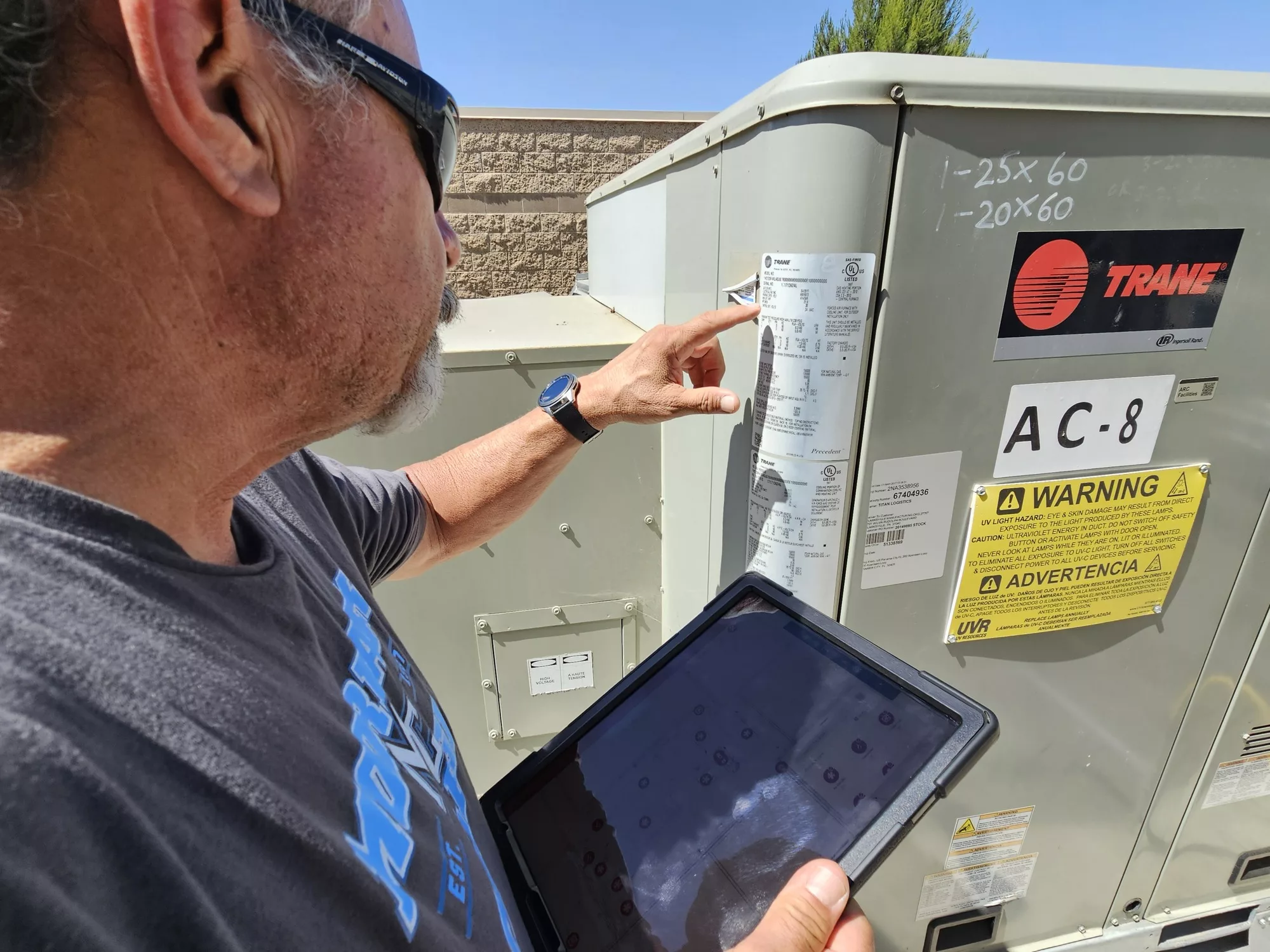
“Having the drawings on my phone while standing on the roof is a game-changer,” Santos said. “It means I can catch a mistake in the moment.” Many facilities teams can tap into their phones or tablets for instant access to equipment and building information.
Remote access to drainage drawings, warranty documents, and historical reports transforms the inspection process. Instead of taking notes and following up later, inspectors can verify conditions in real time. They can confirm drain locations, check slope intent, review past repairs, and ensure that any corrective work aligns with warranty requirements. It also creates accountability.
“It keeps everyone honest,” Santos added. “And it protects the building.”
When documentation is accessible on-site, decisions improve. Assumptions decrease. Small errors are corrected before they become expensive problems.
The 80% Checklist
Santos believes that before “the ladder even touches the wall,” an inspector should be at least 80% prepared. His essential checklist is concise but powerful:
- Warranty status – Is it active? What are the conditions? Has prior work affected it?
- Drainage drawings – Where should water be flowing? Where are the designed low points?
- A two-year leak map (or more) – Where are the repeat offenders?
With those three elements in hand, an inspector arrives informed. The remaining 20%—what’s discovered visually—becomes confirmation, not surprise.
Climb Smarter
Roof inspections will always require boots on the membrane. But the difference between reactive patching and strategic asset management lies in preparation. Historical tickets reveal patterns. Work orders expose systemic failures. Warranty audits prevent hidden liabilities. Mobile access to drawings and documentation enables real-time decision-making. The smartest inspections start before anyone leaves the ground. And when data leads the way, the ladder becomes a tool—not a starting point.
Looking for a reprint of this article?
From high-res PDFs to custom plaques, order your copy today!