Residential Construction
Summit Addresses Housing Crunch Challenges
Low unemployment, fewer permits and policy gridlock are squeezing residential roofing pros as leaders push for solutions at a national housing summit
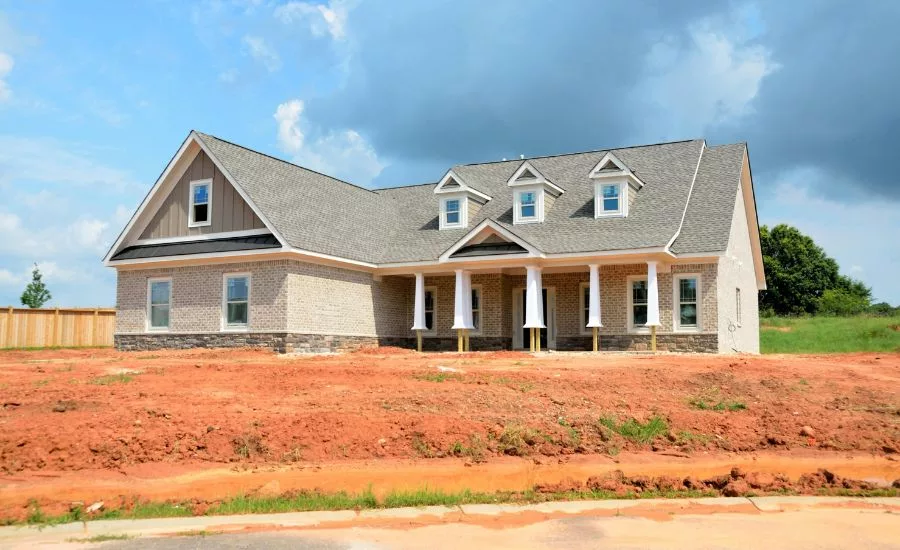
For residential roofing contractors and suppliers across America, the housing shortage isn't just a statistic; it's a daily reality that shapes every bid, every project, and every business decision.
With the nation facing a shortage of millions of homes and mortgage rates stubbornly high, builders, contractors and suppliers find themselves caught between soaring demand and an increasingly challenging economic environment.
High interest rates, rising material costs, and ongoing labor shortages are reshaping how contractors handle projects, pushing many to adjust their business models. Recent industry data highlights the significant impact of these pressures.
Construction unemployment sits at just 3.4%—near historic lows—highlighting the severe workforce shortage even as building permits dropped 11.1% year-over-year in August, according to analysis from the Associated Builders and Contractors and data from the U.S. Census Bureau. More concerning for contractor planning, the Architectural Billings Index fell to 43.3 in September, marking five consecutive months of decline and signaling fewer projects entering the pipeline for 2026.
Adding to these challenges, the 2025 government shutdown froze federal project funding, creating massive backlogs at agencies such as the EPA and the Department of the Interior, which further complicated an already complex permitting process. With supply chain disruptions at ports affecting the availability of building materials and shelter costs continuing to rise at a rate of 3.9% annually, contractors face pressure from every angle, making solutions to increase housing supply more critical than ever.
These mounting pressures brought urgency to the U.S. Chamber of Commerce's inaugural housing summit on Nov. 6, "Building for Growth: Housing Solutions for a Stronger Economy," where leaders from various sectors, ranging from national to local, highlighted challenges and explored solutions to increasing the country's housing supply.
Housing drives 20% of GDP and is increasingly unattainable, with the median age of first-time homebuyers reaching 40 years old—up from 29 in 1981—as prices, interest rates, and supply constraints push homeownership further out of reach, according to the U.S. Chamber of Commerce.
During the "Breaking the Barriers to Building" panel, moderated by National Association of Home Builders First Vice Chairman Bill Owens, industry leaders detailed the challenges that are crushing construction timelines and budgets. Owens outlined the critical bottlenecks—workforce shortages, outdated zoning, slow permitting, regulatory control, and supply chain issues—noting that "every link in that chain adds costs."
The Housing Deficit
The U.S. housing market is experiencing a shortage of 4.7 million homes, leading to significant economic and social challenges that have intensified since the Great Recession. This decade-long crisis of underbuilding has made homeownership unaffordable for countless Americans. The shortage is particularly acute in high-growth areas, where the construction of new homes has failed to keep pace with demand.
The housing deficit extends far beyond individual homebuyers and renters, costing states billions in lost economic output, reduced personal income, and diminished job opportunities. These losses stem from a decrease in housing construction activity compared to pre-2008 levels, according to the U.S. Chamber of Commerce. The crisis has fundamentally altered construction economics—the creation of new homes has failed to keep pace with demand, especially in rapidly growing metropolitan areas.
Patrick Gillin, managing director of Brown Gibbons Lang & Company, an independent investment bank and financial advisory firm based in Chicago, Ill., sees this housing dynamic as a fundamental driver for the home improvement sector.
"The underbuilt formation of the U.S. housing market is what I would consider one of the mega trends that is gonna drive investment in the home space," Gillin said. "People are stuck in place, and the value of their home is increasing. So you've got this cushion that people are sitting on, the value of their home has never been higher, but can't or really don't want to move.'"
Housing market data reveals regional variations, with the South experiencing positive migration trends while the Northeast and California face notable outflows. People leaving high-cost states like California and the Northeast are seeking more affordable housing options. However, this migration pressure is driving up costs and limiting availability in destination markets, making it increasingly difficult for even these traditionally affordable areas to accommodate demand.
Looking for a reprint of this article?
From high-res PDFs to custom plaques, order your copy today!