Storm Watch
Monster Hail Pounds Midwest as Tornadoes Reported
Monster hail and tornadoes hit parts of the Midwest, with Kansas City contractors reporting widespread roof damage and early estimates nearing $100 million.

Roofing contractors are reporting widespread damage after a severe storm system brought large hail and tornadoes across parts of the Midwest this week.
Justin Dant, CEO of Soderburg Roofing & Contracting in Kansas City, Mo., said his inspection teams found significant damage across multiple homes just hours after the storms passed.
“We’ve already been on seven roofs this morning, and all seven of them have been completely totaled,” Dant said. “It’s pretty heavy hail. It’s not just the size — it’s the density of the hail. It’s really solid, and that makes a big difference when it impacts the roof.”
Dant said neighborhoods on the north side of Kansas City, including Parkville and Platte Woods, appear to be among the hardest hit areas.
A series of severe storms moving across the Midwest this week produced tornadoes, damaging winds and large hail across parts of Missouri, Illinois and neighboring states, raising concerns about potential roofing damage in several major markets.
The National Weather Service confirmed an EF0 tornado with winds around 75 mph near Shawnee and Merriam, Kan., that crossed into Kansas City, Mo. According to AccuWeather, the outbreak produced nearly 200 confirmed severe weather reports stretching more than 2,500 miles from Texas to Michigan, including at least 10 tornado sightings in Illinois, Indiana and Texas. Large hail also caused damage across several states, with hailstones reportedly reaching 5 to 6 inches in diameter in Illinois, potentially the largest ever recorded in the state.
“This was an intense severe weather outbreak for early March, and the danger is not over yet,” said Brandon Buckingham, an AccuWeather meteorologist. He noted that storms capable of producing hail, damaging wind gusts and flooding downpours were expected to continue moving across the central and eastern United States through midweek.
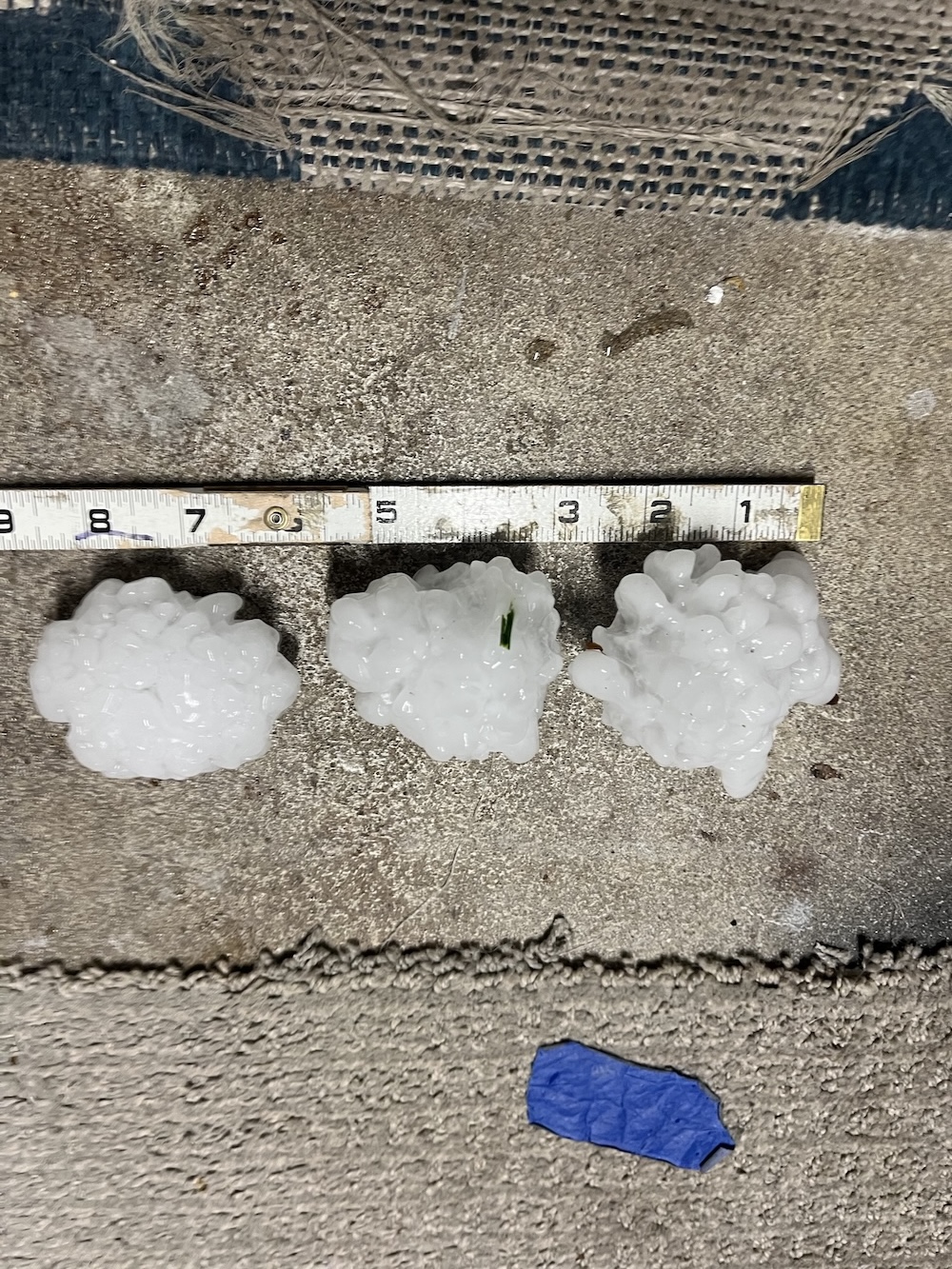 Photo: Soderburg Roofing & Contracting
Roofing contractors in affected areas are assessing potential storm damage as property owners evaluate roofs following the storms.
Eric Moore, owner of First City Roofing & Remediation in Vincennes, Ind., said severe weather systems like this typically lead to a surge in calls from property owners — even in areas that may not have experienced a direct hit.
“After a storm system like this moves through the Midwest, the phones usually start ringing, even in areas that were not directly hit,” Moore said. “Most homeowners do not realize that hail and wind damage is often not visible from the ground.”
Moore said contractors frequently find hail bruising on shingles, wind-lifted or creased shingles and damaged flashing around roof penetrations after severe storms. Even when leaks are not immediately visible, that type of damage can shorten the overall life of a roofing system.
“With storms like this already showing up early in the season, most contractors expect 2026 to be another active year for severe weather across the Midwest,” Moore said. “That usually means more inspection requests and more homeowners trying to understand whether their roof damage qualifies for an insurance claim.”
Watch: Large Hail in Kansas City
Dant said the hailstones reported in parts of the Kansas City area measured roughly 2 to 2.5 inches in diameter, and the volume of large hail made the storm particularly destructive.
“It wasn’t just one big stone and then a bunch of small ones,” Dant said. “There were a lot of larger hailstones sitting in yards. That’s what really causes damage.”
In addition to roofing damage, Dant said the storm also caused widespread vehicle damage across affected neighborhoods.
“This type of hail is more than just a paintless dent repair situation,” he said. “It’s breaking windows and damaging hoods where vehicles need full replacements.”
Dant also said the timing of the storm — arriving early in March — could signal an active severe weather season ahead. “In my opinion, an early storm like this in a market like Kansas City means it could be a really busy storm season in 2026,” he said.
He added that a relatively mild winter may have contributed to early severe weather activity across the region. “We missed a lot of our snow this year, and instead of snow and ice these systems are turning into hail because temperatures are so warm,” Dant said.
Dant said early industry estimates suggest the storm could cause nearly $100 million in damage in parts of the Kansas City area, based on preliminary data from hail analytics firm HailTrace.
If those estimates hold, contractors could be repairing roofs from the storm for months. Dant said storms of this scale are often considered “one-year storms,” meaning contractors may still be completing repairs from the event well into next year.
"This spring is expected to be a warm, rainy, and active storm season," confirmed Chris Kavcsak, CEO at Elevated Roofing & Siding in Dayton, Ohio, who has been responding to multiple areas of damage across Ohio and Indiana. "We track storms closely and remain ready to take action to help homeowners protect their homes from further damage."
Looking for a reprint of this article?
From high-res PDFs to custom plaques, order your copy today!