Roofing Safety
Understanding the Updated Head Protection Standard on Jobsites
ISEA releases ANSI/ISEA Z89.1-2026, the first major revision in over a decade, aimed at curbing serious and fatal head injuries in construction.
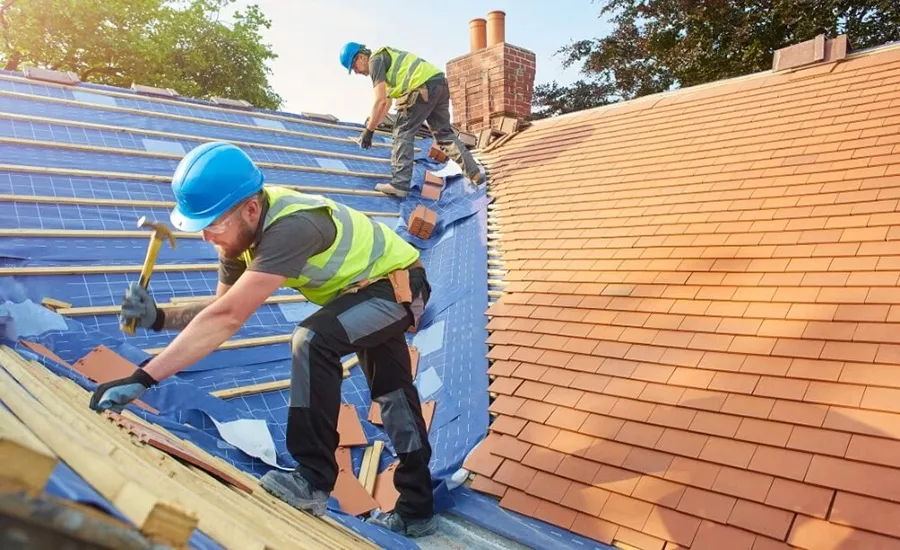
A study out of the University of South Australia has demonstrated the efficacy of a new automated safety hazard identification system that has the potential to dramatically reduce the risk of slips and falls, two major causes of workplace injury and death in construction — particularly in roofing.
Key Takeaways
- There is a new safety standard for head protection on construction jobsites.
- New Type I+ and Type II+ designations with additional performance requirements.
- Expanded impact testing to address off-center and multi-directional hazards.
- New retention and stability requirements, including standardized chin strap testing.
Earlier this month, the International Safety Equipment Association (ISEA) released the updated ANSI/ISEA Z89.1-2026 standard for industrial head protection, the first major revision in over a decade.
The update is part of a renewed effort to curb serious and fatal head injuries on the job, which account for roughly 6 percent of all workplace injuries that require time off work. Industry statistics indicate that nearly half of those occur when workers come in contact with objects or equipment, and another 20 percent are from slips, trips and falls. Part of the problem, safety advocates say, is that workers have been wearing the same head gear designed for workers on jobsites since the 1920s. And a lot has changed over the last century. Primarily, hard hats and traditional helmets don't stay on a worker's head when they fall, and when they do, they offer minimal protection for side impacts.
The Occupational Safety and Health Administration (OSHA) tried to address the issue in late 2023 with a bulletin declaring traditional construction hard hats as inadequate. It then followed the bulletin itself by replacing all its inspector hard hats with Type II safety helmets. Several industry leaders in construction and safety followed suit, adopting helmets with chin straps. While that addressed the on-site hazard, manufacturers trying to meet the new demand still lacked any standardized testing protocols for the new features.
This new standard provides the technical framework for chin strap retention testing, helmet stability during impacts, and multi-directional protection — precisely what OSHA identified as missing from traditional hard hats. Now manufacturers can prove their helmets actually stay on workers' heads during accidents.
Specifically, the new standard provides testing protocols for:
- Chin strap retention — how straps perform under impact (OSHA's #1 concern). If a worker slips and hits their head, does the helmet stay on for secondary impacts?
- Helmet retention — whether helmets stay on heads during slips, trips, and falls. Traditional hard hats often fall off when workers need them most.
- Multi-directional impact protection — front, rear, and side impacts, not just top-of-head. Workers don't just get hit from above — they hit scaffolding, trip into equipment, fall sideways.
- Reverse wearing guidance — critical for real-world jobsite use. Workers wear helmets backward for better visibility or mask fit; now there's testing to ensure that's safe.
While roofing contractors and other construction workers adapt to the change, the standards should be the end of helmet manufacturers making unverifiable claims about how their equipment works. There could also be an impact on liability concerns, insurance costs, and how contractors verify compliance with safety regulations.
Looking for a reprint of this article?
From high-res PDFs to custom plaques, order your copy today!