2026 Roofing Technology Special Section
July 2026 Product Focus: Technology
Roofing technology companies are introducing innovative solutions to boost efficiency, communication, and jobsite performance
Technology companies are racing to reshape how roofing contractors sell, manage and protect their businesses, and the newest wave of tools is putting AI, automation and real-time data at the center of daily operations. From platforms designed to replace multiple software systems to geospatial intelligence engines that identify storm opportunities in seconds, the latest product launches reflect the industry’s growing demand for smarter, faster and more connected workflows.
Zuper Launches AI Command Center for Contractors
Zuper has launched Zuper Sense, an AI-powered operations platform designed for roofing and exterior contractors. The Seattle-based company said the tool provides real-time monitoring, analysis and predictive insights across jobs, invoices, crews and customer accounts.
The platform allows contractors to ask business questions in plain language and receive recommended actions, including the ability to deploy AI agents to complete tasks such as collections, dispatch coordination and customer communication.
According to Zuper, the system continuously monitors operational data to flag issues such as aging estimates, invoice delays, labor overruns and inefficient dispatch routes. The company said the platform also integrates external data sources, including weather forecasts and competitor reviews, through “Intelligence Packages.”
Zuper said roofing contractors participating in an early-access program reported recovering between $50,000 and $150,000 per month in estimates that might otherwise have expired. Other reported results included faster collections and increased storm-event call response rates.
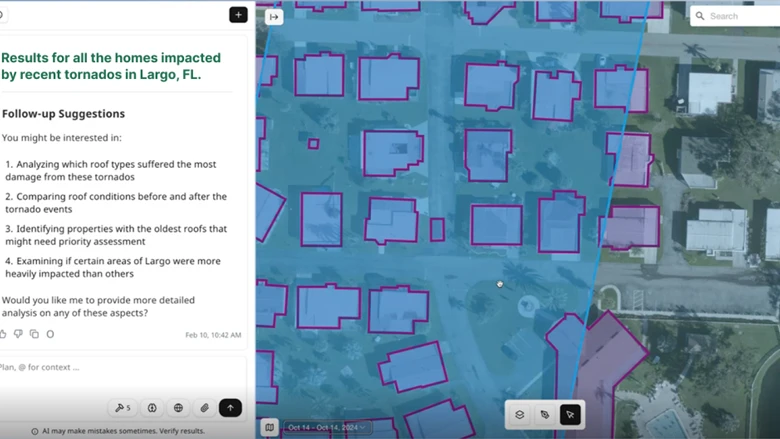
Photo: Eagleview
Eagleview Launches AI Geospatial Platform
Eagleview announced the launch of Eagleview Horizon, an agentic geospatial intelligence (GeoAI) engine designed to help contractors, insurers, property managers and government agencies analyze property data and aerial imagery using AI-powered workflows.
Built on Eagleview One, the company’s aerial imagery and property intelligence platform, Horizon combines proprietary imagery, verified measurements and external datasets to support decision-making across roofing, construction, insurance and infrastructure markets. Eagleview said the platform enables users to identify opportunities, assess property conditions and prioritize projects through natural language prompts and AI agents.
CEO Piers Dormeyer said the technology leverages more than 20 years of property data collected through Eagleview’s fleet of aircraft, which has imaged nearly every property in the United States.
For roofing contractors, Horizon can generate canvassing maps based on storm activity, roof age, roof type and condition. Commercial contractors can use the platform to identify structural changes and streamline inspections, while insurance carriers can prioritize claims inspections based on predicted damage severity. Property managers, solar installers and government agencies can also use the platform for maintenance planning, prospecting and risk analysis.
Eagleview Horizon includes more than 20 workflow tools and multiple AI integrations designed to automate property identification, filtering and analysis. The platform opened by invitation only through Eagleview One on June 1.
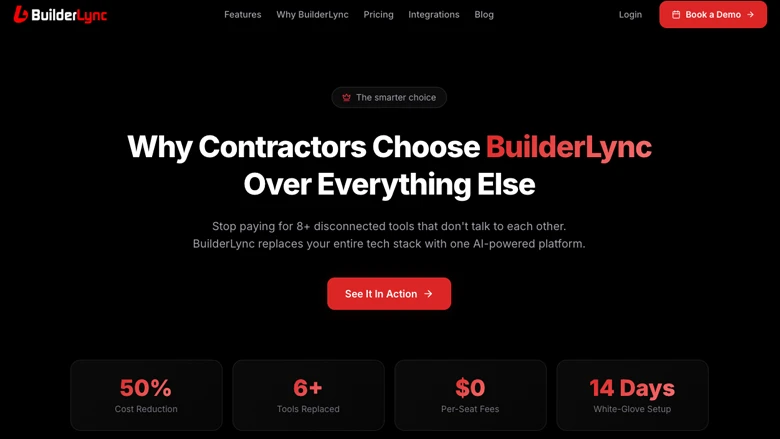
Photo: BuilderLync
BuilderLync Drives Jobsite Efficiency
BuilderLync is an AI-powered operating system built specifically for contractors, including roofers, solar installers, remodelers and general contractors. The platform was created to replace the multiple disconnected apps contractors often use for CRM, estimating, scheduling, marketing, recruiting and invoicing with one unified system.
The platform was developed by active roofing operators, including leaders from Capital City Roofing, Revive Roofing & Exteriors and Tarrytown Roofing, who designed the software around real-world field operations rather than adapting generic contractor tools. According to the company, BuilderLync was built to standardize workflows, improve operational visibility and support AI-driven automation across residential, commercial and multifamily projects.
BuilderLync combines lead management, automated follow-ups, estimating, scheduling, recruiting and reporting into a single platform. The company said contractors using the system can reduce software costs, eliminate inefficiencies caused by switching between applications and improve response times through automation tools such as AI lead routing and missed-call recovery.
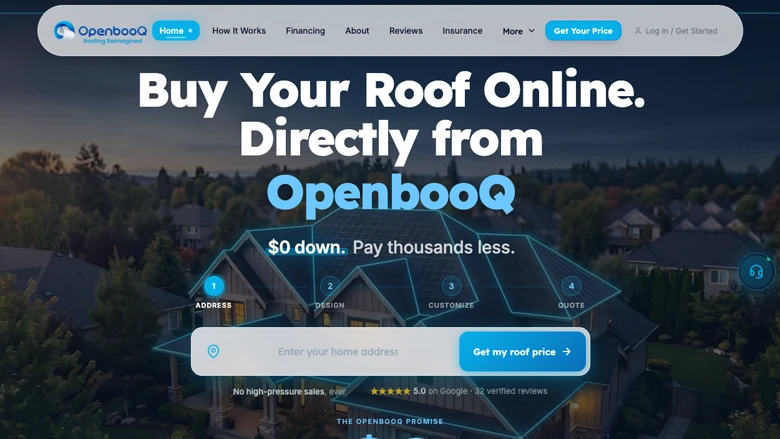
Photo: OpenbooQ
OpenbooQ Launches AI Roofing Platform
OpenbooQ, a technology-driven roofing platform, launched operations in Dayton, Ohio, marking the company’s first active market as it begins a planned national expansion. The company also named co-founder Patrick Salyers as co-CEO alongside Michael Chesbrough.
The platform operates as a direct-to-consumer roofing provider, using AI-powered technology to generate project estimates and manage projects from initial pricing through installation. OpenbooQ said its model is designed to replace traditional sales-driven roofing processes with a more transparent, online experience.
According to the company, homeowners can receive roofing estimates in about 30 seconds through the platform’s AI tools. OpenbooQ said it eliminates common material markups and uses a flat platform fee structure intended to lower overall project costs.
The company reported that early projects in the Dayton market showed homeowner savings of more than 40% compared to traditional contractor quotes. OpenbooQ said every project includes assigned project management, quality-control inspections and full roofing warranties.
OpenbooQ plans to expand beyond Ohio as part of a broader nationwide rollout strategy.
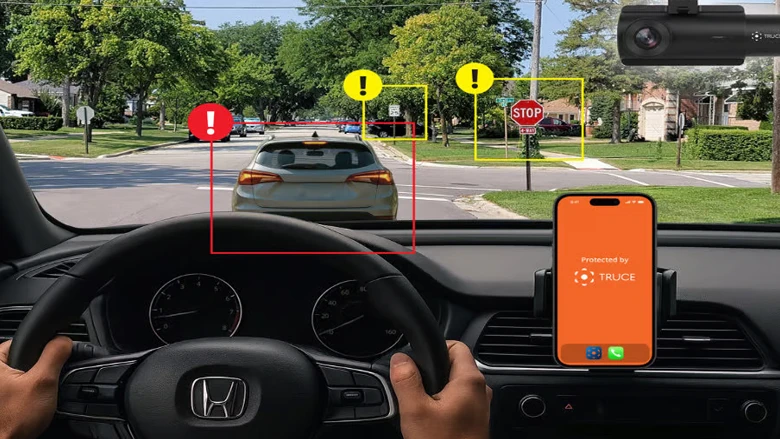
Photo: TRUCE Software
TRUCE Expands Driver Safety Platform
TRUCE Software expanded its driver and fleet safety platform in April, positioning the technology as a way for roofing contractors and service businesses to reduce distracted-driving incidents, improve fleet oversight and lower operational risk.
The company said distracted driving continues to create major financial exposure for employers, citing OSHA estimates that workplace vehicle crashes involving injuries can cost between $16,500 and $74,000. TRUCE said its platform is designed to prevent distractions before incidents occur rather than relying on driver self-monitoring.
The platform includes six modules covering mobile-device restriction, driver coaching, workforce communication, dash-camera monitoring and vehicle maintenance tracking. Its ENFORCE module automatically blocks access to calls, texts, apps and notifications while vehicles are in motion on both company-issued and personal devices. The system operates automatically without driver overrides or opt-in settings.
Additional tools provide driver performance scoring, supervisor coaching workflows, real-time jobsite communication, AI-enabled dash-camera evidence collection and vehicle health monitoring.
David Coleman, head of commercial solutions at TRUCE Software, said company data shows drivers encounter device distractions approximately once every 10 miles behind the wheel.
TRUCE said companies using the ENFORCE feature have reported accident reductions between 40% and 47% during the first year of implementation.
Roofing Technology
Taking Software Seriously Roofing's Operating System Tape Measures to Technology Smarter Financing Product FocusRoofing Technology Special Section Sponsored by

Looking for a reprint of this article?
From high-res PDFs to custom plaques, order your copy today!