2025 Metal Special Section
Metal Misconceptions
Which of these metal roofing myths have you heard?
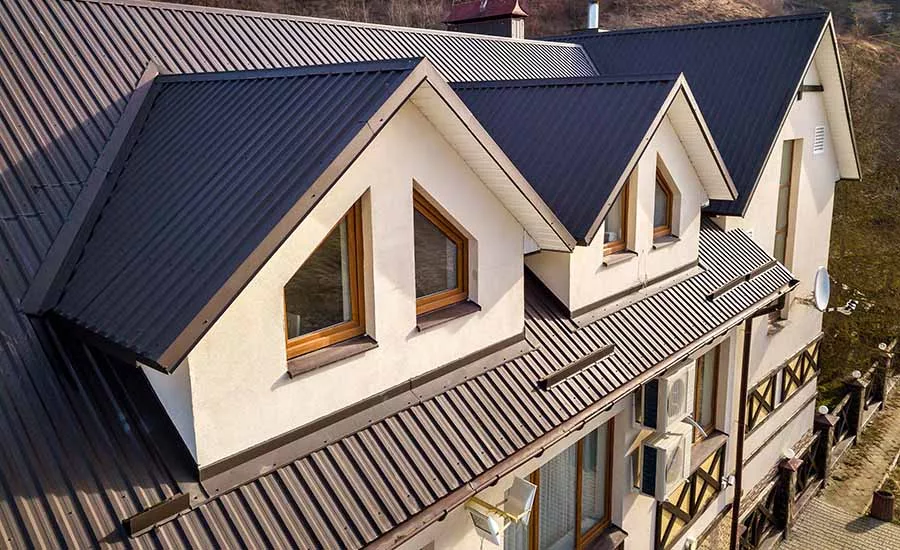
When Golden City, Mo., firefighters began struggling with radio communication in homes topped with metal roofs, it seemed like a straightforward case of interference. Local emergency services pointed to the metal roofing, saying the structures were blocking critical signals from reaching sleeping firefighters.
But according to Darcie Meihoff of the Metal Roofing Alliance (MRA), the incident highlights a long-running misconception unfairly pinned on metal roofs.
“Wi-Fi has nothing to do with roof types, and there isn’t a noticeable difference between metal and other materials,” Meihoff said. “Connectivity problems are far more likely to stem from service provider interruptions, weak signals, or outdated equipment.”
MRA member McElroy Metal of Shreveport, La., reinforced that point by debunking three persistent myths:
MYTH ONE: Metal roofs block Wi-Fi signals.
REALITY
Wi-Fi frequencies (2.4GHz and 5GHz) easily pass through thin roofing sheets. Any reflection or weakening is minimal.
MYTH TWO: Metal roofs always cause poor connections.
REALITY
Router placement, device distance, electronic interference, and outdated hardware have far greater impact.
MYTH THREE: Homes with metal roofs can’t have strong Wi-Fi.
REALITY
Millions of metal-roofed homes maintain excellent Wi-Fi thanks to modern routers and smart placement.
“The bottom line is that metal roofs don’t interfere with Wi-Fi,” Meihoff said. “In fact, for homeowners facing climate extremes, wildfires, or hurricanes, they provide far greater protection and peace of mind.”

Looking for a reprint of this article?
From high-res PDFs to custom plaques, order your copy today!