Roof Coatings Special Section
Reflecting on Today's Roof Coatings
Changes in Coatings can be linked to environmental concerns and technical advancements.
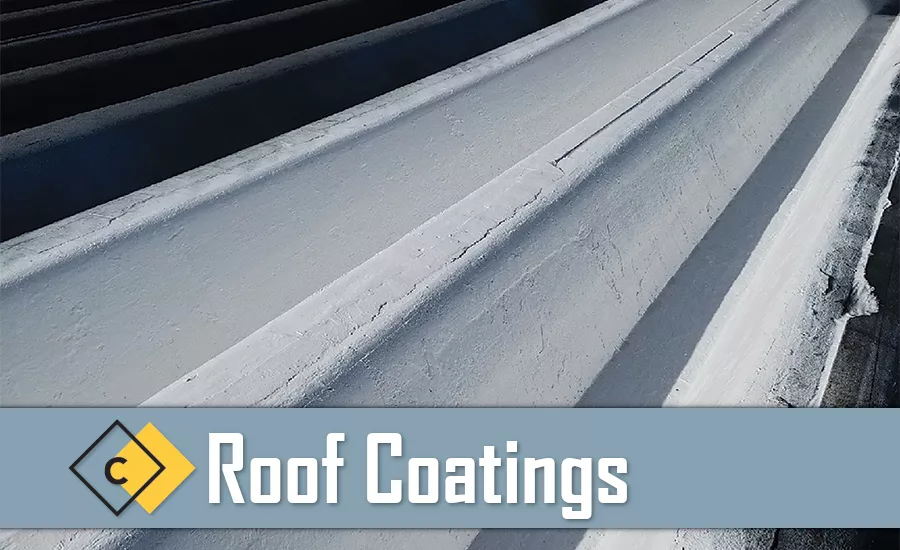
The material formulations and uses of roof coatings have evolved gradually over the past two decades and significantly changed how they’re used on commercial roofs.
The initial roof coating applications were typically completed with aluminum coatings and their primary purpose was to prevent oxidation and ultraviolet (UV) degradation in smooth-surfaced, built-up roofs and modified bitumen membranes.
Aluminum roof coatings are comprised of asphalt petroleum solvents, aluminum pigments and chemical additives to ensure proper pigment distribution. The coatings can also be manufactured with oxidized asphalt cutbacks.
These types of coatings are typically silver in color. Aluminum coatings are economical coatings that can be applied over smooth surface BUR or modified bitumen roof systems. Higher-grade materials can restore new life to older systems, particularly dried-out asphalt roof surfaces. Reflection rates of these products helped reduce thermal shock by resisting UV rays.
In the mid-1990s, the ENERGY STAR program impacted roof materials by requiring all low-slope roof systems to have a reflectivity rate of 65 to 70 percent after three years of application. The only way for most membranes to achieve this rating was with the application of a top coating. At the time, coating colors were primarily white or tan, as studies indicated lighter colors provided better reflectivity. The coatings were applied at a minimal rate to provide a film surface that acted as a barrier against the sun’s UV rays. Selections of coatings were made based on their “Cool Roof Rating.”
Recent advancements in coating material technology have increased the use and popularity of roof coatings in the commercial market. Today, coatings are manufactured as monolithic, fully-adhered, elastomeric materials. They’re now used to restore existing roof systems by acting as a surface that shields the membrane from erosion caused by rain, snow, sleet and hail. They’re also designed to reflect UV radiation.
When properly applied, coatings can provide significant advantages to a roof system. Coatings have been documented to expand the service life of existing roofs, improve a building’s energy efficiency, resist degradation from chemical attack and UV radiation, and eliminate the formation of small cracks associated with these degenerative conditions.
It’s important to point out that, although coatings can extend the service life of the roof system and provide repairs to specific conditions, most coatings do not provide long-term, stand-alone waterproofing protection. The waterproofing is still completed by the existing membrane.
What They’re Using Now
There are several types of coatings available on the commercial roofing market. The material formulations, uses and application methods are all different, so roofing contractors should examine the manufacturer’s material data sheets to determine which product is suitable for their specific project. Not all coatings are acceptable or compatible on all roof surfaces.
Acrylic coatings were originally developed to provide UV protection for sprayed urethane foam applications. These types of coatings are now used across a variety of roof membrane surfaces, including single-ply membranes and metal systems. Acrylic-based materials provide excellent resistance to radiation and hail damage and have the inherent flexibility required to withstand the dimensional instability of most roof membrane surfaces. Some studies have indicated that properly formulated acrylic coatings can reduce surface temperature as much as 20 degrees Fahrenheit when exposed to direct sunlight at 85 degrees Fahrenheit.
Acrylic coatings are manufactured with 100 percent acrylic and can be applied in one or more coats. Most manufacturers provide warranties based on the coverage rates while extended warranties require additional coverage. Acrylic coatings should not be applied in freezing temperatures or when precipitation may occur within a specified period from application. Cure time of these products is highly weather dependent and cold weather or high humidity will impede curing. Ideal curing takes place with warm weather and low humidity.
Acrylic coatings are economical, provide excellent reflectivity, and are easy to work with. However, they lose mil-thickness from weathering, require application in ambient temperatures above 50 degrees Fahrenheit, and they cannot withstand ponding water.
Several acrylic coating manufacturers now offer instant-set materials. This reduces the cure time of the acrylic coating to a few minutes, eliminating the possibility of coating run-off if there is precipitation directly after application.
Silicone coatings are manufactured with a high solids dispersion of 100 percent silicone. It’s a highly elastic material that provides excellent adhesion to the existing surface. Silicones provide excellent weather resistance and rarely become hard or brittle. In the last decade, silicone coatings have gained market share in the commercial roof market. The rise in applications is primarily due to the material’s ability to withstand long-term exposure to ponding water. Most of the other coatings cannot.
Silicone coatings also provide excellent UV protection in extreme temperatures, harsh environments and resistance of oxidation. Silicone is available in a variety of colors and provides high reflectivity and emissivity ratings.
Polyurethane coatings were initially developed to be applied over sprayed-in-place foam roofs. They’re now used as coating applications over a variety of existing roof membranes. Polyurethane coatings provide the best rates of all coatings for impact resistance and for foot traffic. There are two types of polyurethane roof coatings: aromatic and aliphatic. These types of materials are typically used in combination of base coat and top coat. The aromatic coating is used as a base coat material because it’s durable but does not offer high UV resistance. The aliphatic coating is used as a top surface because it is UV stable, stays clean and holds color longer than other coatings.
When considering the type of coating to apply, the contractor should review each material’s advantages and disadvantages as they relate to the specific project. Each material has different material formulations and application methods that may impact the requirements of a project.
Since cost is always a determining factor in material selection, the contractor should review not only materials costs, but also labor costs associated with the application. Some of the more expensive materials may provide significant labor savings. The specific material requirements to take into account should be:
- Coverage per gallon
- Cure time
- Whether multiple coats are required
- Whether primer is required
- The mil thickness required for warranties
- Loss of mil thickness over time
For Best Applications
Contractors should review the coating manufacturer’s specific requirements for preparation of the substrate and the material, temperature constraints and coverage rates.
As with all liquids and adhesives used in the roofing industry, proper on-site material storage is important and all of these products have a specified shelf life.
The most important criteria of a coating application is adhesion to the substrate. To achieve full bonding of the coating, the surface must be properly prepared. Preparation requirements are contingent upon the type of surface over which the coating is being applied and the age of the applied surface.
The surface must be clean and free of all moisture, contaminants, debris, oils and loose particles. Surface contaminants create impediments to the coating adhesion, resulting in disbondment or peeling of the coating. Consult the coating manufacturer to determine proper cleaning methods, whether a primer is required, and which primers are acceptable.
The initial step in the coating application process is to properly mix the coating prior to — and during — the coating application. Pigments and chemicals used in the manufacturing of the coating settle during storage. Properly mixing the coating allows for uniform color and optimum reflectivity.
Contractors should not mix solvents or water into the coating to thin it out. The coatings are manufactured with special formulations to achieve optimum performance. The addition of thinners can contribute to premature failures or shortened service life. Thinning the coating may also decrease the final film thickness, leading to improper weathering.
The coatings should be applied in accordance with the manufacturer’s temperature constraints and coverage rates. The manufacturers have tested their products and know the optimum performance rates. Too much coating or too little coating will result in poor performance or premature failure.

Looking for a reprint of this article?
From high-res PDFs to custom plaques, order your copy today!