Winter Warnings
Contractor Scams Leave Roofers Repairing More Than Roofs
As winter damage drives emergency repairs, fraudulent contractors are eroding homeowner trust and creating costly downstream consequences for legitimate roofing professionals.
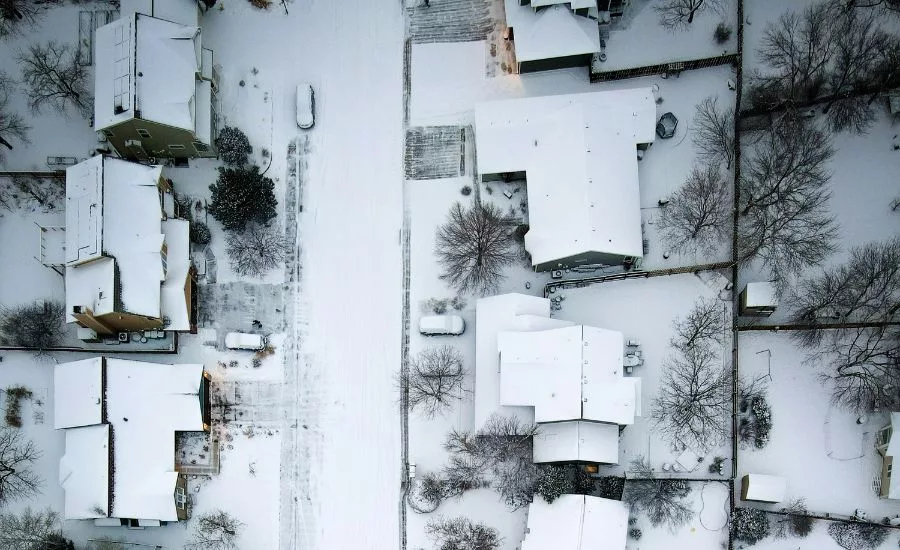
As winter storms trigger a surge in emergency roofing work across the country, contractors are facing more than collapsed roofs and ice-dam damage. A rise in fraudulent operators targeting storm-damaged homeowners is undercutting legitimate bids, delaying repairs, and forcing professional roofers to spend more time rebuilding trust than fixing roofs.
Alongside the predictable spike in emergency calls for snow-load failures, frozen-pipe leaks, and water intrusion, contractor fraud is quietly escalating. Consumer protection agencies and insurers have long warned that storms create ideal conditions for scams, but winter weather amplifies those risks. Repairs often feel urgent, damage may not be immediately visible, and homeowners are pressured to make fast decisions with limited information.
Dawn Collins, CEO of Boxer Exteriors in Wheaton, Ill., said her company has seen significant damage following the late November storm that hit the Midwest. "We're seeing a lot of emergency leaks—ice damming, ventilation failures, compromised flashing," Collins said. "A lot of times, homeowners are realizing they've got attic issues now that temperatures have warmed up a little. Water moisture is starting to come in from flashing that's not properly sealed, or older roofs—even newer roofs if somebody didn't put them on right."
Collins added that, if not addressed, ventilation issues can lead to mold buildup in attic structures that may not become apparent until summer heat arrives.
The urgency and complexity of winter storm damage create ideal conditions for fraudulent contractors to exploit homeowners. Federal Trade Commission data show that consumer-reported losses to fraud continue to climb nationwide — exceeding $10 billion in 2023 — with home improvement and contractor scams among the categories reflected in these millions of reports. Industry experts say the downstream effects increasingly land on legitimate contractors who must address failed work, correct incomplete repairs, and overcome homeowner skepticism created by prior scams. That pattern is playing out again this winter. Storm Fern, which swept across more than 30 states in late January, is projected to generate between $5 billion and $6.7 billion in insured losses, ranking it among the costliest winter storms since 1950. Catastrophe modeler Karen Clark & Company (KCC) estimates that the damage includes residential, commercial, and industrial property losses from snow, ice, wind, and freezing temperatures during the January 23–27 event.Related: Insurers Further Tighten Grip Amid Surging Roof Losses
A Predictable Pattern After Winter Storms
Following major winter weather events, unlicensed or transient contractors flood storm-affected neighborhoods, often offering unusually low bids and promising fast turnaround.
Matt Woods, president of American Roofing & Exteriors in St. Louis, Mo., said unlicensed "knock-and-talk" crews show up in neighborhoods immediately after storms. "They claim they represent 'storm response teams' backed by insurance," Woods said. "They pressure homeowners to sign contracts on the spot and want full payment upfront. Some will even suggest there's a 'storm registry' they're on, which simply doesn't exist."
Mike Feazel, CEO of Roof Maxx, said door-to-door solicitation remains one of the most common red flags. "A contractor knocks on the door and offers quick storm repair work and then asks for a deposit to 'secure materials,'" Feazel said. "They show a fake license or drop a business card and then completely disappear. Unfortunately, this scam seems to affect elderly homeowners the most."
Winter storm damage can also be deceptive, creating additional opportunity for bad actors. Fraudulent operators frequently undercut professional bids by omitting critical scope items, making compliant estimates appear inflated. When those projects fail, homeowners often grow wary of all contractors—including those operating ethically.
Woods said these frauds erode trust in legitimate contractors by misrepresenting credentials, providing lowball bids, and then disappearing or performing poor-quality work that causes more damage. "It makes homeowners understandably skeptical of all roofers, which means we spend more time educating customers on verification of licenses, insurance, and proper permitting," Woods said. "It can affect repair timelines because legitimate work can't begin until questionable contracts are resolved or homeowners feel confident moving forward."
Konrad Schimmel, with WNC Roofing, has offices in two winter storm-impacted areas: Asheville, N.C., and Spartanburg, S.C. "The biggest scam we see is out-of-town contractors and subcontractor crews looking to come in and make a quick buck on insurance claims," he said. "They don't provide long-term customer support or quality solutions, and often are not licensed or insured to work in the Carolinas. They just do a scope that the insurance company will pay for. This caused huge insurance premium jumps after Helene, and I'm sure it will jump again after this winter is all over."
What Professional Roofers Can Do to Stand Apart
Industry experts say transparency and education remain the most effective tools contractors have during storm recovery. Detailed written estimates that clearly outline scope, materials, and contingencies help prevent disputes when hidden damage is discovered mid-project. Payment structures that align with state requirements—and avoid excessive upfront demands—can also build trust with wary homeowners.
Jon Grishpul, co-CEO of GreatBuildz, said many post-storm disputes stem from incomplete bids rather than intentional deception. "When critical scope items are missing from an estimate, the project almost always runs into trouble later," Grishpul said. "Homeowners feel blindsided, and contractors end up in difficult conversations that could have been avoided upfront."
Feazel said fraudulent activity often creates obstacles for reputable contractors before they even arrive on site. "They erode homeowner trust before we get there," he said. "After a scam, clients are skeptical of every contractor—even legitimate ones. It takes time to rebuild that confidence, explain credentials, and sometimes reinspect or correct incomplete work."
Woods said his company emphasizes verification and documentation to counter that skepticism. "We provide proof of license, insurance, and detailed scope of work before we start," he said. "We document damage thoroughly, use written contracts with clear timelines and payment terms, and educate homeowners as much as possible."
Gregg Cantor, president and CEO of Murray Lampert Design Build Remodel in San Diego, said the ripple effects of fraudulent activity extend well beyond individual jobs. "Lead times for repairs can be long, prices increase, and there is a lot more unlicensed activity due to opportunities and the desperation of consumers," Cantor said. "Unqualified, unlicensed, and uninsured people flood the roofing trade space. That leads to illegal contracting, improper down payments, and shoddy workmanship. Homeowners are tempted by lower bids, only to end up with roofs that leak again in the next rain, abandoned projects, and even more damage to their homes."
Cantor offered additional consumer guidance: verify contractors through state licensing agencies, check reputations with the Better Business Bureau and online reviews, and rely on personal referrals. He also emphasized financial safeguards—limit deposits to no more than $1,000 or 10 percent of the project cost, require a clearly defined scope of work in a written contract, and request proof of insurance naming the homeowner as additional insured.
"Do not act in desperation," Cantor said. "If you need more time to contract with a roofing contractor, pay to have your home tarped."
Schimmel said both residential and commercial property owners need contractors with a long-term presence in their markets. "Clients need roofing professionals they can trust—and who will still be there long after storm events," he said.
Looking for a reprint of this article?
From high-res PDFs to custom plaques, order your copy today!

.webp?height=740&t=1781278983&width=auto "KEE(2).png")