Legislation
Labor Department Seeks to Rescind 2024 Contractor Rule
Proposed rule would reinstate a streamlined economic reality test, with construction groups praising the shift and officials opening a 60-day public comment period.
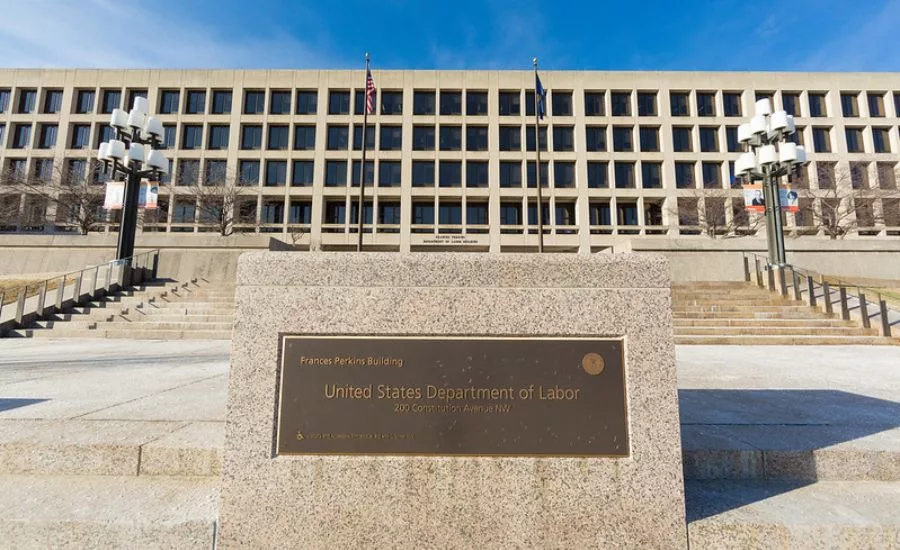
The U.S. Department of Labor's Wage and Hour Division has announced a proposed rule that would rescind the Biden administration's 2024 independent contractor classification rule and replace it with a streamlined analysis similar to one adopted in 2021, a move that is drawing praise from construction industry groups and advocacy organizations.
The proposed rule, open for public comment through April 28, 2026, would apply an "economic reality" test to determine whether a worker is operating as an independent contractor in business for themselves, or is economically dependent on an employer and therefore an employee entitled to protections under the Fair Labor Standards Act.
"The tens of millions of Americans who work as independent contractors are helping drive the Golden Age of the American economy," said Secretary of Labor Lori Chavez-DeRemer. "The department's proposed rule seeks to protect these workers' entrepreneurial spirit and simplify compliance for American job creators navigating a modern workplace, all while maintaining robust protections for employees under the Fair Labor Standards Act."
Under the proposed framework, two "core factors" would guide classification decisions: the nature and degree of control over the work, and the worker's opportunity for profit or loss based on initiative and/or investment. Additional factors — including the skill required for the work, the permanence of the working relationship, and whether the work is part of an integrated unit of production — would also be considered, with actual working practices carrying more weight than what may be contractually possible.
The rule would also extend the department's streamlined analysis to the Family and Medical Leave Act and the Migrant and Seasonal Agricultural Worker Protection Act, both of which rely on the FLSA's definition of "employ."
Wage and Hour Division Administrator Andrew Rogers said the proposal is grounded in long-standing legal principles applied in federal courts nationwide. "The department believes that streamlined regulations in line with Congress's intent when it passed the Fair Labor Standards Act would improve compliance, reduce misclassification, and reduce costly litigation in an economic environment that needs flexibility and innovation."
Construction Industry Welcomes the Change
For construction employers, the announcement signals potential relief from what many described as an unworkable standard. Associated Builders and Contractors, which has been challenging the 2024 rule in federal court alongside its Southeast Texas chapter, the Coalition for Workforce Innovation, and five other organizations, called the proposal a welcome development.
"ABC strongly supports the DOL's proposed rule to rescind the Biden-era 2024 independent contractor final rule and replace it with a commonsense proposal similar to the ABC-supported 2021 final rule," said Kristen Swearingen, ABC's vice president of government affairs. She argued the 2024 rule's multifactor test left employers guessing which factors carried the most weight, producing confusion, expensive litigation, and outcomes that neither protected workers nor promoted economic growth.
Trent Cotney, a partner at Adams and Reese who advises roofing and construction clients, agreed the proposal addresses a real pain point for the industry. "The 2024 rule created significant uncertainty, and a move toward a clearer standard would provide much-needed predictability for businesses that rely on legitimate independent contractor relationships," he said.
Cotney cautioned, however, that contractors should not change their compliance posture yet. "Nothing changes immediately. The current rule remains in effect unless and until a final rule is issued. Contractors should continue complying with existing law while monitoring the rulemaking process closely."
A Win for Women's Flexible Work
Advocacy groups focused on women's economic opportunity also weighed in, framing the rollback as a protection for workers who rely on flexible arrangements.
"On the precipice of Women's History Month, the Trump administration is delivering a big win for women by protecting flexible work in America," said Patrice Onwuka, director of Independent Women's Center for Economic Opportunity. She argued the 2024 rule would have effectively restricted flexible work — a blow to women who increasingly leave traditional employment for independent contracting to balance earning income with caregiving responsibilities.
Onwuka pointed to California's experience following that state's restrictions on independent contracting as a cautionary tale many workers feared would go national. "We look forward to amplifying the voices of those in support of this rule and working with the Department of Labor to see this rule enacted."
Looking for a reprint of this article?
From high-res PDFs to custom plaques, order your copy today!