Private Equity
Private Equity Fallout Rocks Roofing; Pros Step In
When fast-growing finance failed, Minnesota roofers restored stability the traditional way.
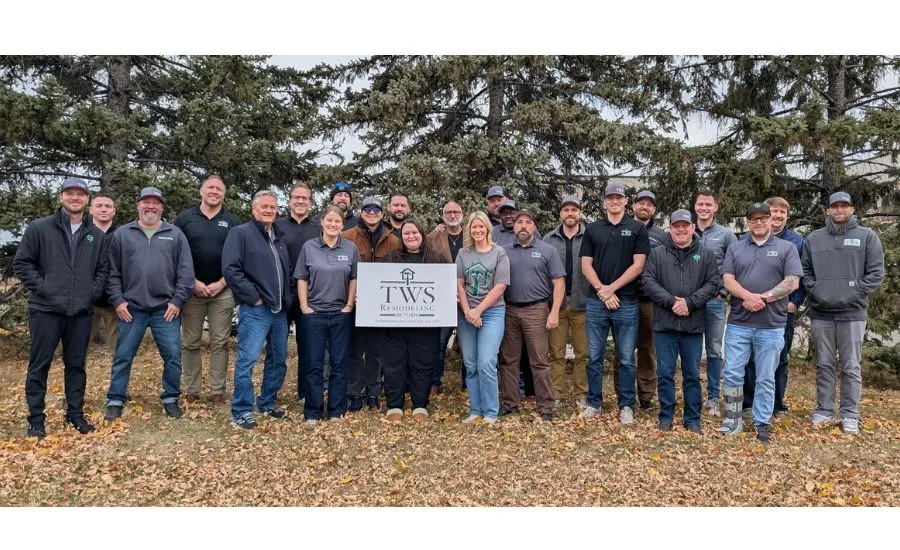
TWS Remodeling team in Minneapolis, Minn.
The sudden shutdown of Minnesota Rusco, a 70-year-old home-improvement company, is drawing attention to the growing vulnerabilities inside private-equity-backed remodeling conglomerates.
Rusco, considered a stable regional player, closed abruptly this fall after its parent company, Renovo Home Partners, filed for Chapter 7 bankruptcy on Nov. 3, 2025. The collapse led to the sudden closure of all 19 of its affiliated companies, including Minnesota Rusco, leaving employees and customers without notice.
Renovo, which was initially funded by the Boston-based private equity firm Audax Group, had assembled one of the nation's largest home-improvement roll-ups, acquiring companies from New England to the Southwest. By the end of 2024, BlackRock held the majority of Renovo's private debt, and in 2025, worked to restructure the business. As interest rates climbed and margins tightened, the heavy debt load used to finance expansion became increasingly difficult to support. The sudden closures left customers with unfinished projects and employees suddenly without work.
The pattern mirrors a broader trend documented in recent reporting in the Seattle Times, which highlighted the national effort by private equity investors to build conglomerates out of roofing and exterior remodeling companies. That plan — designed around rapid scaling and centralized operations — has struggled in an industry where local reputation, skilled labor, and cash-flow timing are central to success.
In Minnesota, the fallout hit both workers and homeowners. Dozens of Rusco installers, salespeople, and office staff were left without warning. On Reddit, customers with thousands in deposits feared their money was gone and that their projects would be abandoned.
Amid the disruption, one local firm stepped in. Minneapolis-based TWS Remodeling began receiving job inquiries from former Rusco staff within hours of the shutdown.
"We had already hired a few former Rusco employees earlier in the year," said Tyler Ganz, owner of TWS Remodeling. "They were talented people looking for a place that valued them again. So when Rusco shut down suddenly, their friends and family knew where to turn."
Within hours, TWS Remodeling's office was flooded with job inquiries—over 40 in total—from former Rusco staff in production, sales, telemarketing, and admin. Ganz was able to bring eight new employees on board despite the limitations of his growing team.
"I wish we could hire all of them," he said. "But the truth is, we didn't have the capacity. That's why we knew we had to do more."
What began as a decision to help displaced workers grew into something bigger. As word spread, the community rallied behind the effort—businesses, suppliers, media outlets, and local organizations all stepped in to support Minnesotans impacted by Rusco's collapse.
TWS launched a 50% Goodwill Discount to Rusco customers who had lost deposits or faced unfinished work. Customers were asked to provide proof of a signed Minnesota Rusco contract or a down payment, and TWS said it would take 50% off the remaining cost to complete the work. The company's website says, "We are committed to helping you break even and move forward.... You lost your contractor, but you won’t lose your dream home."
"We didn't do this alone," Ganz said. "This became a community action. People saw a need and said, 'How can we help?' That's what makes Minnesota special."
RELATED: The Roofing Consolidation Boom—and Its Impact on Workers
Ganz also defends the former owners of Minnesota Rusco. "They were blindsided like everyone else," he said. "They didn't cause this and have been trying to help in whatever ways they can. Some of their former installers are still showing up to complete projects because they care about their customers."
Industry observers say the Rusco collapse raises questions about the long-term compatibility of private-equity models with the remodeling and roofing sector. Roll-ups often rely on centralized call centers, national marketing, and aggressive quarterly growth targets, structures that can clash with the decentralized, craft-driven nature of home improvement work.
Patrick Gillin, managing director at BGL, an investment bank specializing in building products and services M&A, says success relies on execution.
"The continued M&A story is what platforms are doing with businesses they acquire," Gillin said. "What happens after acquisition? What happens to local markets after you buy a business? Does the team stick around? Does the team leave? Do you grow in that market? Do you shrink? To me, the answer to a lot of the benefits of scale in the business is going to be that question."
Gillin sees continued consolidation ahead: “It's hard to see it slowing down."
Some of the benefits of being part of a larger platform include access to operational expertise and the sharing of implementation costs. Tightening insurance and reimbursement markets, along with operational complexity, favor more sophisticated platforms.
"Being able to handle that dynamic with insurers and being more flexible with how you think about demand — that becomes a benefit for larger platforms that can be more sophisticated," Gillin said.
Succession dynamics are also driving broader consolidation.
"Many people who started their business in the '80s and '90s weren't thinking there's going to be this wave of private equity activity that people are going to be coming and paying me high multiples of cash flow," Gillin said. "You've seen a big change over the last 10 to 15 years in businesses that were sleeping mom and pops are now doing $10 to $20 million in revenue, which is pretty big, good-sized businesses with real cash flow."
Still, Gillin emphasized there remains room for independent operators.
"The mom-and-pop shops, they'll always be an opportunity for them," he said. "You can make a really good business by being a mom-and-pop roofer — the cash flow of these businesses is really strong."
As investigations into Renovo's shutdown continue, contractors across the country are watching closely. Many expect more instability among leveraged national groups as interest costs rise and backlog growth slows.
For Minnesota, the immediate work is on the ground: finishing projects, supporting workers, and restoring consumer confidence.
"This is who we are," Ganz said. "Minnesotans take care of each other. It's not just a slogan—it's in our DNA."
Looking for a reprint of this article?
From high-res PDFs to custom plaques, order your copy today!