Solving the Claims Bottleneck in Roofing
Insurance claims often leave roofing contractors stuck in months of negotiations, cash flow delays, and disputes. AI-powered estimating platforms are changing that

For roofing contractors, few aspects of the job are as frustrating as navigating insurance claims.
In storm-heavy regions, crews are often loading trucks while paperwork is already piling up. Approvals slow to a crawl, supplements get bounced back, and payouts rarely keep pace with the true cost of labor, materials, or code compliance. Margins tighten, schedules slip, and stress builds long before a single shingle is installed.
This isn’t just an administrative nuisance. Claims delays tie up cash flow, disrupt project timelines, and pull production teams off active job sites to chase emails or clarify line items. On the other side, insurers are grappling with their own challenges: regional price swings, volatile supply chains, and a mandate for consistency in claims decisions.
Homeowners, stuck in the middle, are left wondering why repairing “just a roof” has turned into a months-long ordeal.
The Pain Point for Contractors
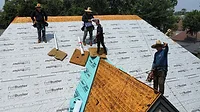
When severe weather strikes, roofers are usually the first on the scene. They tarp damaged homes, document losses, and walk homeowners through the process — often before a claim has even been filed. Yet once that claim enters the carrier’s system, progress grinds to a halt.
Many wind and hail claims linger for months, caught in a cycle of inspections, estimate reviews, and endless supplements. Contractors are forced to float payroll, material deposits, and equipment costs while waiting for checks to clear. For smaller companies, just one or two claims stuck in limbo can lock up enough working capital to disrupt an entire season.
As backlogs grow, crews see uneven workloads, and office teams spend more time arguing over scope than planning production. It’s a cycle that has redefined roofing as much as weather events have. For many firms, insurance work has become less about craftsmanship and more about bureaucracy.
How Technology is Changing the Equation
The roofing industry has been quick to embrace field technology — drones for inspections, digital measurement tools for accuracy, and CRMs to streamline sales. But claims settlement, arguably the most critical part of the process, has been slow to evolve. That’s starting to shift.
AI-powered estimating platforms are emerging as game changers, turning fragmented pricing data, code requirements, and scope details into actionable, negotiation-ready numbers. Instead of leaning on static pricing tables or insurer-driven defaults, we can pull from live market data to calculate Fair Market Value (FMV) pricing. Its algorithms assess roof complexity, replacement requirements, building codes, and other variables, then establish FMV based on weekly material and labor updates.
And these aren’t rough guesses. A roof estimate written for Omaha is specific to Omaha — not an average for “the Midwest.” That precision drastically reduces the back-and-forth that often plagues claims, giving all parties confidence that pricing reflects the real cost of building, not a theoretical average.
Truly Neutral Marketplaces
Plenty of tools in the market call themselves “neutral,” but few live up to the claim. Many were designed primarily for insurance carriers, limiting contractor involvement and leaving homeowners out of pricing conversations altogether. Others work through partnerships with national roofing companies that agree to cut-rate pricing in exchange for volume work — an approach that undercuts local contractors and destabilizes trust between contractors and clients.
What about a different model? A true marketplace where every stakeholder — contractors, carriers, adjusters, attorneys, and homeowners — has equal access to the same transparent data. Because the pricing is built from real market conditions, discussions shift from finger-pointing to collaboration. Negotiations focus on details, not suspicion.
Think of it as a dispatch platform for price accuracy. AI reconciles roof geometry, materials, building codes, and labor indices against its live pricing data. Everyone sees the same FMV output, making it easier to schedule jobs, approve payments, and plan budgets. Roofing contractors gain confidence in bids, carriers get consistency, and homeowners gain visibility into the process, which often leads to quicker resolutions.
Why This Matters
Roofers don’t make money arguing — they make it building roofs. Every week a claim sits unresolved is another week of overhead with no reimbursement. A single slow-paying claim in a busy storm market can throw off production schedules, strain vendor relationships, and test a contractor’s patience.
Neutral, data-backed pricing changes that. Starting a claim with an estimate grounded in local costs means supplements become clarifications rather than battles. Adjusters can move files faster, and contractors can spend more time in the field. Over time, this efficiency adds up to improved margins, healthier business operations, and a better experience for homeowners who just want their roof fixed.
The insurance industry itself is also evolving. Many carriers are rewriting policy language to require mediation or arbitration before a dispute can escalate to litigation. This change aims to cut costs and accelerate resolutions, but it also places more weight on documentation quality.
In a mediation room — or before an arbitrator — objective, locally accurate pricing carries significant influence. Arguments over policy interpretation may continue, but the baseline cost of a roof becomes much harder to dispute. For contractors, that means fewer months tied up in legal wrangling and more time completing projects.
The Real-World Impact
Contractors using FMV-based estimating report tangible improvements: shorter cycle times, fewer rounds of supplements, and smoother scheduling. Reliable pricing allows project managers to lock in crews and materials sooner, while accounting departments can better forecast cash flow. Estimators spend less time reworking labor or waste calculations and more time scoping jobs accurately.
Carriers benefit as well. Standardized pricing reduces regional discrepancies, reins in supplemental costs, and minimizes claims that need legal review. For claim managers, this consistency means fewer headaches and a more predictable workload. The relationship between contractors and carriers becomes less adversarial and more accountable.
Artificial intelligence is only as effective as the data it’s trained on. Our company’s strength lies not just in AI but in the integrity of its inputs. The platform continuously updates pricing across its zones, accounting for local differences in freight costs, supply availability, and regional labor rates.
Transparency is just as important. We show the data drivers behind its numbers — permit structures, code requirements, and inflation factors — so contractors, adjusters, and attorneys can see exactly how a number was built. That visibility makes it easier for everyone to agree on costs, turning disputes into focused questions rather than prolonged battles.
At the end of the day, homeowners care less about the mechanics of estimating and more about getting their roofs replaced quickly and correctly. FMV-based claims help deliver both. When all parties agree on pricing upfront, start dates are firm, scope is clear, and mid-project surprises are rare. This level of trust often turns satisfied customers into referral sources, which is worth more than any marketing campaign.
Looking Ahead
The industry is still in the early stages of adopting AI-driven pricing, but the momentum is unmistakable. A future where market-validated FMV is the standard could mean disputes are rare, not routine. Claims will close faster. Production calendars will become more predictable. Carriers will achieve cost control without pressuring contractors to work at a loss.
We didn’t invent the need for fairness and efficiency in roofing claims — the industry has demanded it for years. What our platform does is operationalize both, turning pricing into a living, transparent system accessible to all. In an industry where storms are inevitable, pricing uncertainty doesn’t have to be.
The path forward is straightforward: use accurate data, keep it updated, make it visible, and put it in everyone’s hands. That’s how a decades-old bottleneck in roofing claims begins to loosen, opening the door to faster settlements, fairer negotiations, and better outcomes for everyone involved.
Looking for a reprint of this article?
From high-res PDFs to custom plaques, order your copy today!

.webp?height=740&t=1781278983&width=auto "KEE(2).png")