News Analysis
Construction Surge Doesn't Boost Roofing Demand
Despite Dodge data showing $1.33 trillion in construction starts, roofing industry faces declining shipments and cautious distributor sentiment
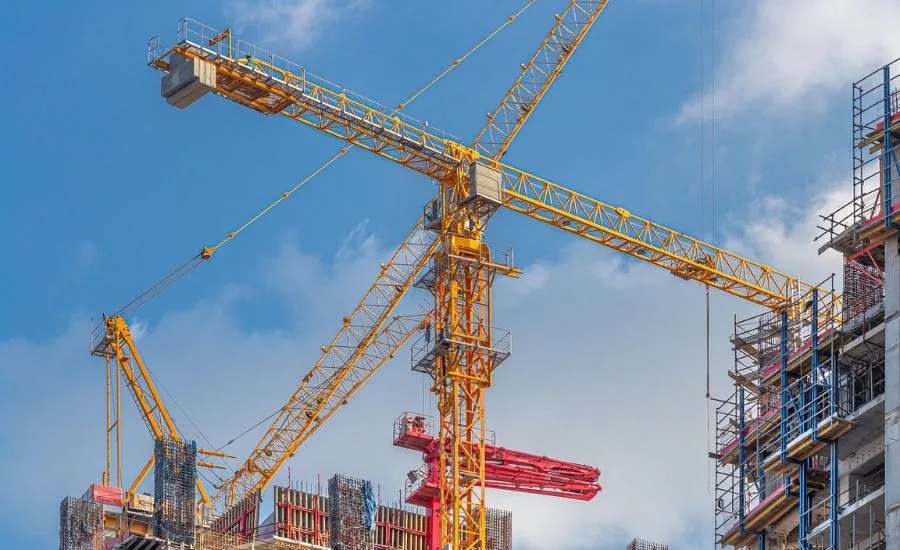
While total construction starts jumped 16% in June to a seasonally adjusted annual rate of $1.33 trillion, the roofing industry continues to grapple with muted demand that underscores the complex relationship between construction activity and material consumption, according to new data from Dodge Construction Network and industry surveys.
The construction surge was driven primarily by nonresidential projects, which soared 39% for the month. Yet, roofing distributors report cautious sentiment and inventory destocking despite the apparent strength in commercial building activity.
Manufacturing construction exploded 304% over the month following the groundbreaking of several mega-projects, including Taiwan Semiconductor's $10 billion factory expansion in Phoenix, Ariz., Commercial construction also posted impressive gains, rising 78% as data center and office projects accelerated.
However, this construction momentum has yet to materially benefit roofing suppliers and contractors. A recent survey by investment firm William Blair found roofing demand up just 2% year-over-year in the second quarter, while actual roofing material shipments tell an even starker story. As previously reported, U.S. asphalt shingle shipments declined 4.3% in the second quarter compared to the same period last year, totaling 44.7 million squares, according to data from the Asphalt Roofing Manufacturers Association (ARMA). Year-to-date shipments have fallen 3.1% to 87 million squares.
Distributors are describing market conditions as "just okay" and expressing caution about second-half volumes.
"Construction starts saw solid growth in June, alongside particular strength in manufacturing and data center construction," said Sarah Martin, associate director of forecasting at Dodge Construction Network. However, Martin cautioned that "risks remain elevated that construction starts will be more subdued in the back half of the year – alongside ongoing uncertainty over trade policy and the broader economy."
Nonresidential Building Starts
Nonresidential building starts surged to a seasonally adjusted annual rate of $635 billion in June. The largest projects to break ground included a $10 billion Taiwan Semiconductor Factory (Phase 3) in Phoenix, Ariz.; a $2.25 billion Eli Lilly Medicine Foundry in Lebanon, Ind.; and a $2 billion SNA Data Center in Cedar Rapids, Iowa.
On a year-to-date basis through June, nonresidential starts are up 6% compared to 2024, with commercial and industrial starts leading the gains at 9% growth. The commercial roofing sector is benefiting from the data center and hospitality construction boom highlighted in the Dodge data.
"Rising investment in data centers and hospitality is translating to stronger demand for low-slope commercial roofing, with these segments leading new-build activity," said Lilli Tillman Smith, industry analyst at Principia Consulting.
However, she cautioned that "demand in other sectors remains uneven as high interest rates continue to delay projects. If contractor pipelines are beginning to fill, labor shortages and cost pressures may restrict how much roofing volume actually gets installed in 2025."
The commercial roofing weakness is reflected in shipment data, with built-up roofing materials declining 21.2% in the second quarter and modified bitumen shipments falling 12.7% for the quarter.
Residential Building Starts
The residential construction sector tells a different story, with starts declining 1% in June to $366 billion annually. Single-family construction, a key driver of new construction demand, fell 2% while multifamily remained flat. Year-to-date, residential starts are down 5%, with single-family starts declining 11%. Census Bureau data shows single-family starts declined 4.6% month-over-month to 883,000 units in June. This represents the lowest level of single-family starts in 11 months. The decline was attributed to factors such as high mortgage interest rates, high new home prices, and general economic uncertainty.
Smith points to ongoing challenges in residential roofing demand. "With single-family starts still weak, demand for new residential roofing is expected to remain soft through year-end," she said. "Any upside may hinge on stimulus from the Big Beautiful Bill, which could reignite starts and boost volume in 2025."
The multifamily segment offers some hope, according to Smith. "Multifamily roofing demand has been muted for two years but is expected to recover this year as rental demand rises due to persistently higher mortgage rates and demand catches up with supply."
According to Dodge, the largest multifamily projects breaking ground in June included the $518 million Court Square Mixed Use Tower in Long Island City, N.Y., and the $391 million Eastchester Gardens Apartments renovation in Laconia, N.Y.
However, near-term residential roofing demand will be driven primarily by replacement work rather than new construction. "NOAA's forecast for above-average storm activity points to a potential uptick in weather-related replacements, though rising insurance premiums and homeowner budget pressures could limit how much R&R demand converts to actual jobs," Smith said.
The muted seasonal patterns in roofing materials further underscore the market weakness. U.S. shingle shipments rose just 5.8% from the first to the second quarter of 2025, representing the smallest quarterly increase since ARMA began tracking data in 2017.
Market Outlook
The William Blair survey revealed more tempered conditions on the ground, with roofing demand described as "modestly below expectations." "Feedback from industry players is that the market is 'just okay,'" the survey found. "Lack of major storms during the first half of 2025 has distributors cautious on second-half volumes and is causing destocking."
The survey revealed geographic variations in demand, with some major markets showing softness "due to tough storm compares, like Florida, Texas, Colorado, and Minnesota." For the full year 2025, contacts now expect residential volume sell-through to be down in the low single digits.
On the commercial side, the survey found that strength has been driven by resilient repair and remodeling activity, with new construction softer – a finding that contrasts with the robust nonresidential construction starts data from Dodge.
This gap between project announcements and actual industry momentum is further evidenced by recent employment data showing the construction industry added only 2,000 jobs in July despite June's 16% surge in construction starts, according to the Bureau of Labor Statistics. The employment weakness appears concentrated in residential construction, aligning with the roofing shipment declines.
The industry will be watching closely to see whether the strong construction starts momentum continues through the second half of 2025, and whether segments like roofing can capitalize on the apparent strength in commercial construction activity, particularly in data centers and hospitality projects.
Looking for a reprint of this article?
From high-res PDFs to custom plaques, order your copy today!