search
cart
facebook twitter linkedin youtube instagram Spotify Podcasts Apple Podcasts Spotify Podcasts Apple Podcasts
  • Sign In
  • Create Account
  • Sign Out
  • My Account
  • NEWS
  • TOPICS
    • Cool Roofing
    • Event News
    • Latinos in Roofing
    • Low Slope
    • Legal
    • Metal
    • Project Profiles
    • Roofing Supply Pro
    • Roofing Safety
    • Steep Slope
    • Sustainable Roofing
    • Technology
  • EXCLUSIVES
    • Best of Success
    • Contractor Profile
    • IRE Show
    • Roofing Contractor of the Year
      • Enter Roofing Contractor of the Year
    • Top 100
      • Enter the Top 100
    • Young Guns
    • State of the Industry
  • MULTIMEDIA
    • Videos
    • Podcasts
    • Interactive Spotlights
    • Roofing Quizzes
    • IRE Videos
    • Webinars
    • Photo Galleries
  • PRODUCTS
    • New Products
    • Featured Products
  • COLUMNS
    • Editor's Note
    • Exit Planning
    • Guest Column
  • EVENTS
    • International Roofing Expo
    • Webinars
    • Best of Success Conference
    • Industry Events
  • DIRECTORY
    • Associations
    • Distributors
    • Manufacturer/Supplier
    • Business Services
    • Get Listed
  • MORE
    • Roofing Contractor Newsletters
    • Techos y Más Advisory Board
    • RC Store
    • Roofing Supply Pro
    • Custom Content & Marketing Services
    • Market Research
    • Sponsor Insights
    • Company Spotlights
    • Classifieds
      • Auctions
      • Business For Sale
      • Business Opportunities
      • Equipment For Sale
      • Positions Available
      • Products
      • Safety
      • Software
      • Services
      • Training
    • Contact Us
  • EMAGAZINE
    • eMagazine
    • Advertise
      • Editorial Calendar
      • Contact
    • Archive Issues
  • SIGN UP!
ColumnsGuest ColumnLow Slope RoofingSteep Slope Roofing

Roof Ventilation

Roofing Contractors: Attic Airflow Ratio 1/150 vs. 1/300

Is more attic airflow better? RC's ventilation expert from Air Vent weighs in
By Paul Scelsi
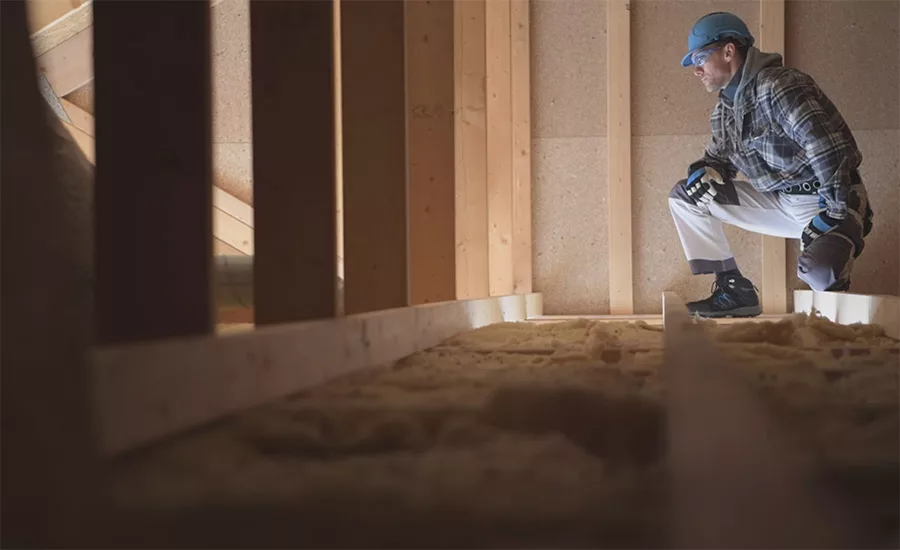
air vent worker
Illustrations courtesy of Air Vent Inc.
November 6, 2024

There’s an expression “Less is more.” When you have “less” of something sometimes the outcome or results might be more desirable, more positive. You don’t need “more” to have that successful outcome. But that’s not the case with attic ventilation as we discussed in a recent episode of our podcast. More airflow through the attic is definitely better – and there’s third-party research to support that.

The International Residential building Code (IRC Chapter R806) explains the amount of airflow that is supposed to pass through an attic as a “ratio.” That ratio is either 1/150 or 1/300.

  • @ 1/150 the airflow provided is one square foot of Net Free Area for every 150 square feet of attic floor space.
  • @ 1/300 the airflow provided is one square foot of Net Free Area for every 300 square feet of attic floor space.

The Code explains how that airflow should be distributed through the attic between intake and exhaust vents. In the educational seminars I host we discuss the importance of balancing the airflow 50% intake and 50% exhaust whether using the 1/150 or the 1/300 airflow ratio. Balanced airflow at either ratio gives the attic ventilation the opportunity to help fight heat buildup, moisture buildup, and ice dams. But the 1/150 airflow ratio packs a more powerful punch.

In its research paper “Energy and Moisture Performance of Attic Assemblies,” the Oak Ridge National Laboratory cited three significant advantages of having more (1/150) airflow instead of less (1/300) through the attic.

  1. Using the 1/150 airflow ratio cuts condensation potential by 33%. The opportunity for condensation to occur inside the attic is slashed by a third with more air passing through the attic vs. less. In past episodes of our podcast we detailed the consequences of condensation troubles inside an attic including mold.
  2. Using the 1/150 airflow ratio cuts the summer heat load by 10%. Running the air conditioning system to cool the living space is reduced. That’s energy savings.
  3. Using the 1/150 airflow ratio lowers the winter heating load 7%. The need to heat the living space in the cold months is reduced. More energy savings. 

Because of these powerful advantages, our calculating tools (our app, our online calculator) automatically default to the 1/150 airflow ratio. And when we go over the calculations step-by-step with seminar audiences on the big screen we use a 1/150 airflow ratio example. 

It should be pointed out that it’s impossible to apply the 1/150 airflow ratio to every roof out there due to the variety of roof designs. The geometry of some roofs does not allow the application of the 1/150 airflow ratio. In such cases, using the 1/300 airflow ratio is acceptable. But if the 1/300 airflow ratio is applied on a roofing project that could be 1/150, the research shows a missed opportunity for energy savings and building materials longevity. More is more. More is better.
KEYWORDS: Air Vent Inc commercial roofing contractor Residential Roofing Contractor ventilation

Share This Story

Looking for a reprint of this article?
From high-res PDFs to custom plaques, order your copy today!


Paul Scelsi is marketing communications manager at Air Vent Inc., and leader of its Attic Ventilation: Ask the Expert™ seminars. He hosts the podcast, “Airing it out with Air Vent,” and he’s the chairman of the Asphalt Roofing Manufacturers Association Ventilation Task Force. He is the author of the book, Grab and Hold Their Attention: Creating and Delivering Presentations that Move Your Audience to Action

Recommended Content

JOIN TODAY
to unlock your recommendations.

Already have an account? Sign In

  • two-roofers-in-harnesses-on-tile-roof

    How AI Is (and Isn’t) Impacting Roofing Jobs

    A new study from Microsoft shows artificial intelligence...
    Roofing Technology
    By: Chris Gray
  • Baker-Roofing-Company-employees-on-flat-roof-examinining-paperwork

    Exclusive: 2025’s Top 100 Roofing Contractors

    Roofing Contractor's 2025 Top 100 list reveals revenue...
    Top 100 Roofing Contractors
    By: Chris Gray
  • A before and after heat measurement comparison

    How Hot is Too Hot in the Attic?

    If the ventilation is working, how hot should the attic...
    Columns
    By: Paul Scelsi
You must login or register in order to post a comment.

Report Abusive Comment

Manage My Account
  • eMagazine Subscription
  • Sign Up for the Newsletter
  • Online Registration
  • Manage My Preferences
  • Subscription Customer Service

More Videos

Sponsored Content

Sponsored Content is a special paid section where industry companies provide high quality, objective, non-commercial content around topics of interest to the Roofing Contractor audience. All Sponsored Content is supplied by the advertising company and any opinions expressed in this article are those of the author and not necessarily reflect the views of Roofing Contractor or its parent company, BNP Media. Interested in participating in our Sponsored Content section? Contact your local rep!

close
  • A finished commercial roof, including flashings
    Sponsored byFlashCo

    It’s All in the Details – How to Avoid 4 Common Mistakes with Roofing Accessories

  • Happy mature couple using phone holding credit card making payments. Middle aged older man and woman doing ecommerce shopping on smartphone booking or buying online on mobile sitting at home table.
    Sponsored byWatercress Financial

    Meeting Modern Expectations: Why Offering Financing Is Essential for Roofers Today

  • A roofing contractor stands on a roof behind an American flag
    Sponsored byTAMKO®

    Building Roofs, Building Community: TAMKO’s Lasting Commitment to Veterans and the Military

Popular Stories

TWS Remodeling team

Private Equity Fallout Rocks Roofing; Pros Step In

gavel-tapped-onto-desk

Bankrupt Lexington Blue CEO Admits He Doesn't Know How to Install Roofs

Malarkey-logo-with-Charles-Collins-headshot

Malarkey Roofing Products Announces New President

Roofing Contractor Bookstore

Related Articles

  • AirVent_img1_1170-(1).jpg

    Airflow in the Attic Delivers More Than Roof Protection

    See More
  • ventilation-ridge-vent-graphic

    Be Careful Cutting that Ridge Vent Airflow Slot

    See More
  • a roof with several types of ventilation

    What Attic Venting Questions are Roofing Pros Asking?

    See More

Related Products

See More Products
  • contractorlaw.jpg

    Construction Law: An Introduction for Engineers, Architects, and Contractors

  • cfc.png

    Construction Forms for Contractors Book+CD, PDF & Software Download

See More Products
×

Be in the forefront of the roofing industry!

Join thousands of professionals today. Shouldn’t you know what they know?

JOIN NOW!
  • RESOURCES
    • Advertise
    • Contact Us
    • Directories
    • Store
    • Want More
  • SIGN UP TODAY
    • Create Account
    • eMagazine
    • Newsletters
    • Customer Service
    • Manage Preferences
  • SERVICES
    • Marketing Services
    • Reprints
    • Market Research
    • List Rental
    • Survey/Respondent Access
  • STAY CONNECTED
    • LinkedIn
    • Facebook
    • Instagram
    • YouTube
    • X
  • PRIVACY
    • PRIVACY POLICY
    • TERMS & CONDITIONS
    • DO NOT SELL MY PERSONAL INFORMATION
    • PRIVACY REQUEST
    • ACCESSIBILITY

Copyright ©2025. All Rights Reserved BNP Media.

Design, CMS, Hosting & Web Development :: ePublishing