SPRI’s 44th Annual Conference in Tucson, Ariz., combined technical committee work, industry and economic outlook sessions, awards, and a community service project
SPRI’s 44th Annual Conference in Tucson, Ariz., combined technical committee work, industry and economic outlook sessions, awards, and a community service project.
In a lighthearted seasonal tradition, SPRI gives Santa’s sleigh the all-clear—while spotlighting the very real standards and guidance that support commercial roof performance year-round.
Santa’s sleigh just passed its roof check. SPRI’s annual “technical review” cleared Santa for rooftop landings worldwide—because even holiday magic needs good load distribution, safe takeoffs, and roofs that can handle a surprise visitor in boots.
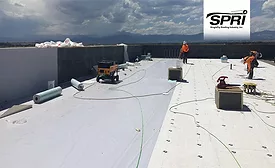
The ANSI/SPRI IA-1 standard establishes field test procedures that verify whether existing roof substrates and roof assemblies are suitable for use with specific adhesives.
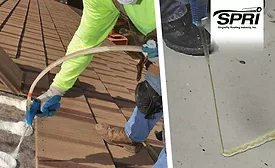
SPRI is reviewing a standard that was developed for measuring the pullout resistance of roofing fasteners in field conditions and is seeking input from the industry.
SPRI is revising its ED-1 Standard for roof edge systems on low-slope roofs, addressing wind loads, materials, and corrosion; it will be re-canvassed for ANSI approval.
The updated standard will contribute to the reliability and safety of roofing systems by accurately evaluating the tensile resistance and failure loads of adhesives and board stock.
With the changes, DORA underscores its role as a critical resource for accessing complete roofing systems tested in accordance with Chapter 15 of the International Building Code.