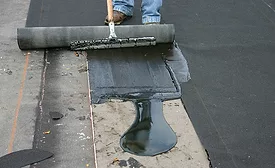
There are three prominent membrane attachment methods used in the U.S. low-slope commercial roofing market. They are fully adhered, mechanically attached and self-adhered. There are advantages and disadvantages to each of these attachment methods which should be considered prior to selection for a specific project.
Contractors and architects in search of sustainable and energy-efficient roofing products increasingly face a broad range of new choices. But a recent study suggests that a frontrunner in the race to be green may be one of the most tried and true products in the marketplace.
In February, President Obama announced the Better Buildings Initiative, a multi-pronged effort to make commercial buildings 20 percent more energy efficient over the next decade by encouraging private sector investment through incentives to upgrade schools, universities and municipal facilities, as well as offices, stores and other commercial buildings.
Christian Madsen is the President of Madsen Roofing & Waterproofing Inc. in Sacramento, Calif. He’s also the current president of the Western States Roofing Contractors Association (WSRCA). Roofing Contractor caught up with Madsen to get his insights on the roofing industry, and he shared his plans for leading his company and the association into the future.
At trade shows, it seems everyone leads off with the same question: “What’s new?” New products are introduced to the world of roofing in a variety of ways, and new product announcements are often timed to coincide with the big trade shows, including METALCON, the International Builders Show (IBS) and the International Roofing Expo (IRE).
The 2011 International Roofing Expo held in Las Vegas hit all the right numbers, including a significant rise in attendance. The show also received rave reviews for its new features, including the Technology Pavilion and Product Showcase.
Energy efficiency, re-use, and recyclability are buzzwords in the roofing industry, and while such terms have a tendency to lose their meaning over time, some in the business take them very seriously. With landfill space at a premium, recycling has become much more than a fad.
As we enter the second decade of the 21st century the low-slope roofing market is still undergoing changes. The recent changes are minor modifications compared to the vast changes that occurred near the end of the last decade.
The newest freestanding academic facility in 33 years at George School in Bucks County, Pa., incorporated many sustainable building elements into its design and construction, starting at the very top with vegetative and metal roofing systems.
Inconsistency and uncertainty characterized the past year, yet neither was necessarily a show-stopper for those of us in the roofing industry that have successfully focused our efforts on continued innovation, value and quality.