5 Benefits of Certified Installers on Metal Projects
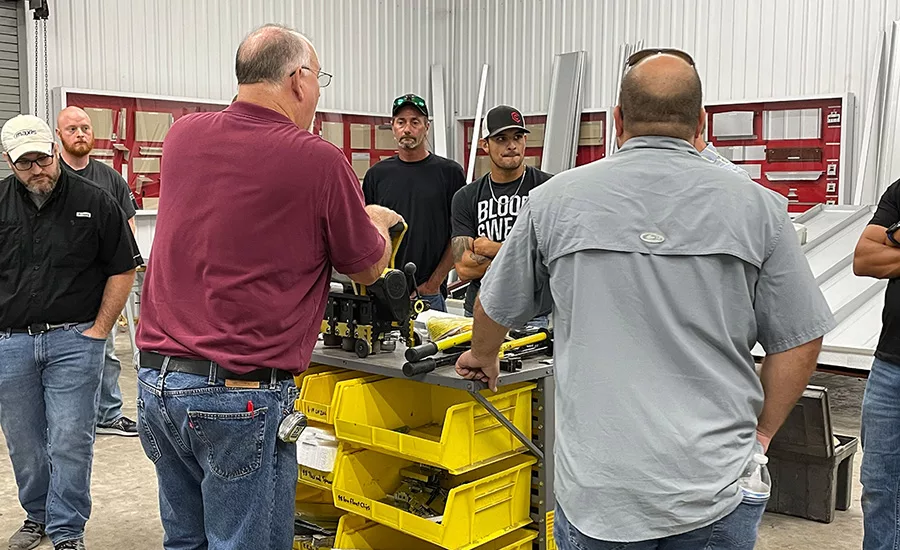
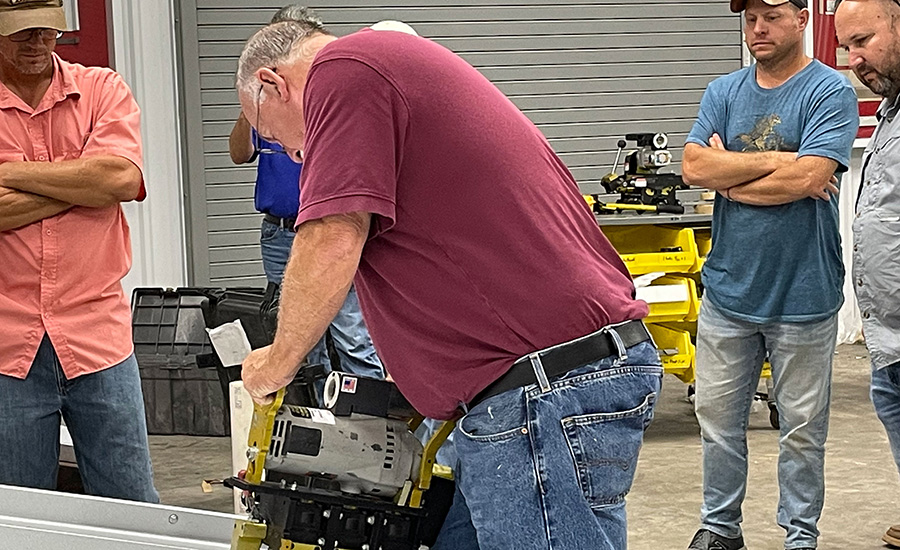
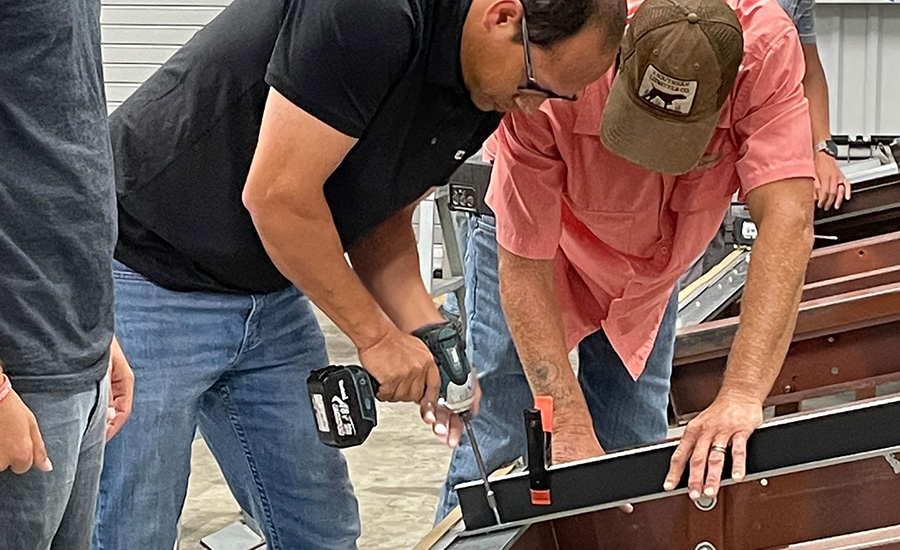
Certification attendees learn how the roofing system pieces go together and proper installation.
Photos courtesy of McElroy Metal.
Manufacturer certification programs can be a source of confusion. Most often, the confusion stems from using words like “certified,” “approved,” “authorized,” and “qualified” interchangeably. While they may mean the same thing to architects and building owners, those terms often mean completely different things to manufacturers.
Let’s assume that “certification” means an installer has completed system-specific installation training by the panel manufacturer. With that established, let's focus on the benefits of requiring a “certified” installer for your next project.
1. Better Quality Installs
While we all know there are no guarantees in life, using certified installers on your next metal roofing project certainly increases the odds of a better-quality installation. For starters, trainees are exposed to the various system components during the certification process. Successful attendees also learn how the roofing system pieces go together and proper installation.
All of that means they aren’t learning the system on your project. And equally important, good training programs also address common errors to avoid.
2. Weathertightness Warranty Requirement
While the expectations vary by manufacturer, it’s quite common for manufacturers to require contractor certification for weathertightness warranties. Problems can occur when the specifications don’t require contractor certification, yet it’s a requirement for warranty issuance by the manufacturer. When the installing contractor isn’t “certified,” the manufacturer can refuse to issue the warranty. As you can imagine, this is especially problematic when it’s not identified until after the installation is complete.
Consequently, if you plan to include a weathertightness warranty in your project specifications, the first step should be to determine the warranty type desired. Once that’s determined, it’s always best to have a manufacturer’s representative review your plans and specifications before publishing to ensure you’re covered. While that may feel like an extra step, it can save untold confusion, missed expectations, and change orders.
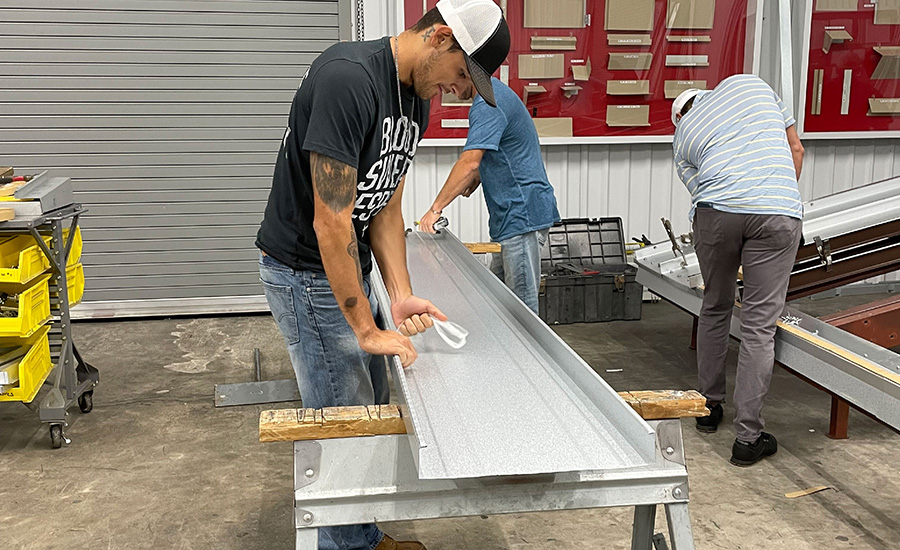
Certified installers arrive at the site with the experience that allows them to reduce the install time and get your projects done more quickly.
3. Contractor Commitment
While becoming a manufacturer-certified installer isn’t impossible, there are most certainly hard and soft costs involved. The hard costs include course registration fees and travel expenses. But in the tight labor market, the soft cost of taking one or two key crew members out of the field for a couple of days is often more significant.
Consequently, becoming a certified installer typically means the contractor is committing to the trade and learning the proper techniques. It’s important to note that they’re also committing to a partnership with the manufacturer. Those types of commitments typically indicate professionalism and a desire for craftsmanship, leading to higher quality.
4. Manufacturer Contact
Wouldn’t it be nice if you could “phone a friend” for questions that come up during installations? While not guaranteed, there’s a good chance that working with a certified installer means just that. The folks who teach the certification classes present a wealth of knowledge, and by spending time together through the certification process, relationships between the manufacturer and class attendees routinely develop. And perhaps most importantly, contact information is usually also exchanged.
The trainers can often be a great source for product-related questions once crews are on the jobsite. Additionally, due to the time the trainers have spent on jobsites themselves, they are well-suited to offer insight. Over time, they have seen unique conditions you can only imagine, identified problems and solutions, and developed best practices. All of that means that when someone on the project team (architect, contractor, or superintendent) has a question, you’ll likely have an existing relationship with an expert when you work with a certified installer.
5. Quicker Install
The chances are good that every owner you work with wants their project finished on schedule, if not before. In a perfect world, that’s a reasonable expectation. But we all know that construction is a messy business. Delays occur on materials from other trades, mistakes and re-work happen and schedules often fall by the wayside early on. While requiring contractor certification can’t work miracles with your project schedule, certified installer crews routinely install products quicker than their non-certified counterparts.
It’s not that contractors who aren’t certified are bad, but they often lack familiarity with manufacturers’ specific products, parts and pieces. So instead of taking time to learn the system on your project and your schedule, certified installers arrive at the site with the experience that allows them to reduce the install time and get your projects done more quickly.
Key Considerations
While the benefits of manufacturer certification are numerous, there are some key considerations when including this requirement in your project specifications.
Programs Differ. While the term “manufacturer certification” is used interchangeably through the metal roof and wall panel industry, certification programs vary widely between manufacturers. Some manufacturers conduct their programs in a conference room at a local hotel where participants are taught only through PowerPoint or by reviewing install manuals for one or two hours.
Other programs are much more robust, lasting one to two days and include contractors physically working with tools, panels and accessories to learn hands-on how to install the product properly. Additionally, the more robust programs typically require attendees to take and pass an exam after the training, where a passing score is usually necessary to obtain certification.
Some manufacturers also include basic credit checks as a part of their certification processes. While the approach varies, manufacturers often look at how long a company has been in business, payment history and an asset-to-debt ratio to ensure financial strength as part of their certification process. Some manufacturers also research the contractor to ensure there isn’t any open litigation pending.
Bidders Can Be Limited. While requiring contractor certification can help ensure the benefits previously discussed, it’s important to understand that it does so by limiting the installers that can bid on a project. When a contractor isn’t already certified by a manufacturer, they can experience two hurdles:
- They may be able to get certified but can’t do so within the time frame the project requires.
- They simply may not be able to meet the manufacturer’s specified criteria.
Consequently, contractors may not be allowed to bid on certain projects if they don’t meet the certified installer criteria. Admittedly, this can sometimes be frustrating during the bidding process, but it’s important to remember the benefits.
Know Who is Certified. While there are some variations, most manufacturers certify the individual who attended the training program instead of the company that employs them. While that approach is a slight nuance, it is important and often overlooked.
Consider these examples:
- Bob, a long-time superintendent for ABC Roofing, attends our certification program and passes all requirements. But a few months later, in a tight labor market, DEF Roofing steals him away to work for them. The remaining crew at ABC Roofing may (or may not, in many cases) be familiar with our system. Consequently, we can no longer indicate that ABC Roofing is a certified contractor.
- Bob, a long-time superintendent for ABC Roofing, attends our certification program and passes all requirements. You publish a specification that requires a certified installer, but Bob is working on a project across town, so another foreman at ABC Roofing, Jack, handles the install. Since Jack didn’t complete our certification process, we have no way of knowing his skillset or familiarity with our systems and consequently can’t certify him as a certified installer.
Bottom Line
Requiring contractor certifications also means that the general contractor must ensure during construction that the actual crew on the roof is certified by the manufacturer. Without this step, there may be a noticeable gap between what you “think” you’re getting and what you are regarding installer certification.
Remember, once achieved, manufacturer certification typically lasts for a limited time frame. Once the established time passes, contractors are required to complete a recertification process. Requiring a certified installer on your next standing seam project offers a host of benefits, including the potential for higher quality and quicker installs. But be aware of the nuances that bear consideration.
Looking for a reprint of this article?
From high-res PDFs to custom plaques, order your copy today!