search
cart
facebook twitter linkedin youtube instagram Spotify Podcasts Apple Podcasts Spotify Podcasts Apple Podcasts
  • Sign In
  • Create Account
  • Sign Out
  • My Account
  • NEWS
  • TOPICS
    • Cool Roofing
    • Event News
    • Latinos in Roofing
    • Low Slope
    • Legal
    • Metal
    • Project Profiles
    • Roofing Supply Pro
    • Roofing Safety
    • Steep Slope
    • Sustainable Roofing
    • Technology
  • EXCLUSIVES
    • Best of Success
    • Contractor Profile
    • IRE Show
    • Roofing Contractor of the Year
    • Top 100
      • Enter the Top 100
    • Young Guns
    • State of the Industry
  • MULTIMEDIA
    • Videos
    • Podcasts
    • Roofing Quizzes
    • IRE Videos
    • Webinars
    • Infographics
  • PRODUCTS
    • New Products
    • Featured Products
  • COLUMNS
    • Editor's Note
    • Exit Planning
    • Guest Column
  • EVENTS
    • International Roofing Expo
    • Webinars
    • Best of Success Conference
    • Industry Events
  • DIRECTORY
    • Associations
    • Distributors
    • Manufacturer/Supplier
    • Business Services
    • Get Listed
  • MORE
    • Roofing Contractor Newsletters
    • Techos y Más Advisory Board
    • RC Store
    • Roofing Supply Pro
    • Custom Content & Marketing Services
    • Market Research
    • Sponsor Insights
    • Company Spotlights
    • Classifieds
      • Auctions
      • Business For Sale
      • Business Opportunities
      • Equipment For Sale
      • Positions Available
      • Products
      • Safety
      • Software
      • Services
      • Training
    • Contact Us
  • EMAGAZINE
    • eMagazine
    • Advertise
      • Editorial Calendar
      • Contact
    • Archive Issues
  • SIGN UP!
Columns

The Rapidly Evolving Marijuana Rules for Roofing Contractors
By Richard Alaniz
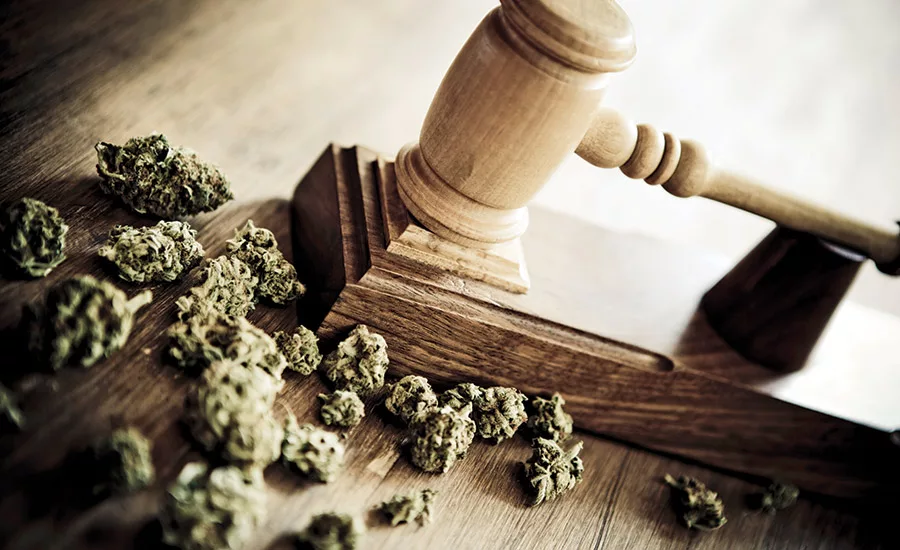
Marijuana legalization

With more than half of the U.S. legalizing the use of marijuana in some form or another, maintaining a safe and drug-free environment is becoming more difficult to achieve.

March 13, 2020

The landscape regarding marijuana use seems to be changing so rapidly that it’s difficult to keep up. More than half of the United States has now legalized some form of marijuana use.

Currently, 33 states and the District of Columbia permit the use of marijuana for either medical or recreational purposes, or both. 

In 10 states as well as D.C., the use of recreational marijuana is lawful. Today, more than 20% of all Americans live in a state where recreational use is legal. As of Jan. 1, Illinois joined the list of states that have legalized cannabis use.

Moreover, all the major Democratic presidential candidates except Joe Biden support legalizing marijuana. It’s possible that the presidential election will completely rewrite the law on marijuana in the U.S.

The Stats

The majority of Americans have accepted the idea that marijuana use should not be penalized. Not surprisingly, almost two-thirds of millennials hold that view. A recent study found that more than 22 million people in the U.S. used marijuana within the past month. Despite the increase in legalized marijuana, it’s still illegal in many states and, more importantly, under federal law. The federal Controlled Substance Act classifies marijuana as a Schedule 1 drug, along with LSD and heroin.

Despite the surveys that confirm declining objection to marijuana use, there’s not currently great support for its national legalization. It will likely remain an unlawful controlled substance under federal law for at least the time being. But the climate is changing.    

Marijuana at Work

It’s the potential effects of marijuana use, both medical and recreational, on the workplace where the issue causes the greatest concerns. A National Institute of Drug Abuse study found that employees who tested positive for cannabis had 85% more injuries, 55% more industrial incidents, and 75% higher absenteeism rates.

Until recently, challenges to employee terminations for testing positive for marijuana were almost always dismissed as proper under employers’ drug-free workplace policies. In some cases, the termination was challenged under state laws that provide protection for personal conduct away from the workplace. The courts consistently ruled that since marijuana was unlawful under federal law, enforcement of a drug-free workplace policy banning its presence was permissible despite the state law.   

State Law and Marijuana

While maintaining drug-free workplaces has long been the rule for most American businesses, there has been a rapidly developing trend for states to include explicit employment protections as medical marijuana laws have been adopted or amended.

A few states have excluded “safety sensitive” jobs. For example, state regulations in Massachusetts list almost 300 positions as “safety sensitive” and exempt from protective statutory legislation. However, 13 states currently have some form of protective language for medical marijuana use. In fact, as of Jan. 1, 2020, Nevada became the first state where employers may not deny employment to an applicant that tests positive for marijuana on a pre-employment drug screen.

In Massachusetts, the state Supreme Court permitted the state’s disability discrimination law to be used to challenge a termination decision affecting a medical marijuana user. The employee used medical marijuana away from work as part of the treatment for a disabling condition. The legal rationale applied by the Massachusetts court is consistent with the increased workplace protection afforded to disabled employees.

It’s quite possible that the same rationale will soon be utilized by other states. It’s especially likely in the three liberal West Coast states of California, Oregon and Washington that were among the first to legalize marijuana use and have developed a large-scale marijuana industry.

In addition, the costs attendant to the use of medical marijuana have recently become reimbursable medical expenses under the Workers Compensation rules of Connecticut, Maine, Minnesota, New Jersey, New Hampshire and New Mexico. This trend is likely to spread to other states that permit the use of medical marijuana.

OSHA and Marijuana

Until early 2019, OSHA had adopted a troubling approach to employer post-accident drug testing under its rules on the reporting of work-related injuries. It interpreted its rules as prohibiting post-accident drug testing as retaliatory and unlawful unless facts indicated that on-the-job drug impairment may have played a role in the accident.

A major problem for employers is that there are currently no viable tests to confirm actual impairment by marijuana use. Virtually all current testing procedures test for the presence of marijuana metabolites. Tests for levels to confirm “impairment” are a work in progress. Fortunately, OSHA’s interpretation of its rules on post-accident drug testing were recently rescinded by the U.S. Department of Labor.

 In October 2019, a company from Northern California announced that in 2020 it will begin marketing a hand-held device similar to a breathalyzer that can run tests for both alcohol and marijuana. According to its developers, the device can detect whether someone has smoked marijuana or ingested a marijuana edible within the last three hours.

Drug Testing

While most employers that utilize drug testing continue to use post-accident and probable cause drug testing, some — especially in states that permit recreational use of marijuana — are eliminating pre-employment drug screening. The inability to hire that employers in all industries are experiencing has been compounded in states that permit recreational use. In some areas, a large number of applicants are unable to pass a drug screen due to marijuana usage. Those employers’ reason that probable cause, or random testing if permitted, will eventually expose habitual marijuana users.

There is, of course, the potential for a claim of negligent hiring if a fellow employee was to be injured by a marijuana-impaired employee. Employers that have eliminated pre-employment drug screening are willing to take that minimal risk.

Conclusion

It’s difficult to predict whether the trends to expand the legalization of marijuana and to protect its usage will continue. However, marijuana has grown into big business in several states and generates substantial tax benefits. Other states may soon want to join the party.

KEYWORDS: drugs OSHA (Occupational Safety and Health Administration)

Share This Story

Looking for a reprint of this article?
From high-res PDFs to custom plaques, order your copy today!
Richard D. Alaniz is senior partner at Alaniz and Schraeder, a national labor and employment firm based in Houston. He has been at the forefront of labor and employment law for over thirty years, including stints with the U.S. Department of Labor and the National Labor Relations Board. He is a prolific writer on labor and employment law and conducts frequent seminars to client companies and trade associations across the country. For more information, call Alaniz at 281-833-2200.

Recommended Content

JOIN TODAY
to unlock your recommendations.

Already have an account? Sign In

  • QXO TopBuild Graphic

    QXO’s $17B TopBuild Deal Expands Reach Across Roofing And Insulation

    Analysts say the acquisition expands QXO’s reach beyond...
    Roofing News
    By: Tanja Kern
  • A couple stands facing a very nice home

    The Homeowner's Roofing Journey in 2026

    RC asked homeowners what their roofing journey was like,...
    Steep Slope Roofing
    By: Art Aisner
  • I.C. Brewhouse

    9 Tips to Optimize Roofing Operations

    Stacking small, consistent improvements that save time...
    Guest Column
    By: Sean Moriarty
You must login or register in order to post a comment.

Report Abusive Comment

Manage My Account
  • eMagazine Subscription
  • Sign Up for the Newsletter
  • Online Registration
  • Manage My Preferences
  • Subscription Customer Service

More Videos

Sponsored Content

Sponsored Content is a special paid section where industry companies provide high quality, objective, non-commercial content around topics of interest to the Roofing Contractor audience. All Sponsored Content is supplied by the advertising company and any opinions expressed in this article are those of the author and not necessarily reflect the views of Roofing Contractor or its parent company, BNP Media. Interested in participating in our Sponsored Content section? Contact your local rep!

close
  • A layeresd image including metal roofing
    Sponsored byFlashCo

    5 Common Misconceptions about ES-1 Edge Metal

  • A house protected during a hailstorm
    Sponsored byTAMKO®

    Rethinking Roof Resilience: How HailGuard™ Shingles Aim to Shift the Conversation on Hail Protection

  • A residential roof with GAF Timberline shingles in Chestnut
    Sponsored byGAF Residential

    Selling Shingles on Beauty and Performance

Popular Stories

Brad Jacobs

10 Big Roofing Takeaways From Brad Jacobs’ QXO Investor Q&A

contractor

Texas Attorney General Sues Roofing Contractor for Alleged Scam

JRC CEO Caleb Johnson

JRC Inc.: Family Roots, National Reach

Events

December 7, 2026

Best of Success

Join roofing professionals from across the nation at the 2026 Best of Success conference, the ultimate destination for roofing professionals seeking the latest industry insights and networking opportunities. Pick up strategies for critical challenges like workforce shortage with innovative solutions, explore the latest advancements in roofing technology and sustainable practices, and gain valuable insights from industry leaders on navigating the evolving roofing landscape.

View All Submit An Event

Related Articles

  • A "Year of Action" Leads to Years of Regulation for Roofing Contractors

    See More
  • workplace policies

    Five Must Have Workplace Policies for Roofing Contractors

    See More
  • unemployment

    Contesting Unemployment Benefits Claims for Roofing Contractors

    See More

Related Products

See More Products
  • contractorlaw.jpg

    Construction Law: An Introduction for Engineers, Architects, and Contractors

  • cfc.png

    Construction Forms for Contractors Book+CD, PDF & Software Download

See More Products

Related Directories

  • Roofing Contractors Assn. of Washington

    The Roofing Contractors Association of Washington (RCAW) is a nonprofit organization dedicated to supporting and promoting the roofing industry in Washington state. RCAW provides resources, networking opportunities, and education for roofing professionals, advocating for best practices, safety standards, and the advancement of the trade through industry collaboration.
  • Midwest Roofing Contractors Assn.

    The Midwest Roofing Contractors Association (MRCA) is a construction trade association primarily made up of roofing contractors within the central part of the country. These firms have joined together to create, develop and administer programs and services geared towards helping member companies build their businesses and save money while continually working to improve the roofing industry.
×

Be in the forefront of the roofing industry!

Join thousands of professionals today. Shouldn’t you know what they know?

JOIN NOW!
  • RESOURCES
    • Advertise
    • Contact Us
    • Directories
    • Store
    • Want More
  • SIGN UP TODAY
    • Create Account
    • eMagazine
    • Newsletters
    • Customer Service
    • Manage Preferences
  • SERVICES
    • Marketing Services
    • Reprints
    • Market Research
    • List Rental
    • Survey/Respondent Access
  • STAY CONNECTED
    • LinkedIn
    • Facebook
    • Instagram
    • YouTube
    • X
  • PRIVACY
    • PRIVACY POLICY
    • TERMS & CONDITIONS
    • DO NOT SELL MY PERSONAL INFORMATION
    • PRIVACY REQUEST
    • ACCESSIBILITY

Copyright ©2026. All Rights Reserved BNP Media, Inc. and BNP Media II, LLC.

Design, CMS, Hosting & Web Development :: ePublishing