search
cart
facebook twitter linkedin youtube instagram Spotify Podcasts Apple Podcasts Spotify Podcasts Apple Podcasts
  • Sign In
  • Create Account
  • Sign Out
  • My Account
  • NEWS
  • TOPICS
    • Cool Roofing
    • Event News
    • Latinos in Roofing
    • Low Slope
    • Legal
    • Metal
    • Project Profiles
    • Roofing Supply Pro
    • Roofing Safety
    • Steep Slope
    • Sustainable Roofing
    • Technology
  • EXCLUSIVES
    • Best of Success
    • Contractor Profile
    • IRE Show
    • Roofing Contractor of the Year
      • Enter Roofing Contractor of the Year
    • Top 100
      • Enter the Top 100
    • Young Guns
    • State of the Industry
  • MULTIMEDIA
    • Videos
    • Podcasts
    • Interactive Spotlights
    • Roofing Quizzes
    • IRE Videos
    • Webinars
    • Photo Galleries
  • PRODUCTS
    • New Products
    • Featured Products
  • COLUMNS
    • Editor's Note
    • Exit Planning
    • Guest Column
  • EVENTS
    • International Roofing Expo
    • Webinars
    • Best of Success Conference
    • Industry Events
  • DIRECTORY
    • Associations
    • Distributors
    • Manufacturer/Supplier
    • Business Services
    • Get Listed
  • MORE
    • Roofing Contractor Newsletters
    • Techos y Más Advisory Board
    • RC Store
    • Roofing Supply Pro
    • Custom Content & Marketing Services
    • Market Research
    • Sponsor Insights
    • Company Spotlights
    • Classifieds
      • Auctions
      • Business For Sale
      • Business Opportunities
      • Equipment For Sale
      • Positions Available
      • Products
      • Safety
      • Software
      • Services
      • Training
    • Contact Us
  • EMAGAZINE
    • eMagazine
    • Advertise
      • Editorial Calendar
      • Contact
    • Archive Issues
  • SIGN UP!
Columns

Repair of Sprayed Polyurethane Foam Systems

October 4, 2002
The odds are high that conventional contractors will occasionally be called upon to repair or replace an SPF system.

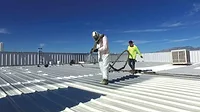
The thrifty cost of sprayed polyurethane foam systems has been a deciding factor in many building owners’ decision-making processes over the years, steadily increasing the applied square footage of these systems throughout the country. However, the sales volume of SPF has not translated to wide acceptance from conventional roofing contractors. The material is typically applied by specialty contractors who only work with and apply this type of system. Most conventional contractors have little knowledge or experience with SPF materials or repair procedures. Regardless of this fact, the odds are high that conventional contractors will occasionally be called upon to repair or replace an SPF system.

SPF systems are manufactured from a chemically complex mixture of polymeric materials such as liquid isocyanates and liquid polyol resins, which are added to various cell stabilizers, blowing agents, combustion-retarding agents, catalysts and fillers. Polyurethane foam is developed by the heat reaction between the liquid isocyanates and liquid polyol resins coupled with the vaporization of the blowing agent. This reaction forms cells that change the material from a liquid to a cellular mass. The material is spray applied over the existing substrate.

Most problems associated with SPF systems have been from improper application procedures. Preparation of the surface is critical for success. This includes thorough removal of all loose particles of existing systems. Polyurethane will not adhere to dirty, wet or oily surfaces. There is also a tendency on the applicator’s part to over-spray the material in some areas and not provide a constant thickness. Uneven application creates depressions in the surface — or birdbaths — that regularly pond water.

The application is only as good as the applicator. However, since most conventional roofing contractors do not apply these systems, lower paid applicators — with little or no previous roofing experience — are often used. This could explain why roof penetrations such as curbs, drains and vents are often completely covered with the polyurethane foam application.

The spray application is extremely weather sensitive and contributes to application concerns. For best results, the material should not be applied when wind speeds exceed 15 to 20 mph. We have observed that these systems typically perform best in low-humidity climates.

Polyurethane foam is vulnerable to ultraviolet rays and weather degradation. A significant number of SPF failures occur because of the loss or erosion of the polyurethane foam’s protective coating. When the protective coating bond is broken, deterioration can occur from moisture infiltration at openings or splits from expansion and contraction. Even if roof leaks are not occurring, the loss of insulation worsens over time. This condition can occur from aging and natural weathering of the material or excessive water flow. Abrasion can also occur from extensive trafficking or from birds pecking at the foam surface to feed on the insects that migrate into the system. The loss of coating is revealed by the brownish-yellow color of the polyurethane foam.

Repairs to these systems can be completed with SPF materials or other specially manufactured coating materials. To begin, remove the damaged material and thoroughly clean the surface. Trim the exposed foam at the perimeter of the repair area on a beveled 45-degree angle to the depth of the penetration to obtain a clean surface. Splices of 1/8 inch to 1/4 inch are adequate for this procedure. Brush back any loose coating or granules from the surface and abrade any remaining coating.

SPF repair materials are typically provided in a two-component froth pack. Repairs involving removal of the SPF (blisters, ridges, etc.) are completed using the froth pack. The two components — isocyanate and polyol — are mixed together by the repair technician and continuously stirred for 30 to 40 seconds until the mixture shows a noticeable color change. Once mixed, pour the material over the affected area, beginning at the beveled edge and continuing evenly at the bottom of the repair area.

Once applied, the foam will begin to rise and should cure for a minimum of one-half hour. If the material does not adequately fill the opening, additional material can be applied within four to five minutes or as soon as the material is tack free. If the material exceeds the opening, trim away excess foam with a knife or grinder to level of the adjoining roof area.

Once the fill material has properly cured, thoroughly clean the surface and apply the protective coating. The protective coating should be brushed on at a rate of 25 to 30 mils. This application is completed using a two-coat procedure with a minimum four- to six-hour drying time between coats. The same drying time should be used prior to trafficking over the completed repair.

In recent years, a number of manufacturers have developed coatings designed to extend the service life of SPF systems. These types of repairs are surface repairs and do not include removal of the SPF. The coatings are primarily 100-percent-acrylic-elastomer-based coatings that can be applied directly to the polyurethane in all instances except where a silicone coating is applied. Acrylics generally do not adhere to silicone surfaces. One advantage to the use of these products in repair applications is ease of application (no two-component mixing required). In addition, they utilize conventional repair methods and are VOS/VOC-compliant materials.

When completing these repairs, follow the instructions of the coating manufacturer for proper application rates. Steps in this process generally include thorough surface cleaning and abrasion to remove any chalk and repairs to the surface, followed by the application of the new coating. Repairs to the SPF surface are completed with approved adhesives and fabrics.

Although most conventional roofing contractors do not apply SPF systems, there are a number of these existing systems that require annual repair and maintenance. If contractors follow the procedures required to complete these repairs they will make themselves more valuable to building owners and in turn increase their workload and improve the bottom line.

Share This Story

Looking for a reprint of this article?
From high-res PDFs to custom plaques, order your copy today!

Recommended Content

JOIN TODAY
to unlock your recommendations.

Already have an account? Sign In

  • two-roofers-in-harnesses-on-tile-roof

    How AI Is (and Isn’t) Impacting Roofing Jobs

    A new study from Microsoft shows artificial intelligence...
    Roofing News
    By: Chris Gray
  • Baker-Roofing-Company-employees-on-flat-roof-examinining-paperwork

    Exclusive: 2025’s Top 100 Roofing Contractors

    Roofing Contractor's 2025 Top 100 list reveals revenue...
    Top 100 Roofing Contractors
    By: Chris Gray
  • A before and after heat measurement comparison

    How Hot is Too Hot in the Attic?

    If the ventilation is working, how hot should the attic...
    Sustainable Roofing
    By: Paul Scelsi
You must login or register in order to post a comment.

Report Abusive Comment

Manage My Account
  • eMagazine Subscription
  • Sign Up for the Newsletter
  • Online Registration
  • Manage My Preferences
  • Subscription Customer Service

More Videos

Sponsored Content

Sponsored Content is a special paid section where industry companies provide high quality, objective, non-commercial content around topics of interest to the Roofing Contractor audience. All Sponsored Content is supplied by the advertising company and any opinions expressed in this article are those of the author and not necessarily reflect the views of Roofing Contractor or its parent company, BNP Media. Interested in participating in our Sponsored Content section? Contact your local rep!

close
  • A finished commercial roof, including flashings
    Sponsored byFlashCo

    It’s All in the Details – How to Avoid 4 Common Mistakes with Roofing Accessories

  • Happy mature couple using phone holding credit card making payments. Middle aged older man and woman doing ecommerce shopping on smartphone booking or buying online on mobile sitting at home table.
    Sponsored byWatercress Financial

    Meeting Modern Expectations: Why Offering Financing Is Essential for Roofers Today

  • A roofing contractor stands on a roof behind an American flag
    Sponsored byTAMKO®

    Building Roofs, Building Community: TAMKO’s Lasting Commitment to Veterans and the Military

Popular Stories

TWS Remodeling team

Private Equity Fallout Rocks Roofing; Pros Step In

Malarkey-logo-with-Charles-Collins-headshot

Malarkey Roofing Products Announces New President

roofer-safety-harness-construction.jpg

OSHA's Top 10 Most Cited Violations of 2025

Roofing Contractor Bookstore

Related Articles

  • Mule-Hide-SPF-1.jpg

    Mule-Hide Products Co. Expands Availability of Spray Polyurethane Foam Roofing Systems Nationwide

    See More
  • SPFA

    Spray Polyurethane Foam Alliance Announces Growth of Industry’s Professional Certification Program (PCP)

    See More
  • SPFA Winners PIC1

    Spray Polyurethane Foam Alliance Announces Winners of the 14th Annual SPFA National Industry Excellence Awards

    See More

Related Products

See More Products
  • 007145828X.jpeg

    Manual of Low-Slope Roof Systems Fourth Edition

  • Green Roof Systems: A Guide to the Planning, Design and Construction of Building Over Structure

See More Products
×

Be in the forefront of the roofing industry!

Join thousands of professionals today. Shouldn’t you know what they know?

JOIN NOW!
  • RESOURCES
    • Advertise
    • Contact Us
    • Directories
    • Store
    • Want More
  • SIGN UP TODAY
    • Create Account
    • eMagazine
    • Newsletters
    • Customer Service
    • Manage Preferences
  • SERVICES
    • Marketing Services
    • Reprints
    • Market Research
    • List Rental
    • Survey/Respondent Access
  • STAY CONNECTED
    • LinkedIn
    • Facebook
    • Instagram
    • YouTube
    • X
  • PRIVACY
    • PRIVACY POLICY
    • TERMS & CONDITIONS
    • DO NOT SELL MY PERSONAL INFORMATION
    • PRIVACY REQUEST
    • ACCESSIBILITY

Copyright ©2025. All Rights Reserved BNP Media.

Design, CMS, Hosting & Web Development :: ePublishing