Scaling Smarter
5 Questions Before You Sign
What One Roofing Contractor Learned from a Franchise Experience
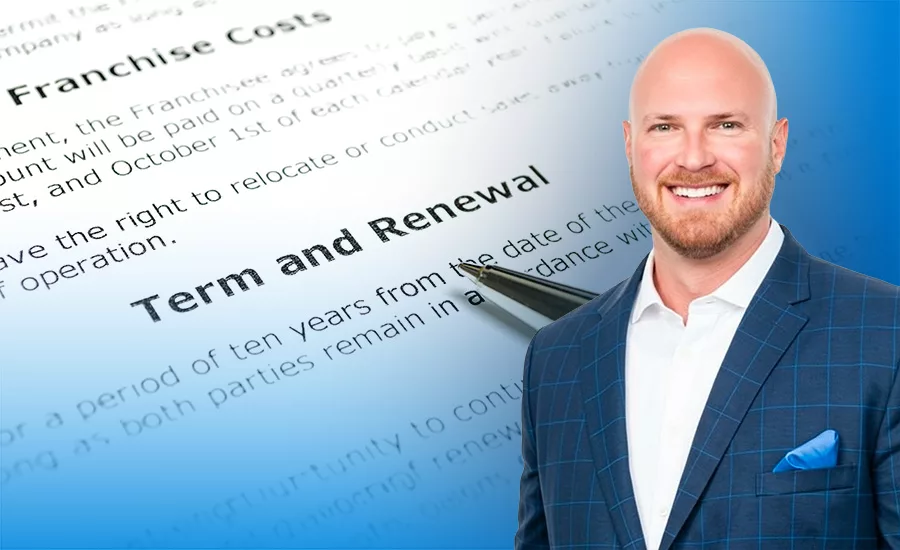
The roofing industry is booming, and with that growth has come a wave of franchise opportunities offering contractors a faster path to scale. Brad Strawbridge, founder of Alpharetta, Ga.-based Capital City Roofing, pursued one of those opportunities. What he learned on the other side is something he now shares freely with anyone who asks.
"I want to build something that actually provides value to people," Strawbridge said. "That experience showed me exactly what that meant."
Long before roofing, Strawbridge built a career around people — first as a pastor in Destin, Fla., and simultaneously as a home services executive at Lowe's. During COVID, he watched two verticals outperform everything else: HVAC and roofing. He chose roofing, moved into a director-level role at a commercial roofing firm in Atlanta, and eventually decided to launch his own company alongside his wife and business partner, Tiffany. Wanting infrastructure and brand recognition from the start, he bought into a franchise.
Strawbridge discovered that while the monthly royalties were significant, the support didn't match them. Within a relatively short period, he was developing best practices that were being distributed across the franchise system — while continuing to pay for support he wasn't receiving. He eventually exited the agreement and launched Capital City Roofing independently.
He's not alone in that experience. In recent weeks, he said, he has fielded calls from multiple contractors in similar situations looking for guidance on how to get out.
"They're still doing it to people," he said.
Strawbridge is careful not to indict franchising broadly — the model works across many industries and contexts. But he believes roofing contractors need to ask tougher questions before signing because the industry's rapid growth has outpaced the sophistication of some of the agreements on offer.
Here’s what he says he’d do differently.
1. Scrutinize the royalty structure — and the contract — against what you're actually getting.
A royalty percentage is easy to understand in the abstract and easy to underestimate in practice. Strawbridge recommends mapping out what monthly royalties will look like at your current revenue and at your projected revenue, then asking specifically what services and support justify that number. Get the answer in writing.
That includes carefully comparing any promised support — marketing, training, estimating systems, lead generation, or supplier relationships — against what is actually documented in the contract, said construction attorney Trent Cotney. If it isn’t clearly spelled out, it may be difficult to enforce later.
Contractors should also closely review the Franchise Disclosure Document (FDD), Cotney added, which provides key details about the franchisor’s financials, obligations, and legal history. Under the Federal Trade Commission’s Franchise Rule, the FDD must generally be provided at least 14 calendar days before a contractor signs a binding agreement or pays any money to the franchisor. State franchise laws may impose additional requirements.
2. Ask what happens when you need something they don't have.
Franchise systems vary enormously in how responsive and resourceful their corporate teams are. Strawbridge recommends stress-testing the relationship before signing by asking detailed questions about support — and paying attention to how quickly and specifically those questions get answered. Vague answers before the contract is signed tend to stay vague after.
3. Understand your territory — and your exit — before you enter.
This is the area Strawbridge said he wishes he had examined more carefully. Contractors should understand whether they are being granted a protected territory and what limitations apply both during and after the agreement.
Exit terms can include long contract durations, non-compete and non-solicitation clauses, confidentiality requirements, restrictions on branding, and even limitations on customer relationships after leaving, Cotney noted. These provisions can be difficult to navigate without legal help.
He recommends having a franchise attorney — not a general business attorney — review any agreement before signing. "Know what you're walking into and know what it would take to walk out."
4. Watch what happens to the work you're doing.
If a franchise system is learning from its highest-performing operators and distributing those lessons across the network, that's worth understanding clearly. There's nothing inherently wrong with a system built on shared best practices — but a contractor who is effectively training the system deserves to understand that dynamic and weigh it accordingly.
5. Look for alignment between the franchisor's incentives and yours.
A franchise relationship works best when both parties benefit from the contractor's growth. If the royalty structure, support model, and contract terms don't clearly reflect that alignment, it's worth asking why.
Strawbridge has since built Capital City Roofing into a company with annual revenue approaching $10 million and launched a licensing platform designed around the lessons he learned. He describes the model he built as everything a franchise offers in terms of structure and support, with better economics and more genuine accountability.
Whether franchising or licensing or building independently, he said, the underlying question is the same: does the organization you're signing with benefit when you benefit?
"If the answer isn’t clearly yes, that tells you something."
Looking for a reprint of this article?
From high-res PDFs to custom plaques, order your copy today!

.webp?height=740&t=1781278983&width=auto "KEE(2).png")