News Analysis
Roofing Faces Rising Costs Amid New Trump Tariff Policies
Uncertainty around new tariffs and trade deals will likely result in price increases and economic slowdown.
Updated 7/11/25 with new information about potential tariff increases to Canada.
July 9 was the deadline for countries to strike a deal with the United States before receiving massive tariff hikes, which would likely affect material and construction pricing. However, President Donald Trump pushed the deadline to Aug. 1.
Trump is still seeking massive tariff hikes on import taxes, demonstrated in his radical tactic of sending letters to global leaders threatening them with high rates this week. In addition, he announced a new tariff on copper that sent prices soaring.
The decisions leave the roofing industry, among others, in a state of uncertainty about what tariffs will look like in the foreseeable future and how they will impact material pricing and the supply chain.
Here’s a breakdown of where things stand.
QUICK READ: 5 Takeaways
- New 50% copper tariff: Trump proposed a 50% tariff on all imported copper. It's unclear when this will take effect, but copper prices have already skyrocketed.
- Letters threaten 25% to 40% tariffs: Trump sent 14 letters to trade partners stating the U.S. would increase tariffs by at least 25% and add reciprocal tariffs if those countries retaliate.
- Steel and aluminum price increases: Tariffs on steel and aluminum have risen since May due to tariffs, according to the Associated Builders and Contractors.
- Hearing set for tariff implementation: The Federal Court of Appeals will hold a hearing July 31 after the Trump administration appealed a ruling that Trump couldn't unilaterally impose his "Liberation Day" tariffs.
- Reducing the impact: Contractors are encouraged to plan for all contingencies to reduce the impact tariffs have on pricing, including purchasing in advance and adding escalation clauses to contracts.
Letters Sent to Global Leaders
This week, Trump sent letters to 14 countries, like Japan and South Korea, threatening higher rates ranging from 25% to 40% on imported goods starting Aug. 1. The letters, posted on Trump’s Truth Social account, indicated there were opportunities to negotiate but also threatened reciprocal tariffs.
“If for any reason you decide to raise your Tariffs, then, whatever the number you choose to raise them by, will be added onto the 25% that we charge,” the letter to South Korea states.
When the news reached Wall Street, the stock market dropped sharply, according to Reuters, though the dollar rose by 1.09% at 146.130.
Trump initially announced his “Liberation Day” tariffs on April 2 that would be implemented April 9, but paused them for 90 days after the market spiraled — the Dow Jones dropped 7.9% and the Nasdaq composite nearly 10% during those seven days.
The Trump administration sought to strike trade deals in those 90 days. So far, only Britain and Vietnam have reached trade agreements. Kevin Hasset, director of the National Economic Council of the U.S., indicated that deals are being finalized.
Adding to the uncertainty, when asked about the Aug. 1 deadline, Trump said it was “firm, but not 100% firm,” per Reuters.
Increased Tariffs on Canada
On July 10, Trump threatened that Canada would receive a 35% tariff as of Aug. 1, upending tentative trade talks between the two countries, according to Axios. In a letter posted on his Truth Social page addressed to Prime Minister Mark Carney, the president blamed Canada's “failure” to prevent drugs from being smuggled into the U.S. as the justification.
New Copper Tariffs
On Tuesday, Trump announced a 50% tariff on copper imports, which caused U.S. copper prices to hit record highs of $5.69 per pound, a 13% increase in a single day. Chile is the largest importer of refined copper, followed by Canada and Peru, according to the Financial Times.
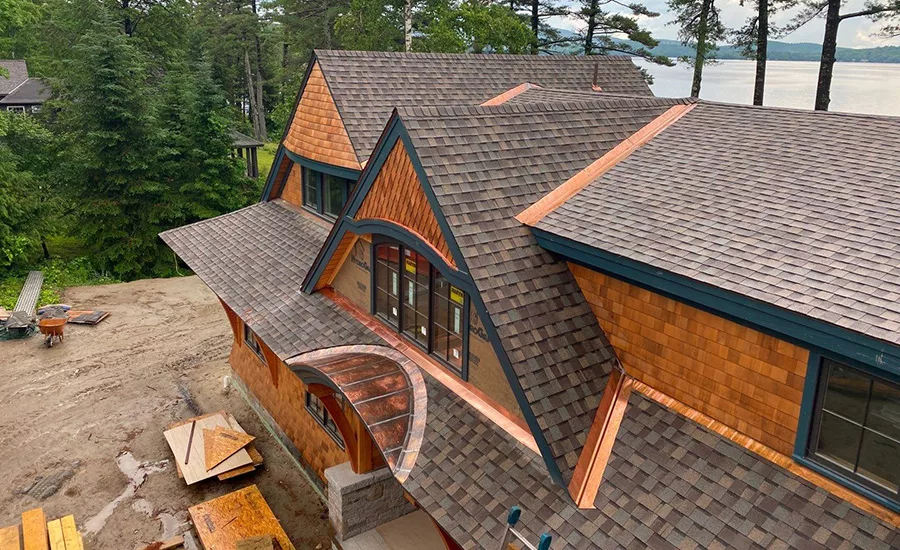
Though it's unclear when this will take effect, the tariff will affect the metal roofing sector in particular but will impact construction at large due to copper’s use in wiring and plumbing, likely raising the costs of home building.
The 50% Tariff on Steel and Aluminum Products
In June, aluminum and steel tariffs doubled to 50%, which spiked domestic metal premiums by more than half since April. The pricing of metal panels, fasteners and flashing has all been impacted.
An analysis of the latest U.S. Bureau of Labor Statistics data by Associated Builders and Contractors shows nonresidential construction spending decreased 0.2% in May, while in the same month, construction input prices increased by 0.2% compared to the previous month.
“Accelerating input price escalation is largely due to rapid price increases for tariff-affected goods like iron and steel,” said Basu. “Expect this dynamic to remain over the next few quarters; these data predate tariffs on iron and steel rising from 25% to 50%, which went into effect on June 4,” said ABC Chief Economist Anirban Basu.
RELATED: Roofing Exhales as Court Strikes Down Trump’s ‘Liberation Day’ Tariffs
A 10% Tariff on Most U.S. Imports
Implemented in April, a 10% tariff was placed on nearly all imports. China was the exception with a 30% rate.
A three-judge panel of the U.S. Court of International Trade ruled in May that the president lacks the authority to levy the 10% tariffs, among others, based on the International Emergency Economic Powers Act of 1977. The decision stated that only Congress may legislate broad-based import duties.
The decision blocks enforcement of the “Literation Day” tariffs, though industry-specific duties on steel and aluminum remain in effect. The decision has been appealed, and the Federal Circuit Appeals Court temporarily stayed the court’s decision. A hearing is set for July 31.
What Can Contractors Do?
The National Roofing Contractors Association is advising its members to plan for “all contingencies” as the Trump administration’s tariff policy evolves and changes.
“During this dynamic period of uncertainty, companies should take proactive steps to advance and protect their interests. For example, businesses should understand imports they rely on and their countries of origin; assess a range of potential effects on key suppliers and materials and consider alternatives,” NRCA officials said.
The association also suggests that contractors include escalation clauses in their contracts to manage cost increases better. The NRCA has conveyed its concerns regarding the impact of tariffs to Congress, the U.S. Trade Representative’s Office and the White House.
Contractors are also encouraged to secure materials in advance to mitigate the impact of price volatility and explore alternative suppliers and materials.
RELATED: Roofing Tariffs: How to Protect Your Profits
Tariff Basics
Tariffs function as border taxes assessed on imported goods, with U.S. importers responsible for remitting the duty to Customs and Border Protection at the time of entry.
For instance, a $125 surcharge is applied for every ton of galvanized steel panels priced at $500 under a 25% tariff. Foreign countries might absorb some of the tariff costs, but more often than not, U.S. businesses and consumers bear that cost.
As evidenced by previous tariffs, the price of materials is expected to rise and will likely slow down economic growth. Contributing to that slowdown is the mounting doubt that the shifting tariff policies create.
Trent Cotney, partner with Adams & Reese, said the Trump administration is using tariffs as an opportunity to negotiate better trade deals, and that economic uncertainty will likely decline as midterm elections approach.
“The issue with the tariffs is the uncertainty. There’s been a lot of back and forth,” said Cotney in a Best of Success podcast. “In the short term, that could impact everything from panels and fasteners to … you name it. I’ve already seen an impact based on the previous tariffs.”
Looking for a reprint of this article?
From high-res PDFs to custom plaques, order your copy today!