Trade Deals Update
Trump’s Trade Clock Ticks Down: 90-Deal Goal Remains Elusive
With only two trade agreements finalized, the White House faces a July 8 tariff cliff that could send material costs and supply chains into another tailspin
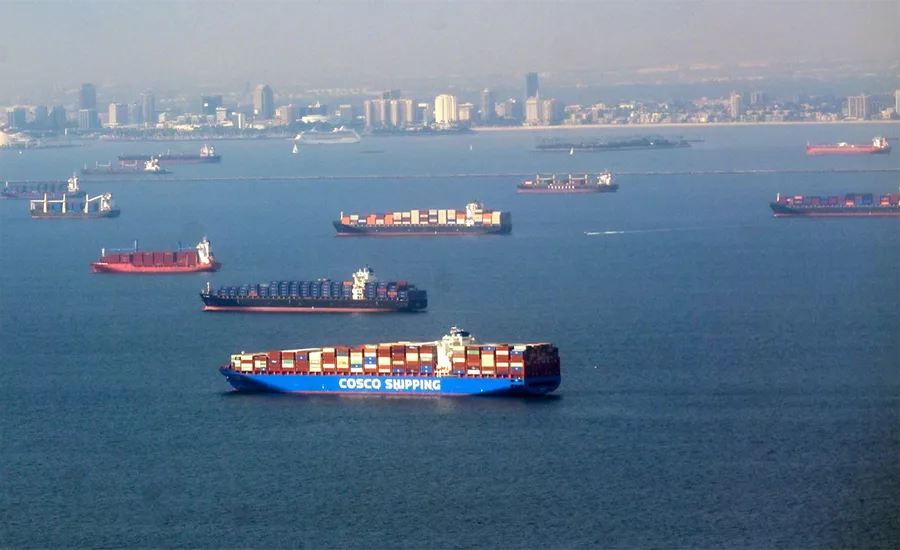
Shipping containers stack up at the Port of Los Angeles in June as importers rush to beat the July 8 tariff deadline. Roofing suppliers warn of rising costs and delivery delays if the White House fails to finalize more trade deals.
— Image courtesy of CNBC
QUICKSHOT
- The White House is far behind on its “90 deals in 90 days” goal ahead of the July 8 tariff pause deadline, with only two agreements reached—one with the U.K. and a temporary truce with China.
- Analysts and industry leaders are warning of major supply-chain disruptions if reciprocal tariffs are reimposed, with roofing contractors and building suppliers likely to face higher costs and longer delays.
- Ports and logistics networks are already straining under a surge of import activity as companies race to bring in goods before the potential tariff snapback, further heightening risk across the construction supply chain.
With just two weeks remaining until the July 8 expiration of the Trump administration’s self-imposed 90-day tariff pause, the White House finds itself far short of its goal to clinch “90 deals in 90 days.”
To date, the administration has finalized only two framework agreements: one with the United Kingdom and another temporary truce with China.
RELATED
Roofing is Left Exposed by Trump’s Deportation Flip-Flop
A proposed deal with India remains in negotiation, but as of late June, no definitive pact has been signed, despite repeated public assurances by administration officials, Axios first reported.
The administration kicked off its “Liberation Day” pause on reciprocal tariffs April 9, aiming to leverage a 90-day window for bilateral agreements that would avert steep duties on imports from more than 180 countries.
Commerce Secretary Howard Lutnick told reporters in mid-April that a comprehensive plan would be in hand by early May, but beyond the two initial understandings, few concrete commitments have materialized
In late May, the White House dispatched letters to dozens of trading partners, urging them to submit their best and final trade offers by the end of the month, according to an Investopedia analysis.
Officials maintain that active talks are ongoing with Japan, South Korea, Mexico, Canada, and the European Union; however, industry participants say confusion over legal authority and inconsistent messaging have hampered momentum, the Associated Press reported.
Analysts warn that failure to extend the pause or secure broader deals could re-ignite sweeping tariffs and roil supply chains.
A Reuters survey published June 3 found that 90% of U.S. business owners surveyed by brokerage Gallagher cited supply-chain disruptions as their top concern, with nearly three-quarters naming tariffs among their chief risks.
“Global supply chains, already strained by geopolitical conflicts and extreme weather, remain vulnerable,” J. Patrick Gallagher, chairman and CEO of Arthur J. Gallagher & Co., told Reuters.
Building material suppliers and roofing contractors are preparing for increased costs and delivery delays if reciprocal duties are reimposed.
A Freightos analysis noted that rush shipments to beat the July 8 deadline have already led to increased container rates and port congestion at major gateways, such as Los Angeles and Long Beach.
RELATED
Walmart’s Tariff Remarks Make Impact Clear, Raising Trump’s Ire
Everstream Analytics’ Jena Santoro warned that the compressed peak-season surge could trigger a “bullwhip effect,” where order backlogs and inventory swings amplify disruption across the supply chain.
Some economists argue the pause itself may have sown uncertainty by offering only temporary relief. Business Insider noted that despite the tariff hiatus on China, consumer prices are likely to remain elevated through summer months, as companies frantically restock ahead of potential duty hikes.
Whether further negotiations can yield lasting agreements remains uncertain — and with the July 8 deadline looming, the roofing and building-materials sectors are left weighing the costs of another tariff cycle against the slim chance of a last-minute deal.
Looking for a reprint of this article?
From high-res PDFs to custom plaques, order your copy today!

Bryan Gottlieb is the online editor at Engineering News-Record (ENR).
Gottlieb is a five-time Society of Professional Journalists Excellence in Journalism award winner with more than a decade of experience covering business, construction, and community issues. He has worked at Adweek, managed a community newsroom in Santa Monica, Calif., and reported on finance, law, and real estate for the San Diego Daily Transcript. He later served as editor-in-chief of the Detroit Metro Times and was managing editor at Roofing Contractor, where he helped shape national industry coverage.
Gottlieb covers breaking news, large-scale infrastructure projects, new products and business.

email gottliebb@enr.com | office: (248) 786-1591