search
cart
facebook twitter linkedin youtube instagram Spotify Podcasts Apple Podcasts Spotify Podcasts Apple Podcasts
  • Sign In
  • Create Account
  • Sign Out
  • My Account
  • NEWS
  • TOPICS
    • Cool Roofing
    • Event News
    • Latinos in Roofing
    • Low Slope
    • Legal
    • Metal
    • Project Profiles
    • Roofing Supply Pro
    • Roofing Safety
    • Steep Slope
    • Sustainable Roofing
    • Technology
  • EXCLUSIVES
    • Best of Success
    • Contractor Profile
    • IRE Show
    • Roofing Contractor of the Year
      • Enter Roofing Contractor of the Year
    • Top 100
      • Enter the Top 100
    • Young Guns
    • State of the Industry
  • MULTIMEDIA
    • Videos
    • Podcasts
    • Interactive Spotlights
    • Roofing Quizzes
    • IRE Videos
    • Webinars
    • Photo Galleries
  • PRODUCTS
    • New Products
    • Featured Products
  • COLUMNS
    • Editor's Note
    • Exit Planning
    • Guest Column
  • EVENTS
    • International Roofing Expo
    • Webinars
    • Best of Success Conference
    • Industry Events
  • DIRECTORY
    • Associations
    • Distributors
    • Manufacturer/Supplier
    • Business Services
    • Get Listed
  • MORE
    • Roofing Contractor Newsletters
    • Techos y Más Advisory Board
    • RC Store
    • Roofing Supply Pro
    • Custom Content & Marketing Services
    • Market Research
    • Sponsor Insights
    • Company Spotlights
    • Classifieds
      • Auctions
      • Business For Sale
      • Business Opportunities
      • Equipment For Sale
      • Positions Available
      • Products
      • Safety
      • Software
      • Services
      • Training
    • Contact Us
  • EMAGAZINE
    • eMagazine
    • Advertise
      • Editorial Calendar
      • Contact
    • Archive Issues
  • SIGN UP!
ColumnsGuest Column

Modified Bitumen Sheet Welding: Open-Flame vs. Hot Air

By Ken Paine
August 7, 2012

Modified bitumen was developed in Europe in the 1960s and has been used as a roofing system in the United States since the mid 1970s. Combining asphalt with modifiers to give it either plastic (APP) or rubber (SBS) qualities, manufacturers sought to combine the durability and weathering capabilities of built-up roofing systems with the consistent manufactured quality and flexibility offered by single-ply.

Manufactured in rolls, modified bitumen can be applied in a variety of methods. Commonly, modified bitumen installers use adhesive-backed (self-adhered) sheets, cold process adhesives, hot asphalt, mechanical screws and plates, or torches to secure the modified bitumen to the substrate. It’s always good advice to check the manufacturer’s latest specifications on any installation. Proper application of the seams is critical. Some of the application methods require additional attention to the side laps and head laps after the sheets are installed.

Let’s talk specifically about the seam-welding aspect of a modified bitumen installation and what a change in technique can mean to you. There are two primary methods of seam welding this type of roofing system — open-flame torch or hot-air equipment. While both do a good job forming strong, watertight seals, there are distinct differences between them.


Open-Flame Torches

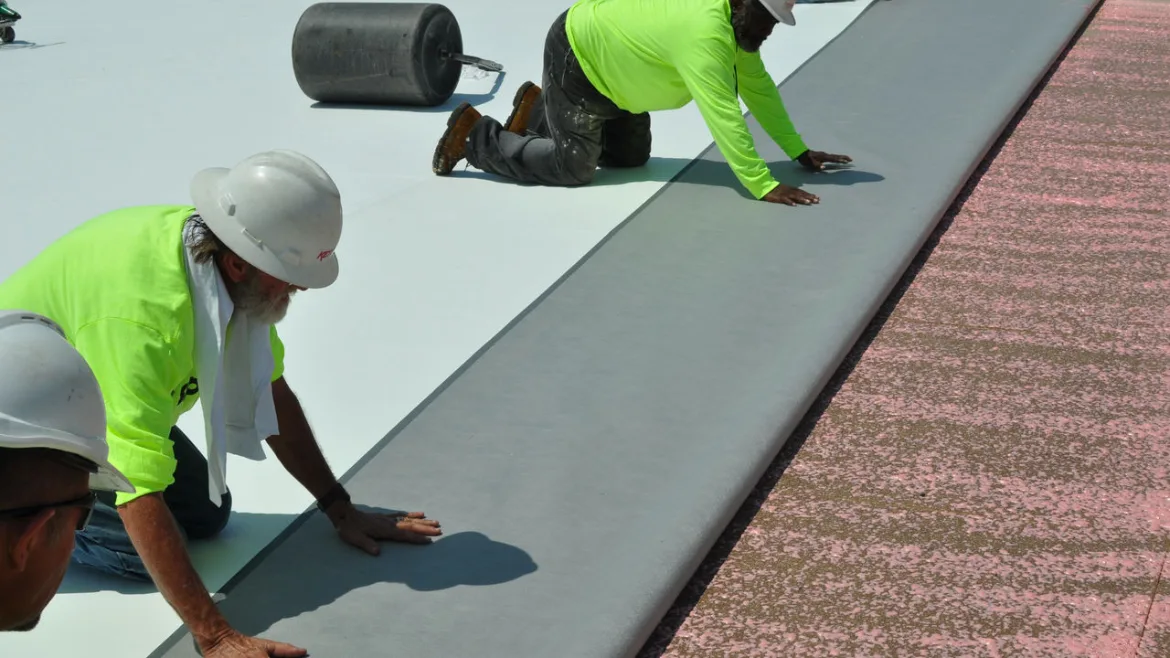
The open-flame seam welding process is pretty straightforward. Two sheets of modified bitumen are rolled out over a flat roof surface with their edges overlapping at least 4 inches. A torch operator then moves down the sheet heating the overlapped seam surfaces to the point that the material liquefies. The weight of the material itself secures the bond or a second operator follows, pressing the top sheet to the bottom sheet with a press wheel.

Operators use the open flame of a propane torch — which typically reaches temperatures between 2,192 and 3,000 degrees Fahrenheit — to melt the modified bitumen. These extreme temperatures can cause operators to accidentally overheat the material, which will damage its structural integrity and lead to weak, ineffective seam welds. In addition, there is greater risk of starting a fire on the roof’s surface or in the underlying roof structure. Lastly, the final result is highly dependent on the skill of the roofer and may have additional labor and material costs to dress the bleed out with loose granules.

In 2004, the Midwest Roofing Contractors Association (MRCA) established the Certified Roofing Torch Applicator (CERTA) Program, which is designed to teach contractors how to safely operate roofing torches. Since the introduction of this program, torch-related building damage has decreased significantly. Today many state building codes require that torch operators be CERTA certified, and many insurance companies won’t underwrite a roofing project that utilizes torches without a CERTA certified professional.


Hot-Air Welding

Typically hot-air welding is associated with thermoplastic roofing materials (i.e., PVC and TPO). Modified bitumen requires higher temperatures to effectively melt and fuse the material.

Fortunately, advancements in the power and heat potential of robotic hot-air welders have created a viable (and some would argue more effective) alternative to an open-flame torch.

Robotic hot-air welding machines apply heat to the modified bitumen seam through a flat nozzle that moves between the overlapped material sheets. The nozzle simultaneously concentrates the hot air directly on the sides of the sheets facing it, as well as the seam directly in front to preheat the area and allow the operator to move at a faster pace.

Directly following the nozzle is a pressure roller, which focuses the machine’s weight directly over the seam, firmly pressing the sheets together. These machines automate the seam welding process so much so that the only requirement of the operator is to ensure the machine’s heat and speed are properly configured for the material and environmental conditions, and that the machine doesn’t veer off-course during the weld.

For roof-edge or confined-area welding, hot-air hand tools can generate the required heat to bond modified bitumen seams, and a standard hand-held pressure roller can apply the necessary pressure.

Hot-air welding tools reduce the threat of fire by eliminating the use of an open flame. Most hot-air welders only require one operator, freeing others to work on different aspects of the roofing project. In addition, because these hot-air welders automate the delivery of consistent heat and pressure, the threat of human error is reduced, limiting the amount of touch-up work required and resulting in consistent, repeatable welds.

Of course, it is important to note that not all safety risks are eliminated with hot-air welders, as these machines still produce high concentrations of heat, which if left unattended or near flammable material or objects can cause
a fire.

In addition, if a nozzle slides out from between the seam during a weld, it has the potential to spray melted bitumen in the direction of the operator. For this reason, manufacturers typically recommend wearing protective clothing, gloves and goggles.

 In roofing, profitability and growth are contingent on completing roofing projects in a timely and efficient manner, and delivering consistent, quality work. Making the switch from open-flame torches to hot-air equipment to install modified bitumen is one small step you can take today to help in these pursuits. 

KEYWORDS: asphalt roofing rubber

Share This Story

Looking for a reprint of this article?
From high-res PDFs to custom plaques, order your copy today!
Ken Paine is president and CEO of Industrial Heat Sources (www.ihshotair.com), a master distributor of Leister hot-air tools and equipment. He has more than 30 years experience in the industrial and commercial roofing industry, first as a contractor, and then as an equipment distributor through IHS and his other company, Hy-Tech Products (www.hy-techroof.com).

Recommended Content

JOIN TODAY
to unlock your recommendations.

Already have an account? Sign In

  • two-roofers-in-harnesses-on-tile-roof

    How AI Is (and Isn’t) Impacting Roofing Jobs

    A new study from Microsoft shows artificial intelligence...
    Roofing News
    By: Chris Gray
  • Baker-Roofing-Company-employees-on-flat-roof-examinining-paperwork

    Exclusive: 2025’s Top 100 Roofing Contractors

    Roofing Contractor's 2025 Top 100 list reveals revenue...
    Top 100 Roofing Contractors
    By: Chris Gray
  • A before and after heat measurement comparison

    How Hot is Too Hot in the Attic?

    If the ventilation is working, how hot should the attic...
    Columns
    By: Paul Scelsi
You must login or register in order to post a comment.

Report Abusive Comment

Manage My Account
  • eMagazine Subscription
  • Sign Up for the Newsletter
  • Online Registration
  • Manage My Preferences
  • Subscription Customer Service

More Videos

Sponsored Content

Sponsored Content is a special paid section where industry companies provide high quality, objective, non-commercial content around topics of interest to the Roofing Contractor audience. All Sponsored Content is supplied by the advertising company and any opinions expressed in this article are those of the author and not necessarily reflect the views of Roofing Contractor or its parent company, BNP Media. Interested in participating in our Sponsored Content section? Contact your local rep!

close
  • A finished commercial roof, including flashings
    Sponsored byFlashCo

    It’s All in the Details – How to Avoid 4 Common Mistakes with Roofing Accessories

  • Happy mature couple using phone holding credit card making payments. Middle aged older man and woman doing ecommerce shopping on smartphone booking or buying online on mobile sitting at home table.
    Sponsored byWatercress Financial

    Meeting Modern Expectations: Why Offering Financing Is Essential for Roofers Today

  • A roofing contractor stands on a roof behind an American flag
    Sponsored byTAMKO®

    Building Roofs, Building Community: TAMKO’s Lasting Commitment to Veterans and the Military

Popular Stories

TWS Remodeling team

Private Equity Fallout Rocks Roofing; Pros Step In

Malarkey-logo-with-Charles-Collins-headshot

Malarkey Roofing Products Announces New President

roofer-safety-harness-construction.jpg

OSHA's Top 10 Most Cited Violations of 2025

Roofing Contractor Bookstore

Related Articles

  • MRCA-Hot-Air-Training

    MRCA Introduces New Hot Air and Induction Welding Safety Training

    See More
  • The Eagle Flameless Hot-air Welding Tool

    See More
  • Technical Details: Self Adhered Modified Bitumen Systems

    See More
×

Be in the forefront of the roofing industry!

Join thousands of professionals today. Shouldn’t you know what they know?

JOIN NOW!
  • RESOURCES
    • Advertise
    • Contact Us
    • Directories
    • Store
    • Want More
  • SIGN UP TODAY
    • Create Account
    • eMagazine
    • Newsletters
    • Customer Service
    • Manage Preferences
  • SERVICES
    • Marketing Services
    • Reprints
    • Market Research
    • List Rental
    • Survey/Respondent Access
  • STAY CONNECTED
    • LinkedIn
    • Facebook
    • Instagram
    • YouTube
    • X
  • PRIVACY
    • PRIVACY POLICY
    • TERMS & CONDITIONS
    • DO NOT SELL MY PERSONAL INFORMATION
    • PRIVACY REQUEST
    • ACCESSIBILITY

Copyright ©2025. All Rights Reserved BNP Media.

Design, CMS, Hosting & Web Development :: ePublishing