5 Historic Roofs to Mark America’s 250th Anniversary
These are historic times indeed as we celebrate some of the nation’s historic, and most important rooftops.
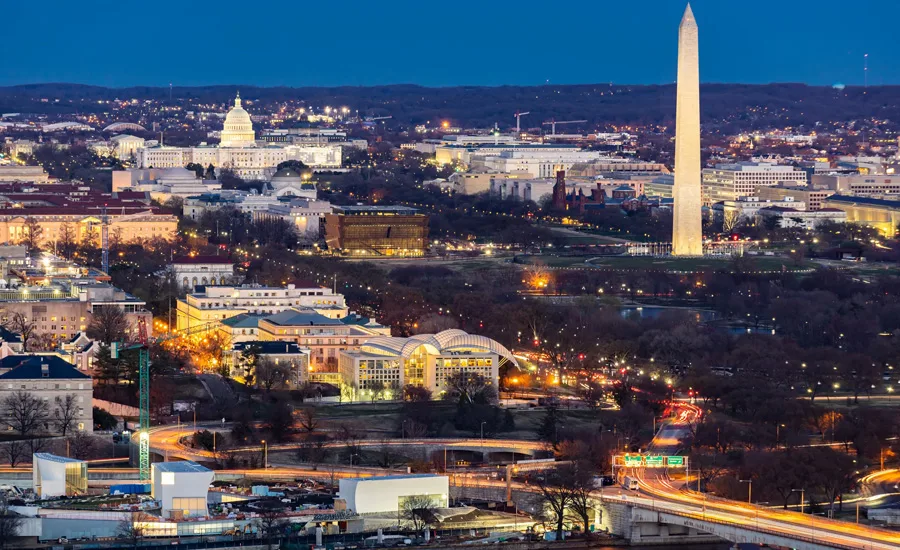
After 250 years of nationhood, there are some rooftops that have stood the test of time in America. Some deemed so important, and deservedly so, for what they represent as our country built itself up from colonization. These buildings also deservedly received protection and reprieve from the elements and other challenges that emerged over time with designation as historic sites. Some of these iconic places required renovations and complete restorations by today’s contractors using modern tools and techniques to preserve the past.
There’s no formula or easy way to quantify the historic roofs of greatest significance in the United States. But it is fun to ponder that on the cusp of our nation’s 250th anniversary. I chose these five as I thought about which rooftops still represent the history, resolve and overall experience that are uniquely American. Remarkably, they also remain symbols of freedom and prosperity for anyone around the world.
I understand this list is subjective and perhaps even limited, but each of these structures stand out for their continued significance to us as a nation. Feel free to leave your own landmark rooftop worth celebrating this summer in the comments, and Happy Birthday U.S.A.!
The White House, Washington, D.C.
Perhaps the most famous rooftop in the nation, there is little debate over whether the decisions made underneath it carry any greater weight around the globe. The original slate roof on the “People’s House” has seen dramatic alterations over the years. From President William Howard Taft’s 1909 open-air sleeping porch to the installation of solar panels in the 1970s, the roof has evolved continuously alongside the American people it serves.
Until recent activity on the East Wing, there hadn’t been a major roof renovation on the facility since 1927, when President Calvin Coolidge reinforced weakened trusses and added a third level with a steel roof. That roof was reinforced during a massive renovation completed under President Harry Truman in 1952. Various maintenance, repairs, and enhancements occurred on the rooftop since.
U.S. Capitol Building, Washington, D.C.
A close number #2 to the White House in terms of decision-making impact happening underneath its substrate, but there may not be a more architecturally impressive or symbolically important rooftop than the U.S. Capitol. For more than 200 years, the site has been home to the legislative branch of the U.S. Government. Roofers started construction on the current building in 1855, and completed it in 1866, slowed down – but not deterred by the Civil War. Its current dome is among the first constructed with preassembled, cast-iron ribs. But it was not the first atop the Capitol. That dome, completed in 1823, welcomed visitors with a green copper color for roughly two decades, and a history of failures.
Independence Hall, Philadelphia
Where it all began. Philadelphia, the burgeoning nation’s capital during colonial times, has many historic locations on the National Register of Historic Places. But can any compare with this structure as far as our nation’s birth is concerned? After all, both the Declaration of Independence and the U.S. Constitution were drafted, ratified, and celebrated under its roof. And it is a fantastic roof.
According to RC’s archives, US Roofing began work on the top levels in early 2011, primarily at the top of the spire steeple and cupola dome. Crews found deteriorated roofing boards when the cedar shakes of the cupola were removed. Each decayed board was replaced with a new board that matched the existing boards in dimension and size. When the 14-month, $4.9 million project was finished in early 2012, the building’s structural integrity was preserved for future generations.
Key to its rehabilitation is a complex repair and replacement of metal roofing, lead-coated copper flat seam roofing, ornamental flashing, and custom-made cedar shakes installed at various locations throughout the nine levels of tower roofing.
Ellis Island, NYC, N.Y.
The U.S. government reports that more than 12 million immigrants were processed at the Ellis Island immigration station in New York between 1892 and its closing in 1954. It also estimates that up to 40% of all current Americans can trace at least one ancestor back who passed through Ellis Island. If those staggering numbers aren’t enough to demonstrate the landmark’s importance to the nation, you likely won’t find another historic roof that endured so much.
The Ellis Island Main Building roof suffered a catastrophic collapse during a fire in 1897. Rebuilt as a fireproof structure in 1900 under a strict mandate from the U.S. Treasury, the facility featured an expansive metal-framed roof and slate/copper elements that remained intact until the building was largely abandoned in 1954. The National Park Service and The Statue of Liberty-Ellis Island Foundation meticulously restored its historic domes and structures in the 1980s as part of a $156-million restoration effort. Designers replaced deteriorating roofing, restored decorative copper flashing, and preserved the iconic soaring ceiling.
Minute Man National Park, Concord, Mass.
Minute Man National Historical Park in Massachusetts is a series of historic buildings and natural spaces preserved in honor of the first colonial militias to take on British troops during the opening battles of the American Revolution. The historic site spans the towns of Lexington, Lincoln, and Concord, Mass., and has preserved the historical landscapes and notable locations of the conflict between British troops and colonial militia.
Several restoration projects were recently completed with funding from the Great American Outdoors Act, which unlocked roughly $1.3 billion for the National Parks Service. This work included extensive roof replacements across multiple historic buildings to preserve the park's character from 1775. Key preservation efforts included structural repairs and roof replacements on 16 historic structures; and the North Bridge Visitor Center underwent comprehensive exterior work, featuring slate roof repairs, copper gutter replacements, loggia and column restoration.
Looking for a reprint of this article?
From high-res PDFs to custom plaques, order your copy today!