How Commercial Roofing Systems Deliver Performance
On paper is one thing, but on the rooftop, the roofing system matters more than just the sum of all its parts.
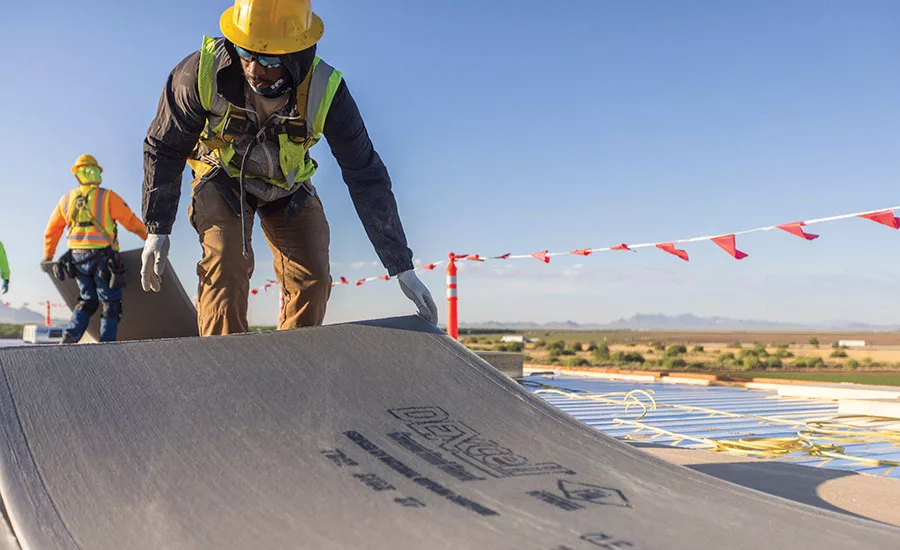
Anyone that’s spent a lot of time on a low-slope commercial roof already knows roofs don’t fail because of one bad product. They fail because something in the system didn’t work the way it was supposed to.
That’s why commercial roof systems are evaluated on the performance of full roof assemblies. Standards like FM 4450 and 4470 Very Severe Hail (VSH) don’t test membranes, insulation or fasteners in isolation. They test every layer, which shows how certain components, like cover boards, help the layers around them perform – and perform as a system.
Why “The System” Matters More Than the Parts
On paper, every component in a roof assembly can meet its own spec. The membrane meets tensile strength. The insulation hits its R-value. The fasteners meet pull-out requirements.
But that’s not how roofs experience the real world.
Wind doesn’t hit just the membrane. It impacts the entire assembly. Hail doesn’t stop at the surface. It drives pressure into the insulation below. Foot traffic doesn’t just wear the top layer. It compresses everything underneath it.
That’s why assemblies pass or fail.
For installers, this can show up on the job site in ways that don’t always get called out in the spec:
- Fasteners backing out because insulation compresses
- Membranes showing premature wear
- Failed uplift tests at perimeters where load paths break down
- Callbacks tied to damage that started below the surface.
When roof assemblies aren’t designed or installed as systems, those issues aren’t surprises. They’re inevitable.
The Weak Link is Usually Under the Membrane
One of the biggest challenges in today’s roofing assemblies is what’s happening beneath the membrane.
As energy codes tied to the International Energy Conservation Code push for higher R-values, assemblies are getting thicker from insulation that’s designed for thermal performance rather than structural durability.
In practice, that insulation can be:
- More compressible under load
- Less resistant to impact
- More susceptible to damage from staging, foot traffic or dropped tools.
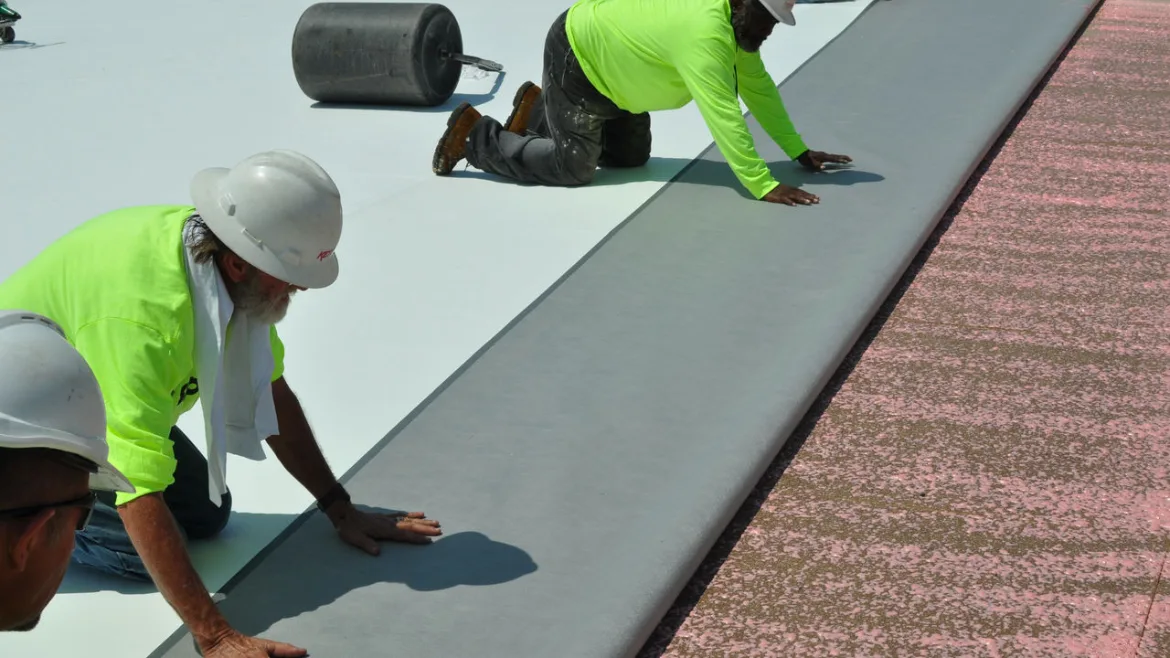
From an installation standpoint, that can create complications on the job. You’re fastening through components that can shift. You’re installing over a surface that may not stay uniform. And you’re expected to deliver an assembly that meets strict performance approvals.
That’s a tough ask. Unless the system is built to handle it.
System Components Can Improve Performance
This is where cover boards earn their place as a critical system component. Installed between the insulation and membrane, a hard cover board changes how the entire assembly performs. How?
- It stabilizes the substrate. A rigid cover board creates a consistent surface for membrane attachment. That means better fastener engagement, more predictable installation and fewer issues with unevenness.
- It distributes load. Instead of compressing insulation at one point, cover boards spread that force across a wider area. That matters for everything from foot traffic to rooftop equipment.
- It protects against impact. In standards like FM 4470 Very Severe Hail (VSH), assemblies are tested for their ability to withstand significant impact. Without a durable layer beneath the membrane and the insulation, passing those tests becomes much more difficult.
- It supports fire performance. Assemblies tested under UL 790 and FM fire standards rely on how layers work together to resist flame spread. Cover boards can help improve those outcomes by adding a protective, noncombustible layer.
- It extends membrane life. A smoother, more stable substrate reduces stress on the membrane, helping prevent punctures and extending life.
- It supports performance of the vapor barrier. Insulation damage can create air pathways that allow moisture-laden air to bypass the vapor barrier. Cover board is a rigid, stable surface above the insulation that stabilizes and protects the layers below it.
If you’ve ever gone back to a roof and seen issues that started below the surface, you’ve seen the difference a cover board can make.
Performance Standards Don’t Leave Room for Guesswork
For installers, here’s one key trend to keep in mind: performance expectations are getting more specific. FM 4450 evaluates wind uplift and fire performance at the system level while FM 4470 VSH pushes assemblies to meet increasingly stringent hail resistance criteria in an expanding geography.
These performance standards expectations are tied to real-world conditions and, increasingly, to insurance requirements and owner expectations. To meet those expectations and the changing standards that are driving them, roofing specifiers are specifying roof assemblies with hard cover board.
What that means in the field is simple: There’s less margin for error in how assemblies are built and installed. Every layer has to do its job. Every connection has to hold. And the system has to perform as designed to stand up to everyday traffic and severe situations.
What Installers Are Seeing in the Field
If you talk to crews working across different regions, a few trends come up again and again:
- More hail in more places – Areas that didn’t used to worry about severe hail are now seeing it regularly. That puts more pressure on assemblies to meet higher impact standards.
- Higher wind expectations inland – Coastal wind requirements aren’t staying on the coast. They’re moving inland, bringing stricter uplift demands with them.
- More rooftop traffic and equipment – From HVAC units to data center infrastructure, roofs are carrying more than ever. And more use means more wear.
None of those trends are going away. And none of them are solved by a single product. They’re solved by assemblies that are built and installed to perform as systems.
Those conditions also influence the material selection of the products in those systems. Hard cover board isn’t one-size-fits-all, and different environments call for different types of cover board to fit those needs. For example, DEXcell Roof Board products—manufactured by Gold Bond Building Products, LLC and PermaBASE Building Products, LLC, affiliates of National Gypsum Company—are offered in four roof cover board options, including glass mat gypsum and cement board, to address a wide range of performance needs, from hail and fire resistance to durability under traffic and longterm stability.
There’s also field demand for efficiency, which can be impacted by material selection. Cover board made of gypsum or cement scores and snaps easily for more efficient and precise installation.
What This Means When You’re on the Roof
At the end of the day, building science only matters if it holds up in the field. For installers, a systems-based approach isn’t about theory. It’s about making the job go right the first time and keeping it that way.
It means:
- Understanding how each layer affects the next
- Installing assemblies that match the performance expectations in the spec, and not just the minimum requirements
- Reducing callbacks by building durability into the system from the start
When a roof fails, everything comes into question – the spec, the product, the installation. And when a roof performs – through wind, hail, fire and years of use – that’s the result of a system that was designed right and installed right.
If You Know, You Know
You already understand that performance isn’t about checking boxes. It’s about how everything works together. And cover boards separate the assemblies that pass on paper from the roofs that perform in the real world.
Looking for a reprint of this article?
From high-res PDFs to custom plaques, order your copy today!