Energy Codes
Court Blocks HUD Energy Code Rule for Housing
Decision halts 2021 IECC mandate
Key Takeaways
- What federal policy was blocked? A court struck down a rule that would have required the 2021 IECC for homes financed through certain HUD and USDA housing programs.
- How do energy codes affect roofing work? Energy codes influence attic insulation levels, roof deck insulation and air sealing requirements that affect residential roof assemblies.
- Will stricter codes still move forward? Analysts expect energy code adoption to continue at the state and local level even without a federal mandate.
A federal district court in East Texas has vacated a rule from the U.S. Department of Housing and Urban Development and the U.S. Department of Agriculture that would have required the 2021 International Energy Conservation Code for certain federally backed housing programs.
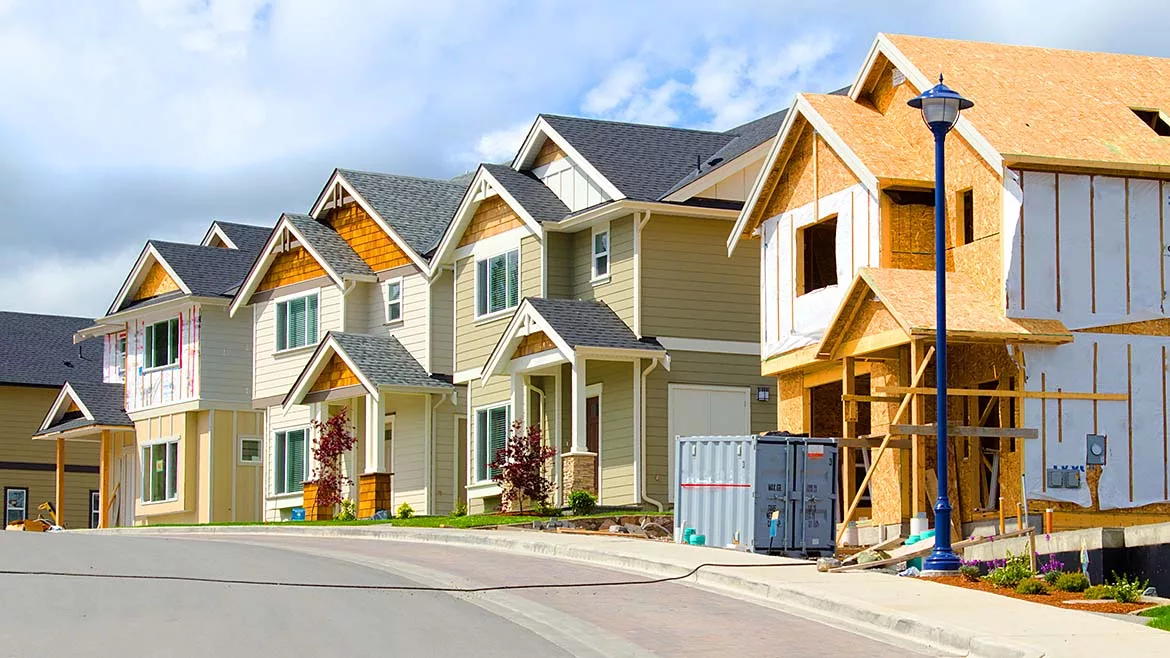
Because HUD and USDA housing programs support residential construction nationwide, the decision could affect energy code requirements for thousands of federally financed homes across the country.
The rule would have tied certain federally backed mortgage programs to newer model energy codes, including the 2021 International Energy Conservation Code and the ASHRAE 90.1-2019 standard.
The lawsuit challenging the rule was filed by the National Association of Home Builders and a coalition of states. NAHB argued the mandate would increase construction costs and exceed the authority HUD and USDA have under the Cranston-Gonzalez National Affordable Housing Act.
In a statement following the decision, NAHB Chairman Bill Owens called the ruling “a major victory for housing affordability.”
Industry groups remain divided over how stricter energy codes affect housing costs and building performance.
For roofing contractors, energy code updates can directly affect roof assemblies, attic insulation levels and ventilation practices.
Curt Rich, president and CEO of the North American Insulation Manufacturers Association, and Michael Kwart, executive director of the Insulation Contractors Association of America, said newer energy codes are more expensive to meet due to provisions that drive adoption of high-efficiency heating, cooling and water heating equipment .
“Homebuilders are not wrong that the most recent model energy codes can be expensive to implement,” Rich and Kwart wrote in commentary on the case, noting the National Association of Homebuilders (NAHB) utilizes an industry study to assert that complying with the 2021 IECC adds between about $9,600 and $21,400 to the cost of a new home, depending on climate zone.
Rich and Kwart suggested the 2012 IECC could provide a compromise that improves efficiency while limiting construction cost increases.
“It is time to call a ceasefire in the energy code wars and build to an energy code that keeps construction costs manageable and homes affordable while ensuring that new homes deliver meaningful, long-term energy savings."
Some building-performance professionals say stronger codes remain important for long-term building quality and indoor air conditions.
Jessica A. Azarelo, CEO of The Attic Queen, said she was disappointed by the ruling.
“Homes need to be built better,” Azarelo said. “It’s far cheaper to do it correctly during new construction than to fix the problems after the house is built.”
She said issues such as poor air sealing, improper insulation installation and poorly sized mechanical systems can lead to indoor air quality problems and moisture issues in new homes.
Industry analysts say the ruling highlights a broader national debate between housing affordability and long-term building performance.
Lilli Tillman Smith, an analyst covering roofing and insulation at Principia, said adopting the 2021 IECC would increase upfront construction costs but would also produce homes that are more energy efficient and less expensive to operate over time.
She said slower adoption of stricter codes could also reduce demand growth for insulation materials because code updates typically increase insulation levels in attics and other parts of the building envelope.
Even without a federal mandate, Smith said newer energy codes are expected to continue advancing through state and local adoption.
For now, the court’s decision leaves federal housing programs tied to older energy standards while the broader national debate over energy codes and housing affordability continues across the construction industry.
Looking for a reprint of this article?
From high-res PDFs to custom plaques, order your copy today!