Supply Evolution
10 Big Roofing Takeaways From Brad Jacobs’ QXO Investor Q&A
From private label roofing products to AI-powered logistics, QXO outlined an aggressive strategy to reshape building products distribution following its proposed TopBuild acquisition.
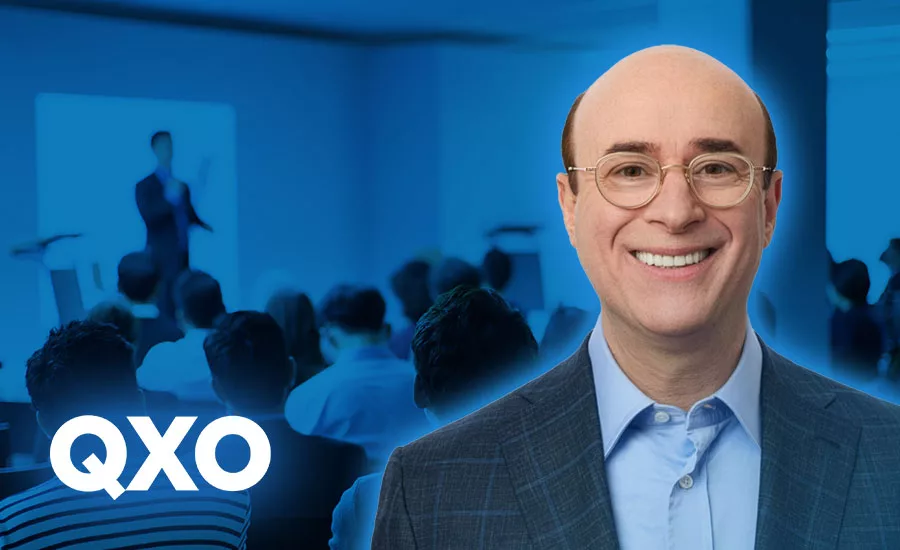
QXO Chairman and CEO Brad Jacobs is making an aggressive bet on roofing — and the numbers behind his latest investor Q&A show just how central contractors, distributors and suppliers are to the company’s long-term growth strategy.
From roughly 22,000 daily job-site visits to an ambitious goal of reaching $50 billion in revenue within the decade, the company outlined a sweeping plan to reshape building products distribution through technology, logistics, cross-selling and deeper contractor relationships following QXO’s proposed acquisition of insulation giant TopBuild.
“We aim to reach $50 billion of revenue within the decade,” the company said, as QXO works to build what could become one of the industry’s largest technology-driven platforms spanning roofing, waterproofing, insulation and broader construction supplies.
For roofing contractors and suppliers, the message was clear: QXO appears to view roofing as a central piece of a broader construction supply ecosystem designed to capture more of the project lifecycle.
Here are the biggest takeaways from the May 2026 investor Q&A.
1. QXO Wants to “Own the Job Site”
One of the most notable themes in the investor Q&A centered on TopBuild’s daily field presence. QXO said TopBuild personnel make roughly 22,000 job-site visits per day, giving the combined company real-time visibility into construction activity, inventory needs, and customer behavior. Executives said that intelligence could help optimize inventory placement, improve procurement decisions and create more cross-selling opportunities across roofing, insulation, waterproofing and other building products categories.
For roofing contractors, that points to a future where distributors play a larger role in coordinating jobs, managing inventory flow and helping keep projects on schedule — not simply dropping off materials.
2. Roofing Remains a Core Growth Engine
While the TopBuild acquisition deepens QXO's presence in insulation and installation services, roofing remains a major part of the company’s broader strategy.
The Q&A repeatedly referenced opportunities to grow market share in roofing, waterproofing and complementary exterior products through bundled offerings and improved customer service.
QXO also pointed to overlap among Beacon, Kodiak and TopBuild customers, particularly across roofing, builders and broader construction markets. The company’s long-term goal is to create a one-stop supplier model that serves contractors and builders across multiple product categories.
3. QXO Thinks Contractors Will Pay More for Better Service
One of the more revealing insights for distributors and suppliers came during a discussion about contractor buying behavior.
According to QXO, roofing customers are willing to pay a 2% to 7% premium for strong performance in five areas:
- Product availability
- Speed of quoting
- Invoice accuracy
- On-time and in-full delivery
- Well-trained sales and support teams
That finding appears to be shaping QXO’s investment priorities, especially around technology, inventory management and service consistency.
4. Technology Is the Company’s Biggest Differentiator
The company repeatedly described the building products distribution sector as “under-digitized.”
QXO believes technology can improve everything from pricing discipline and labor productivity to customer retention and route optimization. The company outlined plans for a fully integrated digital platform that includes:
- ERP systems
- Transportation management software
- Warehouse management tools
- Planned AI-enabled CRM
- Advanced business intelligence
- E-commerce capabilities
For contractors, that could translate into faster quotes, better inventory visibility, more accurate deliveries and tighter scheduling coordination.
Related: How Mega Mergers are Redefining Roofing Distribution
5. Private Label Roofing Products Are a Major Focus
QXO said private label expansion represents one of its clearest margin opportunities — particularly in roofing-related categories.
The company identified roofing accessories, underlayment, waterproofing and ridge caps as immediate targets for private label growth. Executives said private-label products can generate materially higher gross margins than branded alternatives, in some cases reaching 50% or more.
For manufacturers, that may signal increasing competitive pressure from distributor-owned brands. For contractors, QXO framed private label as a lower-cost option with improved availability and faster turnaround times.
6. QXO Is Reshaping Supplier Relationships
The company also described a strategy it called “flipping the supplier relationship.”
Rather than simply negotiating lower prices, QXO said it wants to become the customer that manufacturers prioritize by offering broader market access, better demand visibility, and stronger digital sales channels.
Executives specifically mentioned major suppliers, including:
- GAF
- Owens Corning
- Saint-Gobain
- Carlisle
- Johns Manville
- DuPont
QXO also acknowledged it plans to trim smaller suppliers while consolidating procurement leverage across Beacon, Kodiak and TopBuild operations.
7. Cross-Selling Will Be Easier With Builders Than Roofers
QXO acknowledged that cross-selling opportunities in roofing may be narrower than in broader construction markets.
The company said specialty trades like roofing typically buy within a more limited range of categories, while homebuilders and general contractors present bigger opportunities for bundled sales. Still, the company sees major opportunity in mega-projects and commercial construction, where it can combine roofing, waterproofing, insulation and construction supplies into unified packages.
8. Beacon’s Integration Is Already Changing Operations
QXO also shared several updates on its ongoing Beacon integration. Among the biggest operational changes so far:
- Organizational layers reduced from nine to four
- Centralized procurement is replacing roughly 1,600 buyers
- New pricing discipline tools
- Transportation operations were brought partially in-house
- Reactivation efforts targeting 25,000 dormant accounts
The company said it is also reconfiguring inventory management processes to improve stock levels for fast-moving roofing products.
9. QXO Believes the Industry’s Biggest Problem Is Operational Discipline
When asked what is holding building products distribution back, QXO pointed to a lack of technology and operational discipline across a fragmented market. The company believes better forecasting, centralized data and logistics optimization can significantly improve contractor service levels and margins. That philosophy appears to underpin virtually every part of QXO’s strategy — from acquisitions to routing systems to pricing technology.
10. AI Is Moving Into Roofing Distribution Faster Than Many Contractors Realize
QXO said recent technology rollouts include:
- AI negotiation capabilities
- AI procurement agents
- Advanced forecasting tools
- Planned AI-enabled CRM systems
The company also plans to integrate AI deeper into pricing, inventory management, customer engagement and logistics over the next two years.
For roofing contractors and suppliers, that could eventually mean faster quoting, more dynamic pricing, automated purchasing recommendations and increasingly data-driven sales relationships.
Looking for a reprint of this article?
From high-res PDFs to custom plaques, order your copy today!