Commercial Roofing
Best Practices for Commercial Roofing Installations
Roofing contractors should always follow installation best practices on commercial roof projects, especially as they pertain to high-performance systems.
For many commercial buildings, a leaking roof can spell disaster. Water intrusion can damage critical infrastructure, disrupt operations and lead to significant financial losses.
For roofing contractors, premature roof failure may result in warranty claims, callbacks, and damage to your reputation. Time spent correcting issues is time taken away from future opportunities.
That’s why following proper commercial roof installation practices is essential. It’s widely recognized in the commercial roofing industry that improper installation is a significant cause of failures, particularly roof leaks.
In this article, we’ll highlight some common mistakes and how to avoid them, best practices for single-ply membrane commercial roof installation, special considerations that must be made for different types of facilities, and other factors that can make or break your install.
Best Practices for Single-Ply Roofing Installation
Sound commercial roof installation is often about avoiding errors that can result in problems later on. Paying attention to the following areas can significantly reduce the potential of early failure.
Proper Seam Welding and Adhesion
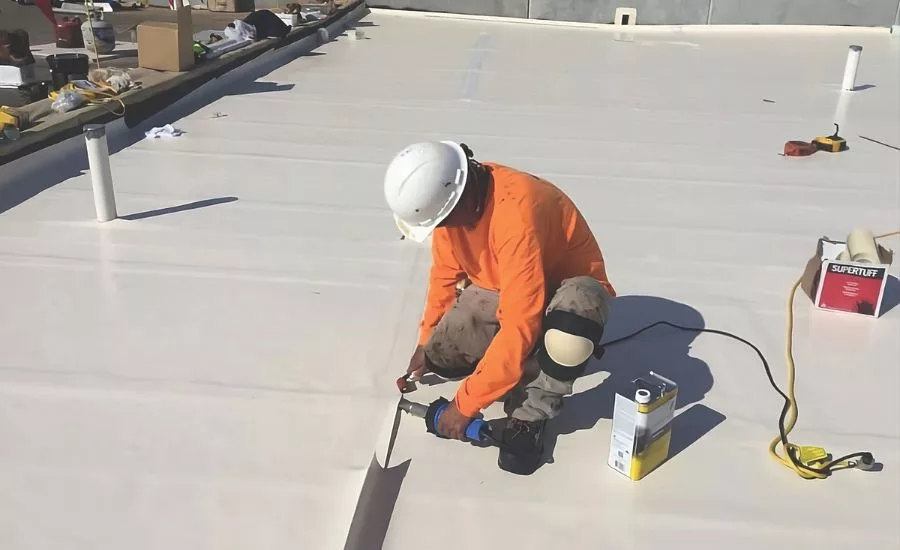
Thermoplastic single-ply roof membranes (which include PVC and TPO) are installed by heat-welding individual sheets together. Because roof materials will inherently expand and contract depending on weather conditions, the integrity of each weld is important. Over time, poorly welded seams are prone to separating and becoming failure points.
Proper preparation of the seam area is critical, as is heat-welding at the specified temperatures. The use of robotic welding machines, now common in the industry, can improve the speed and consistency of heat-welds. While these machines can help with consistency, it’s important to verify they have been properly calibrated to ensure accurate temperatures and speed. Doing so helps create reliable welds.
It is also important to consider the weather factors at the time of installation. During freezing conditions, water can crystallize on the sheet surface, introducing moisture that interferes with the welding process and increases the risk of seam failure. Similarly, extreme heat (90 degrees Fahrenheit and above) can overheat the material and weaken the weld. For best results, seam welding should be performed under moderate conditions whenever possible, so it’s important to consider the climate conditions and time of year.
Comparatively, thermoset membranes (including EPDM) are often seamed using adhesive tapes. This process is just as critical. Surface preparation is important, as is applying firm and even pressure across each seam — any opening is an opportunity for water intrusion. Weather must be accounted for here, too, as many adhesive tape primers are rated for application only above freezing temperatures.
Proper Detailing of Transitions and Penetrations
Commercial roofs inherently contain many penetrations associated with activities underneath the roof. Exhaust pipes, HVAC equipment and a multitude of other industrial equipment must be accounted for when installing the roof membrane.
These areas present greater detailing challenges compared to standard field seams and are common sources of leaks when not properly addressed. Be sure to give special care and attention around penetrations and transitions to ensure they are properly detailed and sealed.
Anticipating Use Conditions
When installing a commercial roof system, it is important to consider the conditions it will face throughout its lifespan.
For example, high winds can pose a significant threat. Anticipated wind loads are used to determine the appropriate fastener density across the system. Miscalculating fastener density requirements can increase the risk of membrane detachment under high wind conditions. Tests that help determine Allowable Stress Design (ASD), performed in conjunction with the membrane or system supplier, can help determine optimal fastener density.
Elsewhere, regions that regularly experience hail may necessitate the use of coverboards to supplement the roof system’s integrity under such conditions. Additionally, a high-performance roof membrane with exceptional puncture resistance can also contribute to system performance.
Project Inspection
Most commercial roof projects are subject to a final inspection upon completion. These inspections help uncover obvious mistakes that can lead to failure, so they can be rectified quickly.
However, it is best to routinely inspect work throughout the entire project. This may include pre-project inspections to assess conditions and account for special considerations that should be made throughout the job. Interim inspections can help determine if the work has been performed properly and may uncover errors that can be prevented and corrected throughout the remainder of the project. Some roof system suppliers will assist in this process, and some projects may even require supplier assistance. This can go a long way to ensure a reliable installation.
Tailored Strategies for Different Building Types
Not all buildings are created equal. There are some special considerations among different types of commercial facilities. In many cases, performance requirements will be included in the roof specification, and it’s helpful for roofing contractors to remain knowledgeable of such requirements to select compliant materials.
Some of those performance requirements include:
- Enhanced Fire Ratings. Some buildings — including hospitals, schools and other mission-critical facilities — will require enhanced fire performance requirements. A Class A fire rating may be necessary in these types of projects, requiring roof membrane materials that can help reduce or stop flame spread in the event of a building fire.
- Chemical Considerations. Some commercial roofs will see regular exposure to chemicals transmitted from interior activities. Food processing facility roofs, for example, may contend with exhaust emissions containing gas, grease, animal fats and industry-specific cleaning agents. A roof membrane that maintains exceptional resistance to chemical exposure is important here.
- Proper Insulation. Insulation requirements vary among facilities. Cold storage and other tightly temperature-controlled facilities typically require additional insulation to ensure proper temperature regulation. Comparatively, a non-air-conditioned warehouse may need minimal insulation.
- Vapor Resistance. Some facilities require the use of a vapor barrier to prevent condensation and moisture migration into the roofing assembly. These may include paper mills, mixed-use facilities and data centers.
The Benefits of Certified Application
Certified applicator programs may involve training for consistent installation quality of specific roofing products and systems. Many high-performance roof system suppliers require contractors to complete these training programs to be eligible to install their products.
These programs offer mutual benefits to contractors, system suppliers and end users by ensuring product performance consistency and long-term reliability. For the system supplier, such a program may be a critical part of their ability to offer extended warranties for end users.
For end users, such a program can grant further confidence in their investment in a new, high-performance roof system. For contractors, participating in a certified applicator program is a way to gain access to higher-performing materials rather than being limited to builders-grade materials, creating more value for the business.
The best jobs are those that are performed once, without the need to return for reactive service and repair. Ensuring reliable, long-term performance involves performing sound installations, accounting for the needs of the roof application and selecting high-performance membranes. Your business will be better for it.
Looking for a reprint of this article?
From high-res PDFs to custom plaques, order your copy today!