Sustainability
Study Shows Green Roofs Can Capture Microplastics
Green roofs can draw out nearly 98% of microplastics from the air
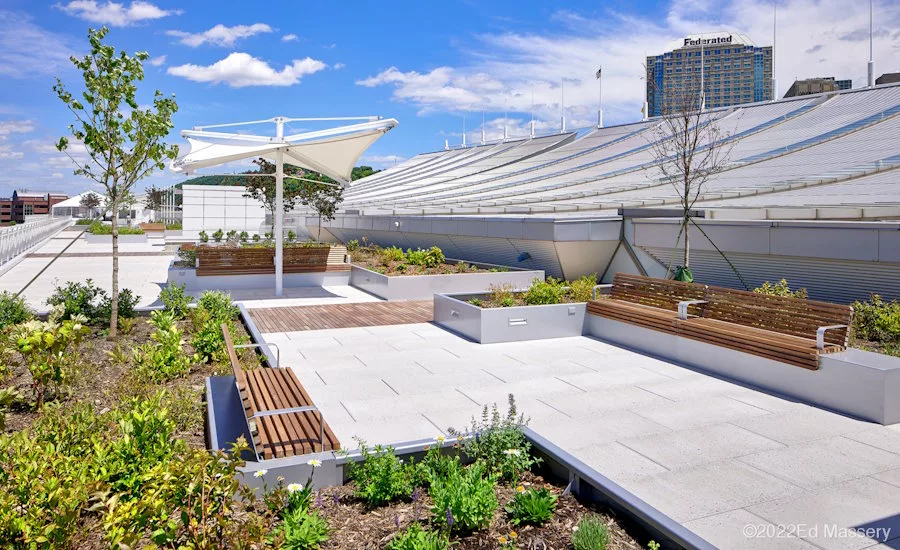
Photos courtesy of Siplast
QUICKTAKE
- Health and Environmental Impact: Microplastics are pervasive in the environment and pose significant health risks to humans, including an increased risk of cancer and organ damage.
- Microplastic Removal: A new study found that green roofs can intercept over 97.5% of atmospheric microplastics, with the majority retained in the planting soil layer.
- Added Sustainability Benefit: Beyond energy savings and stormwater control, green roofs offer a powerful new tool for improving urban air and water quality.
A new study demonstrates how green roofs can serve an additional sustainability role by removing microplastics from the environment.
Teams of researchers from Tongji University and the Shanghai Academy of Landscape Architecture Science and Planning — both in China — determined that plants grown on roofs can intercept and retain microplastics in urban settings.
Microplastics are plastic fragments measuring under 5 mm, typically the result of larger plastics in personal care items degrading, according to Food Safety Magazine. They’re practically everywhere, from trash and seafood to table salt and the air we breathe.
They’re even found in humans, with research showing exposure leads to health problems like cancer and lung and liver complications.
As scientists explore solutions such as plastic-eating microorganisms, the green roof study suggests one potential countermeasure. Published in Communications Earth & Environment, the study shows that green roofs removed over 97.5% of deposited microplastics.
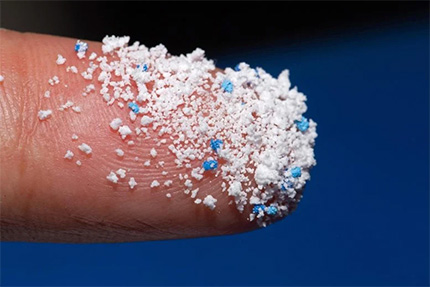
Microplastics are fragments of any type of plastic that are less than 5 mm (0.20 in) in length.
“These results show that green roofs can play a valuable role in reducing urban microplastic pollution and offer practical insights for designing future stormwater and air-quality management strategies,” the study says.
Microplastics enter coastal urban areas through atmospheric fallout and stormwater runoff. With this in mind, the study focused on how green roofs process atmospheric particulates like microplastics.
Four simulated roofs were set up in a lab for the experiment. One replicated a traditional roof configuration without a green roof, one contained a green roof module without plants, and two were planted with common green roof species used in Shanghai.
They introduced microplastics in the air above the roofs at typical levels found in Shanghai. They then simulated rain with a pump that delivered water to overhead distribution systems. Researchers then analyzed the soil and plants for microplastic levels. The research found that higher rainfall intensities slightly increased efficiency due to enhanced moisture content and reduced hydraulic gradient.
“Green roofs demonstrated an impressive average interception efficiency of more than 97.5% for trapping microplastics from atmospheric deposition,” the study concluded. “Most microplastics were retained in the planting soil layer (66-92%), with the overground part of vegetation contributing modestly.”
The study cautions, however, that the long-term operation of green roofs may lead to aging and degradation of any plastic components used to build the roof, such as filter fabrics, which could result in new microplastics.
The ability to intercept microplastics is one more positive attribute that green roofs can provide. Green roofs have proven to clean the air, provide stormwater retention and purify runoff. Previous studies also show that they reduce heating and cooling bills.
Looking for a reprint of this article?
From high-res PDFs to custom plaques, order your copy today!


.webp?height=740&t=1781278983&width=auto "KEE(2).png")

.webp?height=200&t=1747929846&width=200 "FORTIFIED-Study-(2)")