search
cart
facebook twitter linkedin youtube instagram Spotify Podcasts Apple Podcasts Spotify Podcasts Apple Podcasts
  • Sign In
  • Create Account
  • Sign Out
  • My Account
  • NEWS
  • TOPICS
    • Cool Roofing
    • Event News
    • Latinos in Roofing
    • Low Slope
    • Legal
    • Metal
    • Project Profiles
    • Roofing Supply Pro
    • Roofing Safety
    • Steep Slope
    • Sustainable Roofing
    • Technology
  • EXCLUSIVES
    • Best of Success
    • Contractor Profile
    • IRE Show
    • Roofing Contractor of the Year
      • Enter Roofing Contractor of the Year
    • Top 100
      • Enter the Top 100
    • Young Guns
    • State of the Industry
  • MULTIMEDIA
    • Videos
    • Podcasts
    • Interactive Spotlights
    • Roofing Quizzes
    • IRE Videos
    • Webinars
    • Photo Galleries
  • PRODUCTS
    • New Products
    • Featured Products
  • COLUMNS
    • Editor's Note
    • Exit Planning
    • Guest Column
  • EVENTS
    • International Roofing Expo
    • Webinars
    • Best of Success Conference
    • Industry Events
  • DIRECTORY
    • Associations
    • Distributors
    • Manufacturer/Supplier
    • Business Services
    • Get Listed
  • MORE
    • Roofing Contractor Newsletters
    • Techos y Más Advisory Board
    • RC Store
    • Roofing Supply Pro
    • Custom Content & Marketing Services
    • Market Research
    • Sponsor Insights
    • Company Spotlights
    • Classifieds
      • Auctions
      • Business For Sale
      • Business Opportunities
      • Equipment For Sale
      • Positions Available
      • Products
      • Safety
      • Software
      • Services
      • Training
    • Contact Us
  • EMAGAZINE
    • eMagazine
    • Advertise
      • Editorial Calendar
      • Contact
    • Archive Issues
  • SIGN UP!
Low Slope RoofingSteep Slope Roofing

Dealing with Coronavirus Lawsuits and Workers’ Compensation

As long as coronavirus remains a serious threat to our health, lawsuits will be filed on behalf of those affected.
By Richard Alaniz
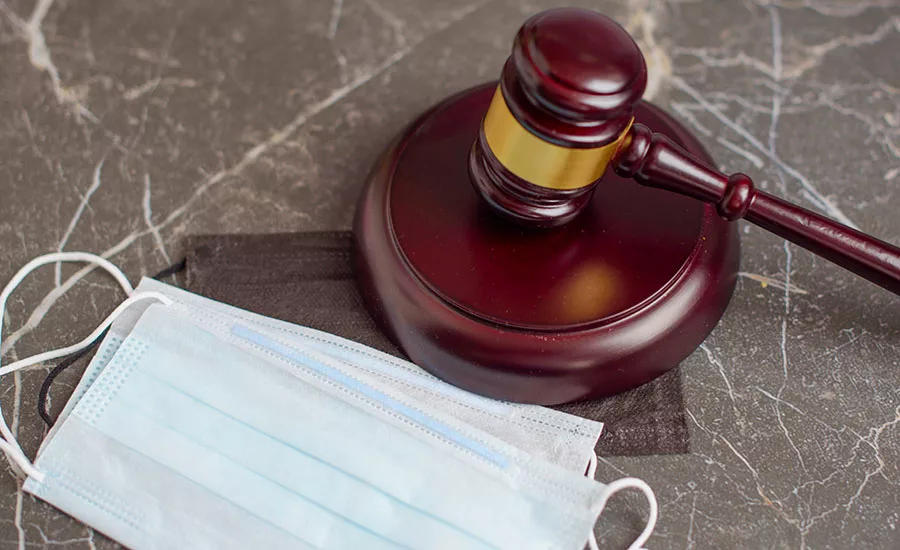
Gavel
December 18, 2020

COVID-19 cases continue to rise following record numbers of new cases reported over the past few months in California, Florida, Texas, and several other states. This recent dramatic increase in cases has caused a sluggish reopening of the economy in many parts of the country. 

At some point, hopefully in the near future, the reopening process will accelerate. Employees will return to their workplaces, joining those essential workers that have continued to work throughout the crisis.

In almost every workplace, employers have been making and will continue to make good faith efforts to keep their employees safe by strictly following the CDC/OSHA and state health agencies' guidance on preventative measures.


Coronavirus Lawsuits

Ensuring that all coronavirus preventive guidance is in place and being followed may be the most immediate priority for most employers, but it’s definitely not the only one. Since the beginning of the crisis, employers have understandably also been concerned over potential lawsuits related to COVID-19 and the anticipated wave of workers’ compensation claims by employees who contracted the illness. Numerous employee lawsuits have already been filed in courts across the country, and more are sure to follow. They’ve included allegations that employers failed to implement effective and necessary preventive measures; that their employer failed to provide adequate personal protective equipment (PPE); that their employer failed to promptly inform them that a co-worker had tested positive; that increased sanitation procedures were insufficient, and similar claims. In cases where an employee unfortunately died as the result of COVID-19, family members have filed wrongful death claims. As long as coronavirus remains a serious threat to our health, lawsuits will be filed on behalf of those affected. 

Some efforts to provide liability protection to employers for liability flowing from the pandemic is happening at the state level. Alabama, Georgia, Iowa, Kansas, Louisiana, Massachusetts, Louisiana, Mississippi, North Carolina, Oklahoma, Ohio, and Wyoming have passed laws limiting liability for employers from some COVID-19-related claims. Similar legislation or executive action is pending in several other states as well. In some cases, the protection is extended only to health care providers. While there have been discussions in the Senate of including a provision limiting liability for employers as part of any new federal stimulus package, that legislation appears stalled. Congress appears to be divided on the issue, but it could still become part of a compromise stimulus bill.


Workers’ Compensation

The predicted wave of workers’ compensation claims by employees infected with the coronavirus has not developed and may not for several reasons. The availability of 80 hours of paid sick leave under the Families First Coronavirus Relief Act (FFCRA) has likely been one reason that relatively few workers’ compensation claims have been filed. The majority of those filed have involved nurses and other first responders who have been on the front line of the response to the pandemic. Workers’ compensation is normally the exclusive remedy of employees for any illness or injury related to the workplace. It is called the “exclusivity bar” since it prevents the filing of lawsuits by employees in virtually all circumstances. COVID-19 is by definition a “disease.” Occupational diseases are those that arise out of and in the course of employment. Most states exclude “ordinary disease of life” from occupational diseases. Ordinary diseases of life include illnesses the general public is equally exposed to and are not the result of increased exposure due to the unique nature of an employee’s job. The expansive community spread of the coronavirus means it is not unique to the workplace. 

The fact that the coronavirus can be contracted by anyone in a variety of circumstances creates the difficulty for an employee to prove that the disease “arose out of and in the course of their employment.” In an effort to avoid the likely denial of these types of claims, a number of states have revised their workplace compensation rules to provide a rebuttable presumption that employees who contract COVID-19 did so in the course of their employment if they have worked during the pandemic. States that have reversed the burden of proof include: Alaska, Arkansas, California, Florida, Indiana, Kentucky, Minnesota, Missouri, New Hampshire, North Dakota, Utah, Washington and Wisconsin. In some of the states, the presumption is limited to first responders. 

Where it is determined that workers’ compensation does not apply, the exclusivity bar protecting employers from lawsuits for workplace illnesses and injuries is obviously not available. In those cases, employees may be able to sue their employers for the tort of negligence, among many others. This is precisely the remedy available for employees of Texas employers who, by law, are permitted to opt out of the state workers’ compensation system. These so-called “non-subscriber” employers take on the responsibility to provide medical care and income guarantees that are provided under traditional workers’ compensation coverage. However, they also have exposure to lawsuits based on negligence theories. Because of the unique nature of the coronavirus and whether there are any long-term effects from the infection, it is difficult to know if there will be extended or permanent health problems preventing an employee from returning to work without limitations. If there are, it could prove even more costly to non-subscribers.

Just as the best course of action to prevent employee exposure is strict compliance with the CDC/OSHA and state health agencies’ guidance, those same efforts will help minimize exposure to lawsuits and governmental action. As more information is known about the coronavirus, the guidance is updated. Continued vigilance is a small price to pay to keep employees safe and businesses operating.

KEYWORDS: COVID-19 lawsuits legal issues in AEC OSHA (Occupational Safety and Health Administration) workers compensation

Share This Story

Looking for a reprint of this article?
From high-res PDFs to custom plaques, order your copy today!
Richard D. Alaniz is senior partner at Alaniz and Schraeder, a national labor and employment firm based in Houston. He has been at the forefront of labor and employment law for over thirty years, including stints with the U.S. Department of Labor and the National Labor Relations Board. He is a prolific writer on labor and employment law and conducts frequent seminars to client companies and trade associations across the country. For more information, call Alaniz at 281-833-2200.

Recommended Content

JOIN TODAY
to unlock your recommendations.

Already have an account? Sign In

  • two-roofers-in-harnesses-on-tile-roof

    How AI Is (and Isn’t) Impacting Roofing Jobs

    A new study from Microsoft shows artificial intelligence...
    Roofing News
    By: Chris Gray
  • Baker-Roofing-Company-employees-on-flat-roof-examinining-paperwork

    Exclusive: 2025’s Top 100 Roofing Contractors

    Roofing Contractor's 2025 Top 100 list reveals revenue...
    Top 100 Roofing Contractors
    By: Chris Gray
  • A before and after heat measurement comparison

    How Hot is Too Hot in the Attic?

    If the ventilation is working, how hot should the attic...
    Columns
    By: Paul Scelsi
You must login or register in order to post a comment.

Report Abusive Comment

Manage My Account
  • eMagazine Subscription
  • Sign Up for the Newsletter
  • Online Registration
  • Manage My Preferences
  • Subscription Customer Service

More Videos

Sponsored Content

Sponsored Content is a special paid section where industry companies provide high quality, objective, non-commercial content around topics of interest to the Roofing Contractor audience. All Sponsored Content is supplied by the advertising company and any opinions expressed in this article are those of the author and not necessarily reflect the views of Roofing Contractor or its parent company, BNP Media. Interested in participating in our Sponsored Content section? Contact your local rep!

close
  • A finished commercial roof, including flashings
    Sponsored byFlashCo

    It’s All in the Details – How to Avoid 4 Common Mistakes with Roofing Accessories

  • Happy mature couple using phone holding credit card making payments. Middle aged older man and woman doing ecommerce shopping on smartphone booking or buying online on mobile sitting at home table.
    Sponsored byWatercress Financial

    Meeting Modern Expectations: Why Offering Financing Is Essential for Roofers Today

  • A roofing contractor stands on a roof behind an American flag
    Sponsored byTAMKO®

    Building Roofs, Building Community: TAMKO’s Lasting Commitment to Veterans and the Military

Popular Stories

TWS Remodeling team

Private Equity Fallout Rocks Roofing; Pros Step In

Malarkey-logo-with-Charles-Collins-headshot

Malarkey Roofing Products Announces New President

roofer-safety-harness-construction.jpg

OSHA's Top 10 Most Cited Violations of 2025

Roofing Contractor Bookstore

Related Articles

  • workers compensation

    Workers' Compensation: A Common Employer's Nightmare

    See More
  • render-2001817_1280.jpg

    Dealing With Workforce Reductions

    See More
  • Top 10 Best Practices in Workers’ Comp

    See More

Related Products

See More Products
  • 51ZWZgSymnL._SX331_BO1,204,203,200_.jpg

    Accidents Waiting to Happen: Best Practices in Workers' Comp Administration and Protecting Corporate Profitability

  • business.png

    How to Succeed With Your Own Construction Business

See More Products
×

Be in the forefront of the roofing industry!

Join thousands of professionals today. Shouldn’t you know what they know?

JOIN NOW!
  • RESOURCES
    • Advertise
    • Contact Us
    • Directories
    • Store
    • Want More
  • SIGN UP TODAY
    • Create Account
    • eMagazine
    • Newsletters
    • Customer Service
    • Manage Preferences
  • SERVICES
    • Marketing Services
    • Reprints
    • Market Research
    • List Rental
    • Survey/Respondent Access
  • STAY CONNECTED
    • LinkedIn
    • Facebook
    • Instagram
    • YouTube
    • X
  • PRIVACY
    • PRIVACY POLICY
    • TERMS & CONDITIONS
    • DO NOT SELL MY PERSONAL INFORMATION
    • PRIVACY REQUEST
    • ACCESSIBILITY

Copyright ©2025. All Rights Reserved BNP Media.

Design, CMS, Hosting & Web Development :: ePublishing