Metal Roofing in Snow Country
Metal roofing systems have a good track record of performance in harsh winter environments, as long as they are properly designed. The key factors are usually snow loading requirements, adequate slope, and the use of snow guards when needed. If these issues are addressed during the design stage and the roofing contractor does his job, these systems will almost always perform as intended.
Metal roofing systems have a good track record of performance in harsh winter environments, as long as they are properly designed. The key factors are usually snow loading requirements, adequate slope, and the use of snow guards when needed. If these issues are addressed during the design stage and the roofing contractor does his job, these systems will almost always perform as intended.
However, of the hundred or so metal roofing projects we have consulted on, a good percentage suffered from the design flaws mentioned above. If these inadequacies are not corrected during the design stage, there are a number of solutions roofing contractors can take advantage of when retrofitting these structures.
It was February and the building owners didn’t like the drips all over the floors. One building was an ice hockey rink and the other was an electronics warehouse. We counted 90 stalagmites on the surface of the ice rink from drips coming from the leaking roof.
When the snow piled up on the roof, melting occurred and ice dams resulted in water ponding 3 inches deep. Metal roofs leak under these circumstances.
Some metal building manufacturers will not warranty a roof with a 1/4-inch slope. Others allow a 1/4-inch slope. A 1/4-inch slope may work in Alabama, but one can expect leaks in Minnesota or Connecticut. We cannot think of any circumstance where we would recommend a standing seam roof with a slope of less than 1 inch per foot.
So how do you add slope to a metal roof that is leaking?
One solution that has worked for us is the Roof Hugger retrofit framing system that adds a new, sloped roof above the existing roof. The company produces sub purlins for all existing metal roof profiles that allow reroofing with your choice of any supplier’s new metal panel. Wind loading can also be enhanced, purlin spacing decreased, roof steps removed and extra insulation added. Visit www.roofhugger.com for more information.
Another second approach involves installing EPS insulation between the flutes, polyiso insulation over the top and a single-ply roof membrane over the insulation. We have used the Duro-Shield metal retrofit system from Duro-Last Roofing Inc. (www.duro-last.com) with success, and there are probably others.

Where there is any significant humidity (over 30 percent relative humidity) inside a building in a cold - or even cool - climate, there will be condensation and dripping when the fiberglass facer is only overlapped, or folded and stapled.
The vapor barrier must be sealed and airtight in its entirety. The seams and penetrations must be sealed at the floor-wall juncture, at the wall-roof intersections, etc.
Because getting an adequately airtight seal can be difficult to achieve in the field, foam insulated panels are a good choice in cold climates for buildings with high interior humidity such as pools, printing plants, trash plants, etc.
There are several good pressure-sensitive tapes on the market to match the insulation vapor barrier facer. However, the tape will not seal to damp or dusty surfaces. Also, the tape must be pressed into place for a long-lasting seal. When properly installed, a quality tape will last the life of the building.
The metal building industry needs to address the issue of low-slope roofs in areas where it snows. Again, we suggest a minimum slope of 1 inch per foot. Unfortunately, it is frequently the contractor, not the architect, who gets sued when ice dams cause leaks.
Low-slope roofs are certainly good for my consulting business dealing with moisture problems. But they are not good for Roofing Contractor’s readers, so issues of slope must be addressed early on.
The building owner was not happy with the Canadian manufacturer and lawyers were hired. Obviously, the manufacturer of this metal building was in error to state that the structure was designed for an 80 psf snow load.
The moral of the story is to ask for a P.E. seal on the design documents when you buy a building or are hired to re-roof one.
On another recent project, a Southern Maine homeowner wanted a red standing seam roof on his new home to match the roof on a barn. Last winter, we had a total of 13 feet of snowfall in Southern Maine. The standing seam roofing was 29 gauge. As the resulting ice “glacier” moved down the two north side valleys, it tore the 29 gauge steel like it was tissue paper. The solution was to install snow blocking devices on both sides of the valley to control the glacier from damaging the standing seams.
With the cumulative total snowfall of 13 feet in Northern New England (Maine, New Hampshire and Vermont) last winter, it has been a good year for consulting engineers. We have looked at many collapsed or sagging roofs in the past several months. Other problems we have seen fall into the following categories:
• Collar ties - Either non-existing or inadequate. This seems rather basic, but some builders/carpenters were asleep the day the instructor talked about collar ties. Collar ties are the structural members that keep a sloped roof from collapsing.
• Rot - We have seen many garages, sheds and barns with 50-plus-year-old asphalt shingles (that leak) with resulting rot at the eaves and ridge. The 5-foot deep snow load brings the building down and the building owner wants replacement cost from the insurance carrier.
However, when the building or homeowner ignores the roof for 50 or so years and it collapses into a rotted heap, the owner should not (in our opinion) expect reimbursement from the insurance company.
• Inadequate trusses - To save a few dollars, unfortunately some builders will install trusses rated at 40 psf load in an area where the code requires 60, 70 or 80 psf design. Typically, this is due to inadequate code enforcement at the local level. Combine this with a two-level roof where the snow drifts are 6 or 8 feet deep, and the result is not pretty. However, it is good for the consulting engineering business.
When a roof fails - metal or otherwise - the first party to get blamed is the contractor. In my experience, the cause of the failure is generally the fault of the designer. That is little consolation, however, when the contractor is also dragged into court.
The standing seam metal roof on this ice hockey rink leaked like a sieve a few weeks after the first snow arrived. The 1/4-inch per foot slope was not adequate. A minimum slope of 1 inch per foot is recommended in snow country.
Metal roofing systems have a good track record of performance in harsh winter environments, as long as they are properly designed. The key factors are usually snow loading requirements, adequate slope, and the use of snow guards when needed. If these issues are addressed during the design stage and the roofing contractor does his job, these systems will almost always perform as intended.
However, of the hundred or so metal roofing projects we have consulted on, a good percentage suffered from the design flaws mentioned above. If these inadequacies are not corrected during the design stage, there are a number of solutions roofing contractors can take advantage of when retrofitting these structures.
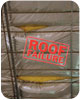
This photo from inside the rink shows ceiling insulation filled with water, with ice and water forming on the insulation facer.
Low-Slope Standing Seam Roofs
Presently, we are consulting on a couple of metal roofs where the architect designed a slope of 1/4 inch per foot. The span for both roofs was 200 feet or more. Both are located in Southern New England - not serious snow country for a Mainer like myself - but problems developed nonetheless.It was February and the building owners didn’t like the drips all over the floors. One building was an ice hockey rink and the other was an electronics warehouse. We counted 90 stalagmites on the surface of the ice rink from drips coming from the leaking roof.
When the snow piled up on the roof, melting occurred and ice dams resulted in water ponding 3 inches deep. Metal roofs leak under these circumstances.
Some metal building manufacturers will not warranty a roof with a 1/4-inch slope. Others allow a 1/4-inch slope. A 1/4-inch slope may work in Alabama, but one can expect leaks in Minnesota or Connecticut. We cannot think of any circumstance where we would recommend a standing seam roof with a slope of less than 1 inch per foot.
So how do you add slope to a metal roof that is leaking?
One solution that has worked for us is the Roof Hugger retrofit framing system that adds a new, sloped roof above the existing roof. The company produces sub purlins for all existing metal roof profiles that allow reroofing with your choice of any supplier’s new metal panel. Wind loading can also be enhanced, purlin spacing decreased, roof steps removed and extra insulation added. Visit www.roofhugger.com for more information.
Another second approach involves installing EPS insulation between the flutes, polyiso insulation over the top and a single-ply roof membrane over the insulation. We have used the Duro-Shield metal retrofit system from Duro-Last Roofing Inc. (www.duro-last.com) with success, and there are probably others.
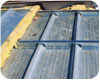
One approach to retrofitting metal roofs with inadequate slope involves installing EPS insulation between the flutes, polyiso insulation over the top, and a single-ply roof membrane over the insulation.
Battling Condensation Problems
In both of the problem roofs mentioned above, some of the dripping was the result of condensation due to overlapped or rolled and stapled vapor barrier seams.Where there is any significant humidity (over 30 percent relative humidity) inside a building in a cold - or even cool - climate, there will be condensation and dripping when the fiberglass facer is only overlapped, or folded and stapled.
The vapor barrier must be sealed and airtight in its entirety. The seams and penetrations must be sealed at the floor-wall juncture, at the wall-roof intersections, etc.
Because getting an adequately airtight seal can be difficult to achieve in the field, foam insulated panels are a good choice in cold climates for buildings with high interior humidity such as pools, printing plants, trash plants, etc.
There are several good pressure-sensitive tapes on the market to match the insulation vapor barrier facer. However, the tape will not seal to damp or dusty surfaces. Also, the tape must be pressed into place for a long-lasting seal. When properly installed, a quality tape will last the life of the building.
The metal building industry needs to address the issue of low-slope roofs in areas where it snows. Again, we suggest a minimum slope of 1 inch per foot. Unfortunately, it is frequently the contractor, not the architect, who gets sued when ice dams cause leaks.
Low-slope roofs are certainly good for my consulting business dealing with moisture problems. But they are not good for Roofing Contractor’s readers, so issues of slope must be addressed early on.
The Roof Hugger retrofit framing system adds a new sloped roof above the existing metal roof. The company produces sub purlins for all existing metal roof profiles that allow re-roofing with your choice of any supplier’s new metal panel.
Snow Loading on Metal Roofs
We recently consulted on a Quonset building where the sales contract stated the structure could withstand a snow load of 80 pounds per square foot (psf). When the building collapsed, we estimated the snow load at less than 20 psf.The building owner was not happy with the Canadian manufacturer and lawyers were hired. Obviously, the manufacturer of this metal building was in error to state that the structure was designed for an 80 psf snow load.
The moral of the story is to ask for a P.E. seal on the design documents when you buy a building or are hired to re-roof one.
On another recent project, a Southern Maine homeowner wanted a red standing seam roof on his new home to match the roof on a barn. Last winter, we had a total of 13 feet of snowfall in Southern Maine. The standing seam roofing was 29 gauge. As the resulting ice “glacier” moved down the two north side valleys, it tore the 29 gauge steel like it was tissue paper. The solution was to install snow blocking devices on both sides of the valley to control the glacier from damaging the standing seams.
With the cumulative total snowfall of 13 feet in Northern New England (Maine, New Hampshire and Vermont) last winter, it has been a good year for consulting engineers. We have looked at many collapsed or sagging roofs in the past several months. Other problems we have seen fall into the following categories:
• Collar ties - Either non-existing or inadequate. This seems rather basic, but some builders/carpenters were asleep the day the instructor talked about collar ties. Collar ties are the structural members that keep a sloped roof from collapsing.
• Rot - We have seen many garages, sheds and barns with 50-plus-year-old asphalt shingles (that leak) with resulting rot at the eaves and ridge. The 5-foot deep snow load brings the building down and the building owner wants replacement cost from the insurance carrier.
However, when the building or homeowner ignores the roof for 50 or so years and it collapses into a rotted heap, the owner should not (in our opinion) expect reimbursement from the insurance company.
• Inadequate trusses - To save a few dollars, unfortunately some builders will install trusses rated at 40 psf load in an area where the code requires 60, 70 or 80 psf design. Typically, this is due to inadequate code enforcement at the local level. Combine this with a two-level roof where the snow drifts are 6 or 8 feet deep, and the result is not pretty. However, it is good for the consulting engineering business.
When a roof fails - metal or otherwise - the first party to get blamed is the contractor. In my experience, the cause of the failure is generally the fault of the designer. That is little consolation, however, when the contractor is also dragged into court.
Looking for a reprint of this article?
From high-res PDFs to custom plaques, order your copy today!
.webp?height=740&t=1781278983&width=auto "KEE(2).png")