Web Exclusive: It's Getting Hot in Here
Why cool roofing systems are an effective sustainable design strategy for increasing occupant comfort, reducing energy costs and helping the environment.

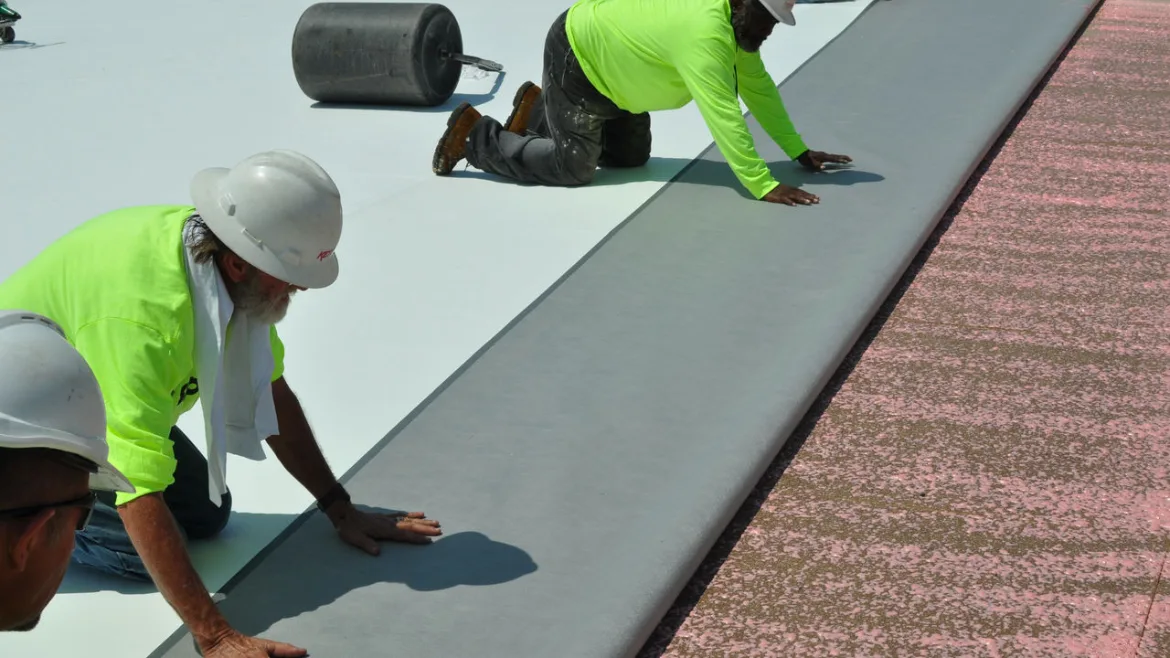
A cool roof is a roofing system that reflects a significant portion of incoming solar radiation back into the atmosphere while resisting the absorption of solar energy and transfer to the building envelope. The “coolness” of a roof is defined by two properties, solar reflectance and thermal emittance. The properties are measured on a scale from 0 to 1, and the higher the value, the "cooler" the roof. The Solar Reflectance Index (SRI) is a combination of the two properties, and is a common measurement used by manufacturers and building rating systems, such as LEED, to indicate overall performance. For example, to meet the requirements of the LEED credit that addresses the heat-island effect of roofing systems, projects must use roof systems with a SRI of 78 for low-slope roofs (less than or equal to 2:12 slope) or an SRI of 29 for steeply sloped roofs (equal to or greater than 2:12 slope).
Selecting the appropriate roofing can have a significant impact on both the indoor and outdoor environment, as well as the amount of energy required to cool a building. The heat-island effect is a well-known phenomenon that has serious consequences for the quality of life in developed areas. According to research by the Lawrence Berkeley National Laboratories, late afternoon temperatures in cities in the summer months can be from 2 degrees to 10 degrees Fahrenheit higher than in surrounding non-urban areas. This affects comfort levels in the outdoor environment and also greatly increases the heat load that must be managed by building systems. The Department of Energy estimates that using a cool roof would typically result in annual energy savings of 10 to 30 percent, with a significant reduction in operating costs. Of course, the less fossil-fuel energy we use to cool buildings, the fewer greenhouse gas emissions are sent into the atmosphere, slowing the pace of global climate change. Currently, nearly half of the worldwide GHG emissions can be attributed to buildings and their operations.
 What to Consider When Looking at a Garden Roof
Specializing in both K-12 and higher-education projects, SHW Group is one of the world’s largest educational architecture and design firms and has seven studios nationwide. The firm has designed high-performance buildings in a variety of climate zones, from Michigan (cold climate) and the mid-Atlantic (mixed, humid climate) to Houston (hot, humid client). Experience designing in these varied climates continually affords the firm insight into some critical issues that its project teams must consider when selecting roofing systems. Issues for consideration include the following:
1. Project location - climatic and regional variations are a major determining factor in roofing selection. Due to variations in solar altitude at different latitudes, roofs receive differing amounts of solar radiation throughout the year. In very cold climates, where there are more Heating Degree Days than Cooling Degree Days, buildings may not experience year-round energy benefits from cool roofs due to increased heating costs. However, the absorption of solar energy by an opaque building surface will not be a significant benefit to heating in cold climates since solar angles are relatively low during the heating season and the roof should be well-insulated against conductive heat flow. As most of our buildings are cooling-dominated, due to occupant, lighting and equipment loads, cool roofs will usually result in a net-energy savings in most climates.
2. Form of the building - as summer irradiation is the most intense on a horizontal surface, and walls are more easily shaded than roofs, a low, flat building will have a greater solar load than a tall, thin building. This roof-to-envelope ratio is particularly important in southern latitudes where cooling is the principle energy requirement.
3. Views of the roof - this is an important consideration for both aesthetics and occupant comfort. If not carefully considered, highly reflective roofs can create an intense and uncomfortable glare that becomes a problem for those inside the building, on the ground or in adjacent structures.
4. Daylighting strategy - a highly reflective surface adjacent to an aperture can significantly improve its performance as a light source. However, uncontrolled daylight can result in uncomfortable glare.
5. Stormwater or rainwater harvesting - roofing selection and system design can affect the ability to treat stormwater or harvest rainwater for use in the building and site. Some roofing materials are better than others for treating or harvesting water. As undeveloped land areas and clean potable water become increasingly scarce, how the roof deals with the water that falls onto it is an important performance factor.
6. Project budget - a client’s budget is always an important factor, but project teams should make sure to consider the life-cycle costs of any building system.
7. Aesthetics - system selections must be consistent with the design concept and material palette.
 Issues in Practice
A review of the following SHW Group-designed projects effectively illustrates how the selection of the building’s roofing system was affected by climatic and other regional variations, as well as project-specific concerns. For example, the project team for West Brazos Junior High School, in Houston, Texas, used a reflective ENERGY STAR membrane roofing system. This feature, along with the highly reflective pavement used for the school’s walkway and parking lots, reduces heat absorption and the heat-island effect. The light-colored roof reflects daylight into the high clerestory windows bringing light into the interior of the building while significantly reducing the energy required to cool a large building in a hot, humid climate. These sustainable benefits assisted the project in becoming the first public school in Texas to garner LEED certification.
For Central Michigan University’s College of Education and Human Services in Mount Pleasant, Mich., SHW Group’s project team selected a vegetated green roof that is planted with hardy, low-growth sedum plants. Though technically not a highly reflective surface, green roofs do provide similar energy savings and urban heat-island mitigation benefits as cool roofs. But there are additional benefits derived from this roofing system. The multi-story building offers pleasant views of its sedum-covered roof. The roof absorbs and filters rainwater, reducing stormwater runoff. The soil and vegetation covering the roof membrane provides wind buffering and sound insulation. It also extends the service life of the roof by protecting the waterproofing layer from UV degradation as well as damage from impacts such as hail and wind-blown debris. Finally, the vegetation on the roof sequesters carbon, produces oxygen and increases biodiversity by creating small habitats.
The Roy Lee Walker Elementary School, in McKinney, Texas, was an early adopter of a number of innovative, high-performance building strategies including day lighting, rainwater harvesting, solar water heating and wind energy. As parts of the roof are highly visible features of the architecture, a metal-standing seam roof was selected for aesthetics, yet offered a number of performance benefits as well. In 1998, when the project was designed, the cool finishes for metal roofing were fairly limited. Today, designers can choose from a full range of cool finishes in standard colors that are highly reflective to infrared light. The light-colored finish on the roofing on Roy Lee Walker reflects light into rooftop monitors, reduces cooling loads and provides a clean surface for rainwater collection.
Conclusion and Resources
In summary, roofing performance depends on thoughtful selection, proper specification and careful detailing by the project team. No one is paying attention to energy performance when the roof is leaking. Cool roofing systems that are properly selected, detailed, specified and installed have a number of direct benefits to a high-performance project, including the following: increased occupant comfort, reduced energy costs for cooling, and compliance with codes and building rating systems. They also offer a number of indirect benefits including reduced heat-island effect and smog, reduced peak-energy usage, increased stability in the electricity grid and reduced greenhouse gas emissions.
For more information on cool roofs:
Cool Roofing Rating Council - www.coolroofs.org
To estimate energy savings from using a cool roofing system:
DOE Cool Roof Calculator
www.ornl.gov/sci/roofs%2Bwalls/facts/CoolCalcEnergy.htm
EPA Cool Roof Calculator
www.roofcalc.com/RoofCalcBuildingInput.aspx
To learn more about National Standards:
Solar Reflectance Index - ASTM E 1980
Reflectance - ASTM E 903, ASTM E 1918, ASTM C 1549
Thermal Emittance – ASTM E 408, ASTM C 1371
A cool roof is a roofing system that reflects a significant portion of incoming solar radiation back into the atmosphere while resisting the absorption of solar energy and transfer to the building envelope. The “coolness” of a roof is defined by two properties, solar reflectance and thermal emittance. The properties are measured on a scale from 0 to 1, and the higher the value, the "cooler" the roof. The Solar Reflectance Index (SRI) is a combination of the two properties, and is a common measurement used by manufacturers and building rating systems, such as LEED, to indicate overall performance. For example, to meet the requirements of the LEED credit that addresses the heat-island effect of roofing systems, projects must use roof systems with a SRI of 78 for low-slope roofs (less than or equal to 2:12 slope) or an SRI of 29 for steeply sloped roofs (equal to or greater than 2:12 slope).
Selecting the appropriate roofing can have a significant impact on both the indoor and outdoor environment, as well as the amount of energy required to cool a building. The heat-island effect is a well-known phenomenon that has serious consequences for the quality of life in developed areas. According to research by the Lawrence Berkeley National Laboratories, late afternoon temperatures in cities in the summer months can be from 2 degrees to 10 degrees Fahrenheit higher than in surrounding non-urban areas. This affects comfort levels in the outdoor environment and also greatly increases the heat load that must be managed by building systems. The Department of Energy estimates that using a cool roof would typically result in annual energy savings of 10 to 30 percent, with a significant reduction in operating costs. Of course, the less fossil-fuel energy we use to cool buildings, the fewer greenhouse gas emissions are sent into the atmosphere, slowing the pace of global climate change. Currently, nearly half of the worldwide GHG emissions can be attributed to buildings and their operations.
Specializing in both K-12 and higher-education projects, SHW Group is one of the world’s largest educational architecture and design firms and has seven studios nationwide. The firm has designed high-performance buildings in a variety of climate zones, from Michigan (cold climate) and the mid-Atlantic (mixed, humid climate) to Houston (hot, humid client). Experience designing in these varied climates continually affords the firm insight into some critical issues that its project teams must consider when selecting roofing systems. Issues for consideration include the following:
1. Project location - climatic and regional variations are a major determining factor in roofing selection. Due to variations in solar altitude at different latitudes, roofs receive differing amounts of solar radiation throughout the year. In very cold climates, where there are more Heating Degree Days than Cooling Degree Days, buildings may not experience year-round energy benefits from cool roofs due to increased heating costs. However, the absorption of solar energy by an opaque building surface will not be a significant benefit to heating in cold climates since solar angles are relatively low during the heating season and the roof should be well-insulated against conductive heat flow. As most of our buildings are cooling-dominated, due to occupant, lighting and equipment loads, cool roofs will usually result in a net-energy savings in most climates.
2. Form of the building - as summer irradiation is the most intense on a horizontal surface, and walls are more easily shaded than roofs, a low, flat building will have a greater solar load than a tall, thin building. This roof-to-envelope ratio is particularly important in southern latitudes where cooling is the principle energy requirement.
3. Views of the roof - this is an important consideration for both aesthetics and occupant comfort. If not carefully considered, highly reflective roofs can create an intense and uncomfortable glare that becomes a problem for those inside the building, on the ground or in adjacent structures.
4. Daylighting strategy - a highly reflective surface adjacent to an aperture can significantly improve its performance as a light source. However, uncontrolled daylight can result in uncomfortable glare.
5. Stormwater or rainwater harvesting - roofing selection and system design can affect the ability to treat stormwater or harvest rainwater for use in the building and site. Some roofing materials are better than others for treating or harvesting water. As undeveloped land areas and clean potable water become increasingly scarce, how the roof deals with the water that falls onto it is an important performance factor.
6. Project budget - a client’s budget is always an important factor, but project teams should make sure to consider the life-cycle costs of any building system.
7. Aesthetics - system selections must be consistent with the design concept and material palette.
A review of the following SHW Group-designed projects effectively illustrates how the selection of the building’s roofing system was affected by climatic and other regional variations, as well as project-specific concerns. For example, the project team for West Brazos Junior High School, in Houston, Texas, used a reflective ENERGY STAR membrane roofing system. This feature, along with the highly reflective pavement used for the school’s walkway and parking lots, reduces heat absorption and the heat-island effect. The light-colored roof reflects daylight into the high clerestory windows bringing light into the interior of the building while significantly reducing the energy required to cool a large building in a hot, humid climate. These sustainable benefits assisted the project in becoming the first public school in Texas to garner LEED certification.
For Central Michigan University’s College of Education and Human Services in Mount Pleasant, Mich., SHW Group’s project team selected a vegetated green roof that is planted with hardy, low-growth sedum plants. Though technically not a highly reflective surface, green roofs do provide similar energy savings and urban heat-island mitigation benefits as cool roofs. But there are additional benefits derived from this roofing system. The multi-story building offers pleasant views of its sedum-covered roof. The roof absorbs and filters rainwater, reducing stormwater runoff. The soil and vegetation covering the roof membrane provides wind buffering and sound insulation. It also extends the service life of the roof by protecting the waterproofing layer from UV degradation as well as damage from impacts such as hail and wind-blown debris. Finally, the vegetation on the roof sequesters carbon, produces oxygen and increases biodiversity by creating small habitats.
The Roy Lee Walker Elementary School, in McKinney, Texas, was an early adopter of a number of innovative, high-performance building strategies including day lighting, rainwater harvesting, solar water heating and wind energy. As parts of the roof are highly visible features of the architecture, a metal-standing seam roof was selected for aesthetics, yet offered a number of performance benefits as well. In 1998, when the project was designed, the cool finishes for metal roofing were fairly limited. Today, designers can choose from a full range of cool finishes in standard colors that are highly reflective to infrared light. The light-colored finish on the roofing on Roy Lee Walker reflects light into rooftop monitors, reduces cooling loads and provides a clean surface for rainwater collection.
Conclusion and Resources
In summary, roofing performance depends on thoughtful selection, proper specification and careful detailing by the project team. No one is paying attention to energy performance when the roof is leaking. Cool roofing systems that are properly selected, detailed, specified and installed have a number of direct benefits to a high-performance project, including the following: increased occupant comfort, reduced energy costs for cooling, and compliance with codes and building rating systems. They also offer a number of indirect benefits including reduced heat-island effect and smog, reduced peak-energy usage, increased stability in the electricity grid and reduced greenhouse gas emissions.
For more information on cool roofs:
Cool Roofing Rating Council - www.coolroofs.org
To estimate energy savings from using a cool roofing system:
DOE Cool Roof Calculator
www.ornl.gov/sci/roofs%2Bwalls/facts/CoolCalcEnergy.htm
EPA Cool Roof Calculator
www.roofcalc.com/RoofCalcBuildingInput.aspx
To learn more about National Standards:
Solar Reflectance Index - ASTM E 1980
Reflectance - ASTM E 903, ASTM E 1918, ASTM C 1549
Thermal Emittance – ASTM E 408, ASTM C 1371
Looking for a reprint of this article?
From high-res PDFs to custom plaques, order your copy today!