Maintenance of Modified Bitumen Roof Systems
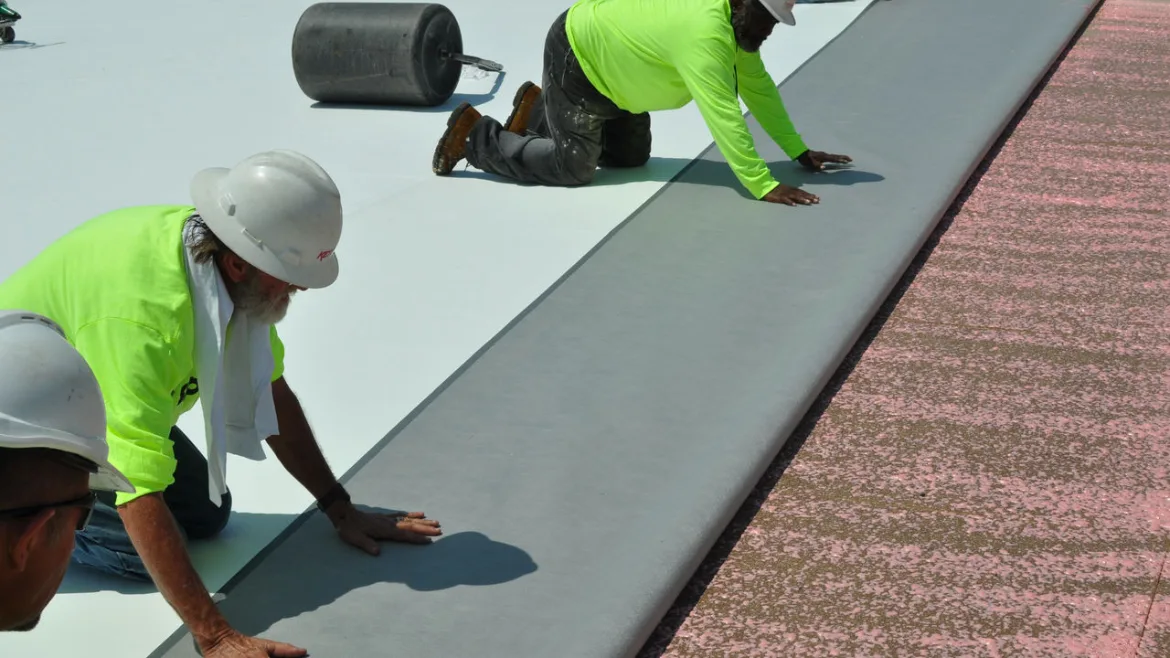
Modified bitumen has become a conventional alternative to built-up roof systems. As usage increases, roofing contractors will not only be required to install these systems, they also will need to repair and maintain them.
There are two primary types of modified bitumen systems: atactic polypropylene (APP) and styrene-butadiene-styrene (SBS). Possible application methods are: torch applied, set in hot asphalt, set in cold adhesive and self-adhering systems. Each method has nuances that could contribute to potential problems. Modified materials also have inherent characteristics that require proper maintenance over their service life.
APP
APP is not compatible with asphalt and can only be torch applied. APP can be torch applied because the modifiers extend the asphalt without changing its basic characteristics. This allows for a thicker asphalt content to be applied to the base of the membrane sheet. The additional asphalt content of the sheet-when torched-provides the adhesive capacity of the membrane to the substrate. The polypropylene content should be in a 25 percent ratio with the asphalt to achieve the proper characteristics.Long-term performance capabilities have been affected by asphalt polymer separation, which has in some cases led to premature failures. When the APP network progresses toward its natural aging limit, the APP becomes separate and distinct from its asphalt counterpart. This separation accelerates the rate of degradation leading to a quick transition from adequate performance to failure. This dynamic would indicate that APP membranes require protective surface coating during initial application for long-term ultraviolet protection.
Another concern with these applications is membrane seam failures. These types of problems, which can be identified by open and unadhered seams, are often the direct result of improper torch application. Proper repairs require torch or heat welding of the seams.
SBS
SBS membrane sheets were developed in the 1960s. They required an asphalt with basic properties to be applied in colder climate regions. SBS asphalt uses 10-15 percent of a rubber polymer called styrene-butadiene-styrene as an additive to the asphalt modifier. This form of modified asphalt has many of the characteristics of rubber, including its excellent elongation capacities.SBS membrane sheets are more versatile than APP sheets and can be applied with hot asphalt or solvent-based, torch-applied and water-borne liquid adhesives. When hot application methods are employed, it is critical that the asphalt be heated in accordance with the manufacturer's requirements. Membrane shrinking and wrinkling can be caused by the instability of the membrane when it is heated at improper application temperatures.
The surfacing of the sheets is also a maintenance concern. Although SBS sheets are not as sensitive to ultraviolet light as APP sheets, there is still a possibility of degradation. Recent studies have indicated that applying a reflective coating to SBS sheets within five years of application can extend the service life of the membrane by as many as 10 years. Typical surface degradation can be identified by membrane grazing, cracks, and in extreme cases, alligatoring.
Membrane degradation can also be the result of exposure to chemicals and oils. Membrane degradation can be identified by discoloration of the sheets, surface cracks and delamination of the sheets in localized areas. The membrane manufacturer should be consulted for proper repair procedures. It would be helpful to provide the manufacturer's technical staff with the type of chemical or oil that the membrane is exposed to so that they can provide the proper treatment methods.
Defects can also occur when using cold adhesives due to the application learning curve. Because these systems have been increasing in popularity, many contractors are performing them for the first time. The application requirements differ from the older hot asphalt applications and it is important that manufacturers properly train contractors. Most of the problems with these systems have been from improper adhesive use-either too much or not enough. However, there have also been reports of membrane failures due to the use of incompatible cold mastic containing a solvent that softens the membrane sheet. This problem can be identified by extensive membrane blistering and slippage of the membrane.
Seam failures are also a concern with SBS applications. Seam failures can result from improper bitumen application or inadequate adhesive coverage. The repairs of these sheets can be achieved with bitumen application, cold adhesive or torch application. Most membrane manufacturers recommend the use of torch or heat welding at seams no matter what adhesion method is employed to install the membrane sheets.
Temperature Constraints
One important item to consider is the temperature at the time of application. Generally, modified bitumen sheets should not be installed in ambient temperatures of 40 degrees F or below. These constraints are similar no matter what adhesion application method is employed because the issue is with the membrane sheets. Cold adhesive applications have additional parameters. Currently, all SBS cold adhesive applications use solvent-based adhesives. This does not place the stringent constraints that are on waterborne adhesives; however, application methods and storage procedures should be in accordance with the manufacturer's requirements.Typical Repair Methods
Repair methods for SBS and APP membranes are generally the same. The only difference is the type of patch adhesion that is employed. The first step is to determine if water infiltration has occurred at the membrane opening. If moisture is present, open the membrane and inspect the insulation and deck for damage. Remove the wet or damaged insulation and repair or replace the deck as required. Properly attach new, dry insulation consistent with the thickness of the existing insulation and compatible with the other roof system components.Remove all debris, contaminants, surfacing, ballast or loose granules from the surface of the membrane or flashing to be repaired. The prepared area should extend beyond the perimeter of the patch to provide an ample clean space on which to install the patch. Clean the surface of the membrane. If the membrane surface has been flood coated and aggregate embedded, carefully spud the aggregate free from the surface and sweep clean. The exposed asphalt flood coat may need to be heated with a torch in order to smooth out irregularities, then allowed to cool.
If the surface of the membrane is severely weathered, lightly prime the surface of the membrane with asphalt primer and allow it to dry. Primer contains solvents and is used to enhance adhesion; however, overuse of primer can harm the membrane. Cut a patch of like material 8 inches larger in all dimensions than the defect to be repaired. Round the corners of the patch to a minimum radius of 3 inches.
For SBS membrane sheets: Install the patch in hot asphalt, cold adhesive or by heat welding in accordance with the manufacturer's recommendation over the repair area, extending 8 inches in all directions from any part of the defect. When using hot asphalt as the method of application, use Type IV asphalt and take care to maintain the asphalt at a minimum of 400 degrees F at the point of application. When torching, work gradually, applying heat only sufficient to achieve adhesion without damaging the membrane reinforcement or scorching the surrounding membrane.
For APP membrane sheets: Install the patch in cold adhesive or by heat welding in accordance with the patch manufacturer's recommendations over the repair area, extending 8 inches in all directions from any part of the defect. When heat welding, work gradually, applying heat sufficient to achieve adhesion without damaging the membrane reinforcement or scorching surrounding membrane.
Once the repair materials have been completed, apply moderate pressure to the patch to assure proper adhesion to the existing membrane. These repair procedures can be used for membrane openings, splits, blisters and ridges. Be certain to use the manufacturer's approved materials on all warranted projects. Properly completed repairs can extend the service life of the roof system
Looking for a reprint of this article?
From high-res PDFs to custom plaques, order your copy today!