Storm Chasers
The Honest Roofer's Playbook for Post-Storm Trust
How the roofing industry is pushing back against fraud—and protecting the markets contractors spent years building
Every established roofing contractor knows the feeling. A major hail event hits your market on a Wednesday. By Friday morning, unfamiliar trucks are circling neighborhoods you've worked for years. By the following week, homeowners are calling after signing contracts they didn’t fully understand—or after getting burned badly enough to distrust every contractor who follows.
This is the storm chaser playbook. And it's getting more sophisticated.
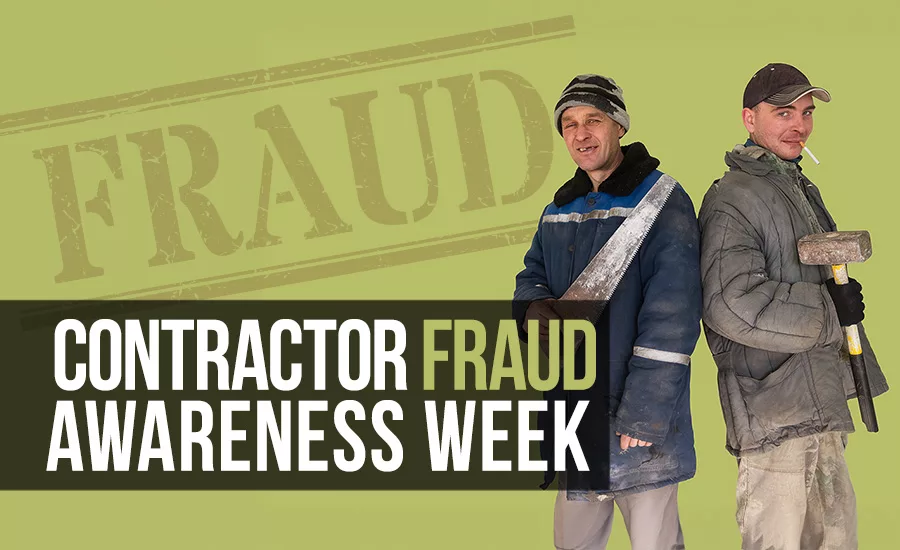
As the National Insurance Crime Bureau (NICB) marks the sixth annual Contractor Fraud Awareness Week, NICB reports that reported instances of contractor fraud increased 38% between 2023 and 2025—a period that also saw the United States experience 23 billion-dollar disasters totaling roughly $115 billion in damage and economic losses. The fraud problem has grown alongside the increasing frequency and cost of severe weather events.
"Severe weather events often leave communities shaken and trying to rebuild their lives as quickly as possible," said David J. Glawe, president and CEO of NICB. "Unfortunately, criminals recognize those moments of vulnerability as opportunities for financial exploitation."
According to NICB, 36 states now formally support Contractor Fraud Awareness Week through proclamations and public awareness efforts. For roofing contractors, the professionals most directly competing with storm chasers for the same jobs, customers, and markets, the week is less an awareness campaign than an annual reminder of a bigger industry problem.
More Storms, More Opportunity for Fraud
AccuWeather forecasts a near- to above-average Atlantic hurricane season, warning that rapid intensification and near-shore storm development could leave homeowners with little time to prepare.
"There is no reason to let your guard down this year," said AccuWeather Lead Hurricane Expert Alex DaSilva. "It only takes one storm to cause major damage, disruption and heartache."
For roofing contractors, every major storm creates a familiar challenge: out-of-state operators arriving before local companies can mobilize. Storm chasers still rely heavily on urgency and timing. They show up before homeowners have had time to think clearly.
“Storm chasers often rely on urgency and pressure," said Aleks Krylov, founder and president of Stern Roofing and Gutters in New Jersey. "Legitimate contractors focus on education and transparency.”
How Legitimate Roofers Build Trust After Storms
The contractors who consistently outperform storm chasers describe the same strategy: slow the process down, document everything, and communicate constantly.
Garrett Maxwell of Brown's Roofing, which operates across Louisiana, Arkansas, and Kansas, said legitimate contractors should make their local presence impossible to miss: a physical office, manufacturer certifications, years of reviews, and stable crews that customers recognize.
"Storm chasers have rotating crews," Maxwell said. "A legitimate contractor uses the same team week in and week out because their reputation depends on what those guys do on the roof."
William McGavin, owner of Sundance Roofing in Chandler, Ariz., said unsolicited door-knocking itself should raise concern for homeowners: "If you didn't ask them to come out, that's your answer. A legitimate roofer is busy serving the customers who called them. They aren't cruising neighborhoods looking for the ones who didn't."
Eric Thomason, owner of Blue Nail Roofing & Construction in Dallas, said transparency and documentation are critical for building trust after storms.
"Transparency creates trust — fully written scopes, photographic evidence, and the ability to separate what is truly urgent from deferred work," Thomason said.
His company documents projects with before-and-after photos while educating homeowners about the roof system before discussing replacement options.
"Homeowners respond well when contractors take the time to explain the roof system first," he said.
McGavin said one of the most effective trust-building strategies is also the hardest: being willing to walk away from a sale.
"Telling a homeowner their roof has another five years in it, when I could just as easily sell them a replacement, is what people remember and refer their neighbors to," he said.
How Contractor Fraud Hurts Legitimate Roofers
While AOB vary significantly by state, contractors and insurers alike continue to identify improperly executed AOB agreements as a major fraud concern in post-storm markets.
"The quickest way to lose a post-storm client is to request a benefit assignment prior to inspecting the roof," Daniel Cabrera, founder of Roof Direct San Antonio.
Instead, he advises contractors to document damage carefully, communicate with carriers early, and build scopes that align precisely with approved claims.
"This reduces the time it takes to complete supplements from weeks to days," he said.
The NICB identifies AOB abuse, manufactured roof damage, inflated water mitigation claims, exploitation of elderly homeowners, and falsified documentation among the most common post-storm fraud schemes.
But contractors say the long-term damage extends beyond individual scams.
"In high-fraud storm zones, carriers examine everything a little harder," said Alex Adekola, CEO of ReadyAdjuster and a licensed independent insurance adjuster based in Atlanta. "This means even good contractors end up spending extra time proving obvious damage."
Inflated claims and poor workmanship also create broader market consequences. Adam Yost of Elevated Roofing & Siding in Dayton, Ohio, said out-of-town contractors often leave behind improperly installed systems and warranty problems local roofers later inherit: "Improper flashing, bad ventilation work, underlayment skipped — things homeowners would never notice from the ground."
Building Better Contractor-Insurer Relationships
Several contractors interviewed said one of the clearest ways to reduce friction is by improving coordination between contractors, adjusters, and homeowners early in the claims process.
"The best outcomes happen when both sides communicate clearly and focus on accurate documentation instead of conflict," Krylov said. "Contractors should provide detailed evidence of storm damage, while insurers should establish realistic expectations around timelines, scope approvals, and supplemental repairs if hidden damage is discovered during construction."
Scott Brennan, SVP of Commercial Sales at EagleView, said technology can help with communication. "The friction between contractors and carriers after a major weather event is largely a data problem. Both sides are working from different baselines. Different measurements, different damage assessments, sometimes different photos of the same roof. That gap is where disputes, delays, and frustration live."
Looking for a reprint of this article?
From high-res PDFs to custom plaques, order your copy today!