Restore or Replace?
Roof restoration represents an effective, minimally disruptive, and cost-optimized solution to elevate a commercial roof’s performance compared to a complete tear-off.
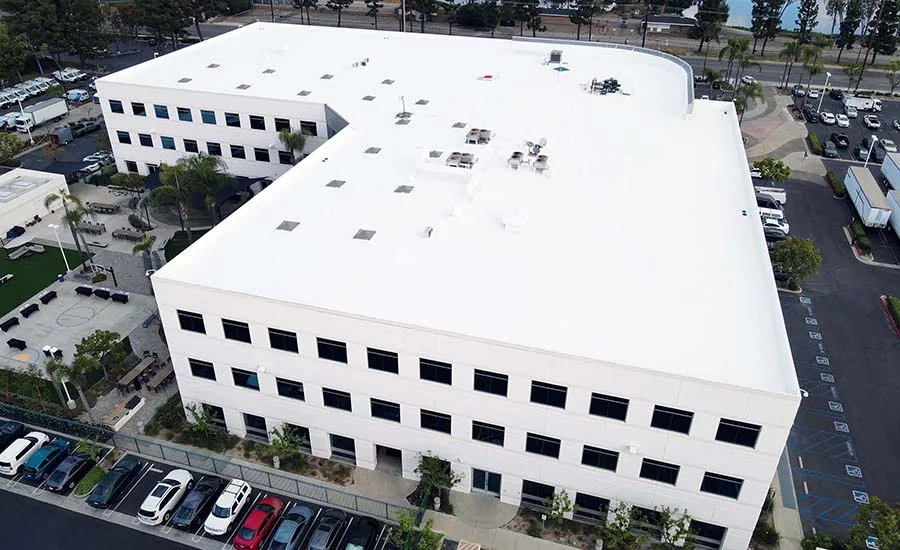
To best ensure the long-term performance of commercial rooftops, full tear-offs and replacements are no longer the only options for contractors and building owners—nor are they always the best.
Instead, commercial roof restoration has become an increasingly viable alternative for any roof type. Most notably, restoration techniques—performed with high-quality materials—are effective in ensuring commercial roofs regain and maintain their full performance potential over the course of their lifetimes, and at a fraction of the cost for a full replacement.
Roof restoration falls into a few different categories, including metal, single ply, and asphalt roof restoration, depending on the existing roof system. Not only does restoration reduce the likelihood of failure, but it also extends the longevity of your commercial roof, regardless of type. Restoration, paired with regular health checks and necessary upkeep, helps ensure easier maintenance and inspection throughout the roof’s lifetime.
So, how to tell if restoration is a good option for any job? There are a few considerations to walk through. Let’s explore:
The Case for Restoration
To start, it’s helpful to explore the basics of roof restoration and the benefits restoration can bring for contractors and building owners alike when compared to tear-off and replacement jobs.
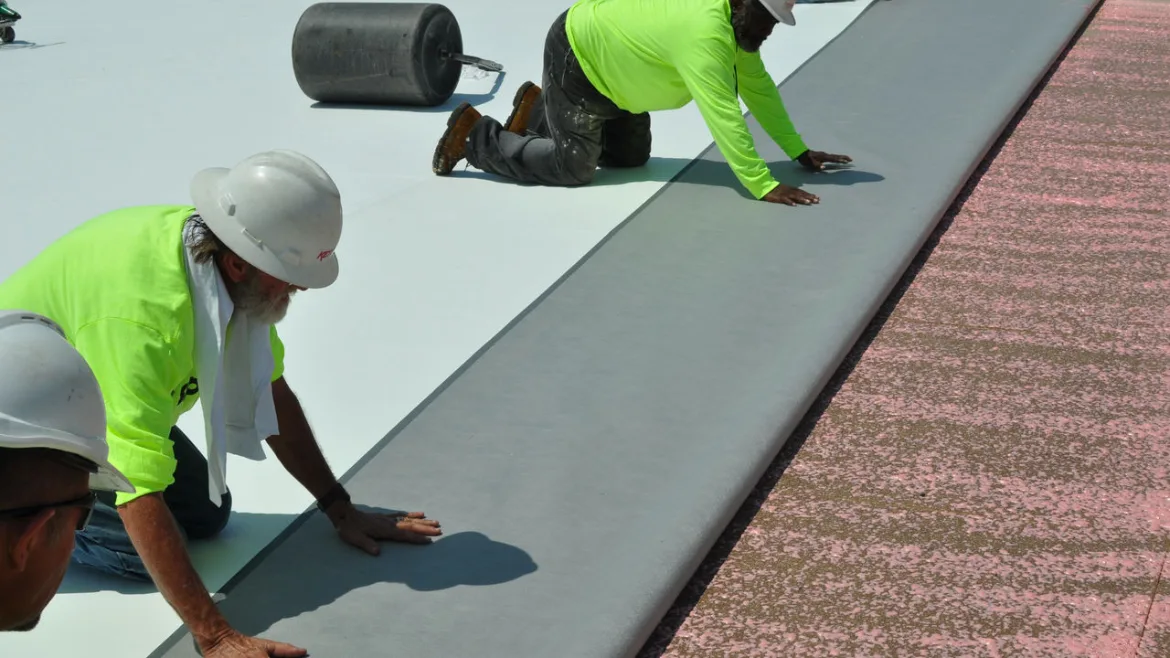
A good roof restoration process first involves removing any debris and cleaning the roof to prepare for the rest of the project. Next, depending on the condition of the roof, a primer is applied to ensure good adhesion for patching, stain blocking, and rust inhibition. Then, patching is performed to make sure all parts of the roof system are watertight. Finally, protective coatings can be applied to ensure long-lasting performance. All the while, regular activity inside the building can continue uninterrupted.
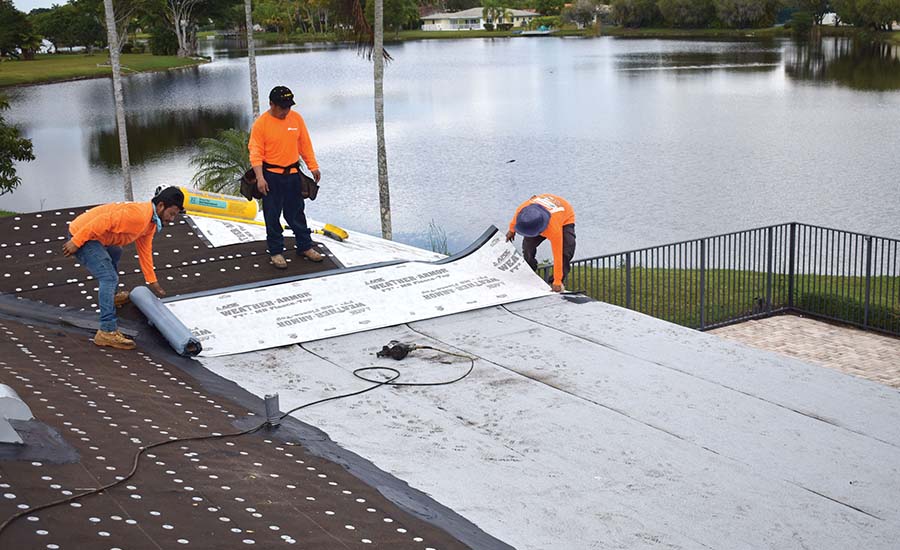
Photo: APOC
This work generally does not require specialized equipment and does not leave the building interior exposed while the job takes place. Restoration jobs can also happen far faster than an entire reroof—and for contractors, time is money. If you can successfully bring an existing roof back up to its original performance level with restoration methods, you can move on to your next job more quickly.
And because a restoration project can be undertaken with the purchase of just a few high-performance products, it’s a far more cost-effective solution than replacing the roof entirely. Full restorations on average range between $400 to $700 per square while tear-off and replacement starts at $1,000 per square and can go up from there depending on the region and project complexity.
So, how to determine if your roof is a good candidate for restoration? Answering a series of questions can help, starting with:
What Is the Current State of Your Roof?
First, contractors must determine if the existing roof remains in good enough condition for restoration techniques to be effective for long-term performance. To start, conduct a thorough assessment of the roof itself.
- This process begins with a visual inspection, which should involve clearing off any trash or accumulated debris that might hide problem areas. For example, some clues that may become easily apparent to the naked eye include:
A soft area underfoot is an indicator of saturated insulation. - Rusted, rotted, or cracked decking can sometimes be seen from the inside of the building and may help to pinpoint the worst areas of deck deterioration.
- Ponding water could indicate structural sagging in the deck.
- A splitting membrane may be visible to the naked eye for experienced professionals.
To gain a more thorough assessment of wet insulation, infrared thermography can be deployed to uncover what the naked eye can’t. Small, hand-held infrared cameras are great for smaller roofs. For very large roofs, aerial infrared photography, when possible, can be effective.
With your visual inspection complete, you can verify your visual findings through a series of testing. A peel adhesion test can help determine the viability of coating solutions. Core cutting, while destructive, can be eye opening, helping to validate the visual moisture survey and helping to confirm how many layers of roofing actually exist. Wind uplift testing can be used to determine the state of the membrane—remember that membranes can become decimated by a storm, but may stay in place.
Finally, a licensed structural engineer should be retained if there is any evidence of structural failure or additional loading on the roof (condensing units, blowers, metal screens, ballasted antennas, etc.).
With your roof inspection complete, it’s time to determine a path forward. Roofs with low to moderate damage and saturation levels are often good candidates for roof restoration rather than a full re-roof and can be a cost-effective option when the circumstances call for it. Reroofs will be required in more extreme scenarios, with elevated levels of insulation saturation, decking deterioration, and more.
Does Your Roof Meet the 25% Rule?
In some instances replacement will still be a necessity versus a restoration project. A good rule of thumb to remember is that roofs that have been 20%-25% (or more) saturated will likely need to be replaced in their entirety based on varying building codes and standards.
What Are Your Future Plans for the Building?
If your analysis of the roof condition has helped determine that restoration is a viable option, there are a few other areas to consider before making a final decision.
For example, it’s worth evaluating the anticipated service life of the building. Not every structure merits the same level of repair work. A small retail store that sits in the path of a proposed freeway expansion, for example, might not need a repair that ensures 20 years of performance. A major museum in the hub of a cultural district, by contrast, will require a long-term solution. In either case, proven repair solutions are available to best suit the needs of the given situation.
Also worth consideration are potential expansion plans for the structure. It is generally more economical to reroof a structure in conjunction with an expansion rather than split the project across multiple years. The need for roof access and the impact to building operations can be greatly reduced if both projects can be performed at the same time.
It’s also important to remember that for professional contractors, performing quality restoration work requires sourcing reliable, proven products from a trusted supplier. High-performing primers, coatings, adhesives, caulks, sealants and other materials will help to ensure longevity and performance your customers can trust.
Overall, roof restoration makes for an economical and reliable way to restore commercial roofs to their original levels of performance. For any busy roofing contractor operating in today’s environment, it’s an avenue worth pursuing to keep your business profitable.Looking for a reprint of this article?
From high-res PDFs to custom plaques, order your copy today!