State of the Industry
Roofing Industry Q&A 2026: Eagleview
Eagleview’s evolution continues from being known primarily as a trusted roofing report provider to a leader in AI-powered geospatial intelligence.
Editor’s Note: Gauging the pulse of the roofing industry is an annual challenge RC continues to undertake as roofing contractors adapt to a rapidly changing marketplace. In addition to the survey results from last fall that built RC’s 2026 State of the Roofing Industry Report, RC also sought out the opinions of leaders from all segments of the industry.
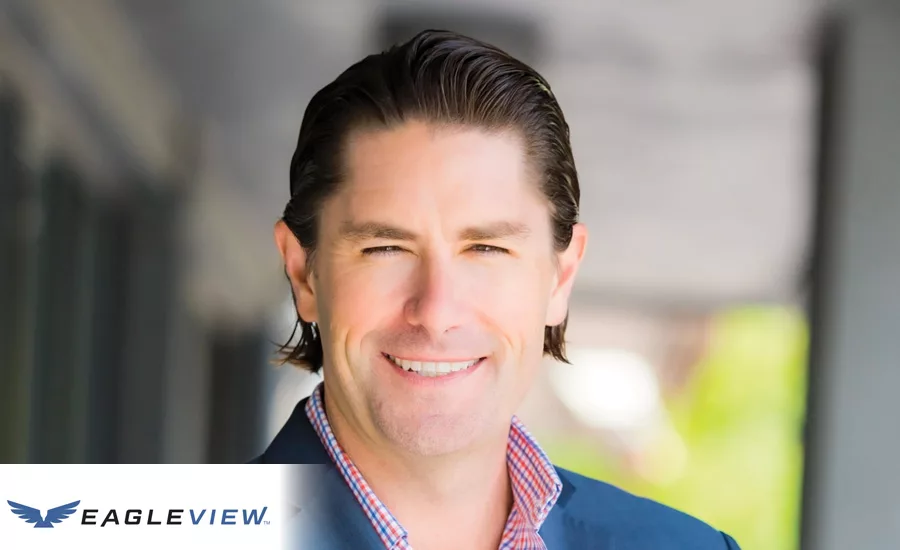
As part of RC’s continuing coverage, here’s what Piers Dormeyer, CEO of Eagleview, shared with us.
How would you characterize the state of the roofing industry looking at 2026?
PD: Looking at 2026, the roofing industry is operating in a period of heightened complexity and rapid change. Residential and commercial segments alike are feeling pressure from affordability challenges to shifting insurance dynamics to uneven demand cycles.
These conditions require companies to be more focused, more adaptable, and more deliberate in their decision-making. But they also create opportunities. Periods of transition often accelerate new ideas, new technologies, and new ways of working. The companies that respond with clarity and discipline will be positioned to grow even in a challenging environment.
Eagleview had such a big year with new products and a rebrand. What stands out to you and how do you continue that momentum?
PD: Looking at 2026, the roofing industry is operating in a period of heightened complexity and rapid change. Residential and commercial segments alike are feeling pressure from affordability challenges to shifting insurance dynamics to uneven demand cycles.
These conditions require companies to be more focused, more adaptable, and more deliberate in their decision-making. But they also create opportunities. Periods of transition often accelerate new ideas, new technologies, and new ways of working. The companies that respond with clarity and discipline will be positioned to grow even in a challenging environment.
Eagleview had such a big year with new products and a rebrand. What stands out to you and how do you continue that momentum?
PD: This year demonstrated what’s possible when an organization aligns around a clear vision and executes with focus. The launch of EagleView One™ was more than a product milestone, it established a foundation for the next chapter of our innovation strategy.
The creation of EagleView Labs is another major step forward. It gives us the ability to explore new applications in AI and geospatial intelligence with greater speed and experimentation. It’s designed to help us identify new opportunities and bring meaningful advancements to our customers faster than ever before.
We maintain momentum by staying disciplined in what we prioritize and making sure every effort ties back to delivering real, practical value for the industries we serve.
What trends are you continuing to monitor in 2026?
PD: AI innovation continues to advance at an extraordinary pace. It shortens development cycles, improves operational efficiency, and opens doors to entirely new capabilities.
In parallel, industry-specific pressures such as changing insurance protocols, rising input costs, and labor shortages are reshaping how work gets done. These are structural dynamics, not temporary ones, and they reinforce the need for tools that help contractors work more efficiently and more profitably.
Was your company impacted by tariffs or increased immigration enforcement in the past year?
PD: We addressed both issues with an emphasis on preparation and flexibility. Tariffs introduced additional operational complexity, but through proactive planning and disciplined inventory management, we were able to minimize disruption, price hikes, and continue delivering reliably for our customers.
Immigration enforcement has had broader implications across the industry, particularly around workforce availability and the processing of high-skill visas for specialized roles. In response, we’ve focused on anticipating regulatory shifts, planning well ahead, and supporting the long-term stability of our teams.
More broadly, we’re concerned about how these factors affect the roofing industry overall. Labor constraints and rising compliance pressures can threaten long-term industry health, which in turn affects our customers and partners. We’re actively planning with that broader context in mind.
Our annual survey of roofing contractors showed a lot of optimism in the marketplace when it came to projected sales and product investment. Do you share that viewpoint?
PD: I do. I think thoughtful optimism is warranted, especially when you look at the increasing professionalism and innovation emerging across the industry. More people are recognizing the trades as high-value, long-term career paths, and that’s bringing a wave of talent and energy into roofing.
What economic factors will play the biggest role in a roofing contractor’s success this year?
PD: The contractors who will thrive are the ones who embrace operational excellence and smart technology adoption. Running a more efficient, disciplined business, supported by data, automation, and streamlined workflows will be a major differentiator for the companies that execute digital transformations.
Markets may continue to fluctuate, but companies that use technology to gain efficiency, manage risk, and improve customer experience will be better positioned to perform consistently regardless of external conditions.
What product categories or new technology capabilities are you most excited about in roofing moving forward?
PD: There’s real momentum around technologies that reduce labor requirements and improve workflow efficiency. Robotics and automation are emerging as meaningful tools for addressing workforce shortages.
At the same time, AI is enhancing every step of the contractor workflow—from customer engagement to surveying to project planning. These innovations don’t just improve efficiency; they help contractors offer a better, more reliable experience to their customers.
How is your organization responding to the growing consolidation and private equity involvement in the roofing industry?
PD: We believe private equity’s entry into roofing was inevitable. Roofing is a resilient sector with relatively steady cash flow, which naturally attracts investment. That creates opportunities to achieve economies of scale and realize efficiencies across different geographies. In many ways, we expected this shift and are only surprised it didn’t happen sooner.
We work closely with both private equity–backed organizations and independent contractors. Our technology supports companies that are standardizing workflows across growing portfolios, while also helping independent businesses maintain a competitive advantage against larger, more resource-rich players. In an increasingly consolidated market, you need to take every advantage you can.
Are there plans to open new facilities or announce new investments in 2026
PD: We are planning several new initiatives in 2026 including the launch of Eagleview Labs, our Innovation Hub that will serve as a center for advanced AI development. We are actively hiring talent, including the recent appointment of Dr. Dylan Kesler, to support this effort.
We are also moving forward with data and platform expansion efforts related to Eagleview One as we continue our strong commitment to growing our data capabilities and capital infrastructure.
I’m incredibly proud of how far the organization has come in such a short time. We moved from being known primarily as a trusted roofing report provider to becoming a leader in AI-powered geospatial intelligence.
What’s keeping you up at night, and what are the biggest concerns moving forward?
PD: The biggest concerns moving forward are managing uncertainty and maintaining stability in a rapidly shifting environment. Ongoing geopolitical, regulatory, and economic changes, particularly around trade policy, labor availability, and immigration, create unpredictability that can affect operations, talent planning, and our customers’ businesses.
What keeps us up at night is ensuring we stay ahead of these shifts: protecting service continuity, supporting our workforce, and helping customers navigate challenges that may be outside their control. Our priority is to remain proactive, adaptable, and disciplined so we can manage risk while continuing to invest in long-term growth and reliability.
Looking for a reprint of this article?
From high-res PDFs to custom plaques, order your copy today!

.webp?height=740&t=1781278983&width=auto "KEE(2).png")