2025 Storm Season
Forecasts Reduced for Named Storms, Hurricanes After Mid-Season Lull
Number has ticked down to 16, but severe weather still in the forecast
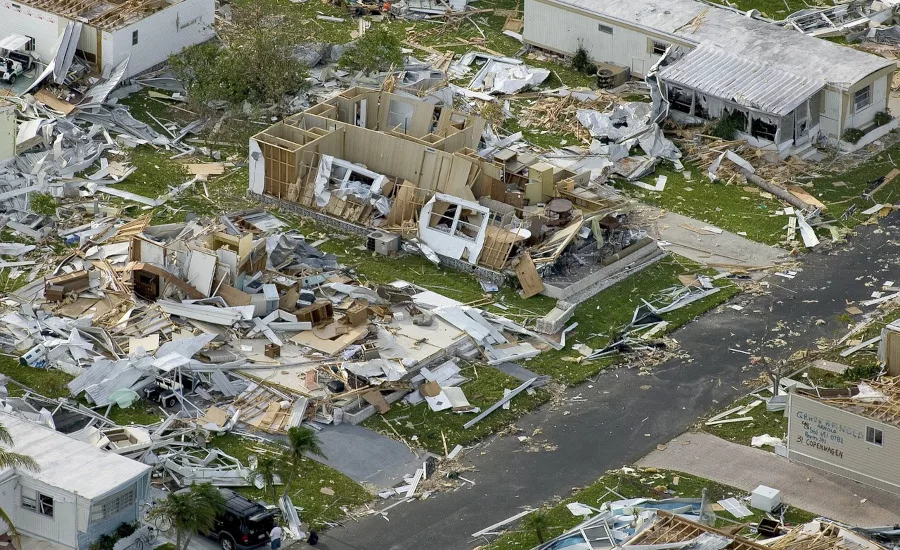
Earlier this year, forecasters predicted that this year's storm and hurricane season wouldn't be as tumultuous as 2024, but to expect a steady stream of powerful storms. After an unusually quiet season so far, those forecasts received an update.
AccuWeather reduced its forecast for the highest potential number of named storms and hurricanes expected to develop this season. In March, the weather service predicted 13 and 18 named storms this year, including seven to 10 hurricanes, three to five major hurricanes at Category 3 or higher, and three to six direct U.S. impacts.
That has now been updated to 13 to 16 named storms, and six to nine hurricanes for the 2025 Atlantic hurricane season.
“AccuWeather hurricane experts are constantly refining and integrating new data into our predictions,” AccuWeather Lead Hurricane Expert Alex DaSilva said. “Unusual surges of dry air, Saharan dust, disruptive wind shear, cooler water temperatures off the western coast of Africa, and other atmospheric conditions have hampered multiple tropical waves from developing into tropical storms or hurricanes, during what are typically the peak weeks of tropical activity in the Atlantic basin.”
Despite the slight adjustment, the forecast for three to five major hurricanes and three to six direct impacts to the United States has not changed.
“The range of named storms expected to develop in the Atlantic basin this season has been reduced, but the risk of direct impacts has not changed. AccuWeather continues to forecast three to six direct impacts to the United States this season,” DaSilva said. “It only takes one storm to create a devastating hurricane season.”
There have been two direct impacts on the U.S. this year. Tropical Storm Chantal caused an estimated $4 billion to $6 billion in total damage and economic loss, following damaging flooding and tourism losses in North Carolina over the Independence Day holiday weekend. Hurricane Erin brought rough surf, beach erosion and deadly rip currents to the U.S. East Coast in August.
RELATED: How Roofers Can Prepare for the Next Crisis
This could explain, in part, why some roofing contractors are struggling to meet 2025 projections. According to the Insurance Information Institute, claims from storms, including hail, reached $60 billion in 2023, double the $30 billion from 2022. State Farm alone reported a $1 billion increase in hail-related claims from 2021 to 2022. Climate.gov reports that in 2024, 27 individual weather and climate disasters with at least $1 billion in damages occurred, trailing the record-setting 28 events of 2023.
If business seems slower than last year, there may be reasons beyond the quiet season. 2024 was among the costliest seasons on record, trailing 2017 ($395.9 billion), 2005 ($268.5 billion) and 2022 ($183.6 billion). Coming off such an active storm season may make this one seem slower for contractors by comparison.
Verisk, a global data analytics and technology provider, reported that roof repair and replacement cost value totaled nearly $31 billion, up nearly 30% since 2022. Roof-related line items were more than a quarter of all residential claim value in 2024.
Not Out of the Woods
AccuWeather warns that businesses and officials shouldn't become complacent. The tropics behaved like this last year during the typical peak season — the same season that brought Hurricanes Helene and Milton to U.S. shores. Those storms resulted in more than 250 lives lost and caused an estimated $385 billion to $430 billion in damage.
Northern and eastern portions of the Gulf Coast and the Carolinas are areas of higher-than-average risk of direct impacts this season. Atlantic Canada and the northeastern Caribbean, including Puerto Rico and the United States Virgin Islands, are also at an increased risk of direct impacts for the rest of the season.
The forecast goes beyond hurricanes. AccuWeather predicts inland areas will have a risk of flooding and tornadoes, like in 2024. Parts of the Appalachians, especially from Virginia and south of it, could be at risk of experiencing flooding again this year.
According to Verisk, wind and hail were the predominant drivers of 2024's loss costs, accounting for more than half of all residential claims. Since 2022, non-catastrophic wind/hail roof claims increased from 17% to 25%.
Looking for a reprint of this article?
From high-res PDFs to custom plaques, order your copy today!