Storm Season
The Benefits of FORTIFIED-Compliant Vents
Withstanding severe storms and reduced insurance claims are among the positives of FORTIFIED vents
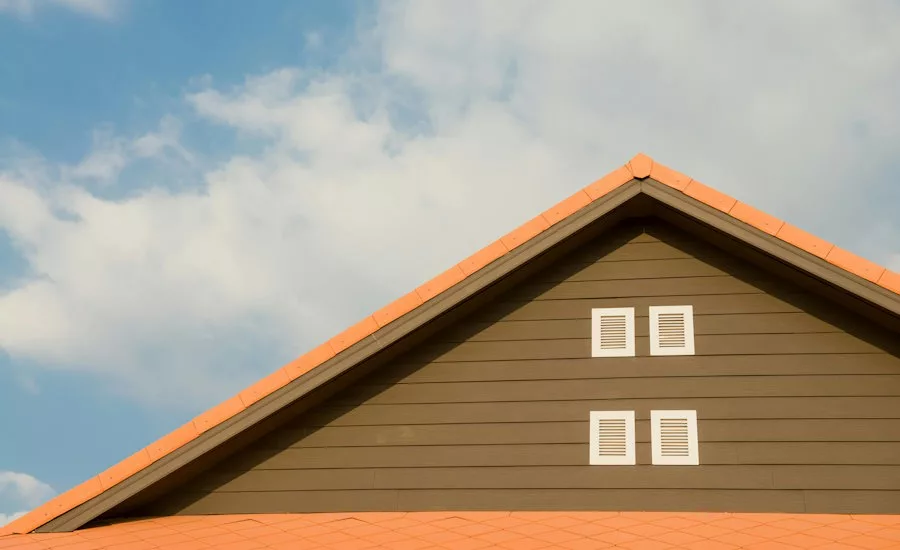
Photo by Tirachard Kumtanom via Pexels.
Homes that are built with FORTIFIED-compliant products have a higher chance of withstanding severe storms. They may also allow homeowners to qualify for reduced insurance costs.
In a recent episode of our podcast, we discussed the program at large and the ventilation segment in particular with professional engineer Shumon Hossain, engineering supervisor at AirVent for the ventilation business at Gibraltar Building Products.
“The FORTIFIED program is a construction standard developed by the Insurance Institute for Business & Home Safety (IBHS) that is completely voluntary. The goal is to go beyond building code. The program outlines specific criteria to withstand severe weather,” says Hossain, who works closely with the IBHS and the testing required for AirVent products to become FORTIFIED-compliant.
“When we think about severe weather, there are four main perils: high wind, wind-driven rain, hail, and wildfires. The FORTIFIED program has different levels that impact not just the attic vents but the house overall,” Hossain says. “There’s FORTIFIED Roof, which includes the attic vents and the roof subassembly. There’s also FORTIFIED Silver, which takes into account the doors and windows. And then there’s FORTIFIED Gold, which ties everything together; the roof tied to the walls; the walls to the floor; the floor to the foundation.”
110 mph Wind; .05% Water Entry
In order for an attic vent to be classified as FORTIFIED-compliant, making it eligible for the FORTIFIED Roof tier, it must pass the TAS100A Miami-Dade County wind-driven rain test.
“You have a mock deck 6 feet by 8 feet. It has the underlayment, it has the shingles, and it has your attic vent installed,” Hossain explains. “Water exposure is then introduced at a rate of 8.8 inches per hour. Finally, wind is factored in at speeds of 35 mph, 70 mph, 90 mph, and 110 mph.”
RELATED: FORTIFIED Homes Gaining Momentum
In between each of the four wind speed tests, there is a five-minute pause to allow time to collect any water. Hossain said in order to pass the testing, no more than .05% of the total amount of water sprayed cumulatively across all four wind speeds can be collected.
“Miami-Dade has one of the strictest standards for wind-driven rain, which is why the IBHS has adopted it as a requisite to have a component qualify for the FORTIFIED Roof program," he said.
Witnessing AirVent’s products passing the Miami-Dade wind-driven rain test is eye-opening, says Hossain.
“They give you a set of earplugs, which you may not need for the wind speeds at 35 mph and 70 mph, but at 90 and 110… They ask you to stand at least 10 feet away from the direction of the water being sprayed. Otherwise, you’ll get pretty wet," he said. "To see how fast that wind comes and how loud it is, it’s quite a sight to see.”
Win-Win Homeowners and Insurance
Having a FORTIFIED-compliant attic vent on your roof is no guarantee that Mother Nature’s forces will be kept in check. But, vents that are FORTIFIED-compliant should have fewer leaks, can lower roof and house maintenance costs, and help with the long-term value of the home.
“That is the expectation. We’re talking about .05% allowable water entry in 110 mph wind,” Hossain said. “Also, keep this in mind: The IBHS is a non-profit organization offering this voluntary building standard. Funding the program is the insurance companies because it’s in their interest to mitigate payouts. They are looking to strengthen building products used in a home.
"In turn, from a homeowner’s perspective, the insurance companies can potentially lower policy costs if they see your home is actually FORTIFIED. That makes a big difference right there.”
That’s a win-win.
Looking for a reprint of this article?
From high-res PDFs to custom plaques, order your copy today!