Regulatory Hurdles
Hurricane Milton Update: Group Urges Lawmakers to Allow Wind-Mit by Roofers
The Florida Roofing and Sheet Metal Contractors Association says changes to regulations allowing roofers to perform wind mitigation will speed recovery efforts and ease insurance burdens
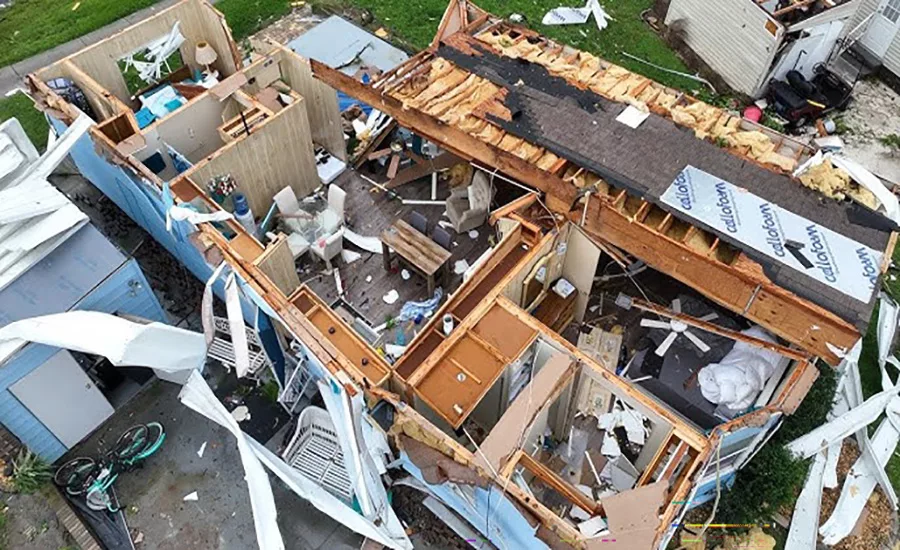
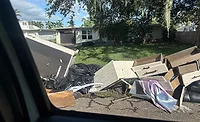
A home in North Fort Myers, Fla., following the devastation of Hurricane Milton in October. Many homes built before 2002 may not have the hurricane straps that help secure a home’s roof to its walls.
— Image courtesy of YouTube
The photo above depicts the destruction caused by Hurricane Milton in North Fort Myers, Fla. The home’s entire roof structure — from rafters and ceiling joists to sheeting and roof tiles — just disappeared, exposing the house and its possessions to wind, rain, and flying debris.
Some experts say this type of catastrophic failure, which has led to significant insurance claims, can be attributed to the home's construction being completed before Florida’s building code requirements were updated in the mid-2000s.
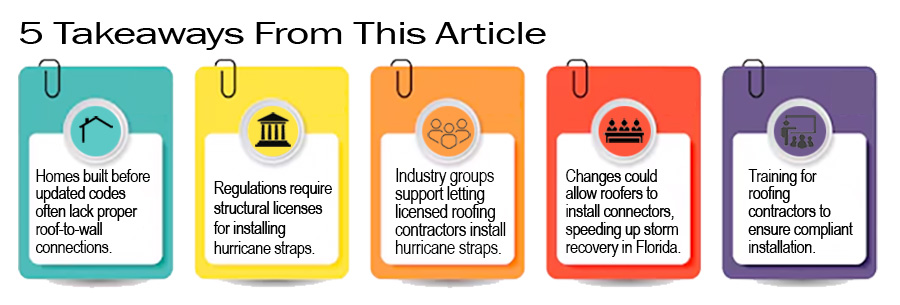
One of the significant code updates mandated that steel hurricane straps and clips be used for roof-to-wall connections to prevent the likelihood that a roof would be ripped off in its entirety.
Florida statutes, building codes, and contractor licensing regulations classify installing such straps and clips as structural improvements and require contractors to hold a Division 1 builder contractor’s license.
The rules do not specifically permit roof contractors to install the straps and clips; few roofing contractors — who replace plywood roof decking on residential properties when needed — want to interrupt a roofing job to schedule a structural contractor’s time. Additionally, most Division 1 building contractors have little interest in getting involved in the middle of a one-off roof replacement.
In an August 2024 article in Florida Roofing titled “The Importance of Addressing Roof-to-Wall Connections,” Mike Silvers, director of Technical Services for the Florida Roofing and Sheet Metal Contractors Association, emphasizes the critical role of roof-to-wall connections in enhancing roof system resiliency, particularly against hurricanes.
The piece highlights how changes to the Florida Building Code since 2002 have promoted roof deck and water barrier improvements, yet Silvers says roof-to-wall connections remain under-addressed. While enhanced roof decking attachments have shown success, the structural nature of roof-to-wall connections often requires costly engineering input, which many homeowners avoid due to the expense.
“Ultimately, whether to address roofing connections is up to the owner, especially if the cost exceeds a certain threshold,” Silvers explains. “The reroofing project serves as a trigger for compliance, and there is some confusion about whether we can proceed with necessary work despite the code stating it must be addressed.”
Silvers noted that “addressed " really means the homeowner can choose not to proceed with recommended actions because of the significant cost involved in bringing in a structural engineer or general contractor to install hurricane straps. As he noted, it's a “complicated situation.”
The 'Simple' Fix
The FRSA and the International Association of Certified Home Inspectors Inc. are urging Florida regulators to expand the rules allowing roofing contractors to install or upgrade tie-down connectors. The two groups recently penned a public statement and letter to state officials outlining the advantages of modifying the rules.
Silvers said the Florida Construction Industry Licensing Board, housed within the state Department of Business & Professional Regulation, may be able to make the change, but Silvers noted that the state legislature will likely have to amend the code. The Florida Legislature’s regular 2025 session does not begin until next March.
The FRSA argues that allowing more contractors to carry out hurricane-hardening work could significantly help reduce property insurance costs in claims-heavy Florida and help speed recovery efforts following Hurricane Milton’s multi-billion-dollar damage to the state’s housing stock.
During hurricanes, roof decking and shingles or metal panels can be removed, making the trusses and wall connection points accessible for repairs. However, when roofers lack the necessary certification or licensing for this type of work, some property owners may skip essential tie-downs. According to the FRSA, this omission could result in expensive insurance claims in the event of the next storm.
“We want to keep homeowners’ insurance available in Florida, and we know we need to play our part,” Silvers said.
The Florida Roofing article calls for expanding the licensing scope for roofing contractors, allowing them to address roof-to-wall connections as part of their standard work, with appropriate training. Silvers emphasizes the need for immediate change, stating, "Roof-to-wall connection enhancements will only improve the resilience of buildings when they are performed.”
The FRSA has an ally in its advocacy, the International Association of Certified Home Inspectors, or InterNACHI. The latter group has recommended two hours of continuing education for roof contractors who want to be certified in retrofitting homes with roof-wall connectors.
The group has urged building officials to require the certificate when building permits are applied for “to provide notice of proper training on retrofit methodology and proper installation for applicable insurance effects,” the group said in its letter to regulators.
Of course, Silvers acknowledged some roofers may already be quietly installing straps and clips on some sites even without a Division 1 builder contractor’s license. And while that practice may help keep the roof on, it can complicate things when property owners want to apply for premium discounts or when they want to sell the home — especially if a building permit did not include the work or if tie-downs are not installed perfectly, with correct nails and screws.
Silvers said his group has consulted extensively with the Insurance Institute for Business & Home Safety on expanding roofer work. Add to that the shortage of available workers — in all types of construction — and the situation is primed only to worsen as the glut of repairs competes with new construction and a dearth of available field crews.
Meanwhile, insurance claims from recent storms are growing. The Florida Office of Insurance Regulation reported that, as of Nov. 1, claims from four hurricanes in the last 14 months had topped 447,000.
“Roofing contractors can handle this,” Silvers said. “We can give them the education that they need to handle these roof-to-wall connections and make it more palatable for everybody; help the insurance industry and, in the long run, help our citizens to keep them in their buildings.”
Looking for a reprint of this article?
From high-res PDFs to custom plaques, order your copy today!

Bryan Gottlieb is the online editor at Engineering News-Record (ENR).
Gottlieb is a five-time Society of Professional Journalists Excellence in Journalism award winner with more than a decade of experience covering business, construction, and community issues. He has worked at Adweek, managed a community newsroom in Santa Monica, Calif., and reported on finance, law, and real estate for the San Diego Daily Transcript. He later served as editor-in-chief of the Detroit Metro Times and was managing editor at Roofing Contractor, where he helped shape national industry coverage.
Gottlieb covers breaking news, large-scale infrastructure projects, new products and business.

email gottliebb@enr.com | office: (248) 786-1591