search
cart
facebook twitter linkedin youtube instagram Spotify Podcasts Apple Podcasts Spotify Podcasts Apple Podcasts
  • Sign In
  • Create Account
  • Sign Out
  • My Account
  • NEWS
  • TOPICS
    • Cool Roofing
    • Event News
    • Latinos in Roofing
    • Low Slope
    • Legal
    • Metal
    • Project Profiles
    • Roofing Supply Pro
    • Roofing Safety
    • Steep Slope
    • Sustainable Roofing
    • Technology
  • EXCLUSIVES
    • Best of Success
    • Contractor Profile
    • IRE Show
    • Roofing Contractor of the Year
      • Enter Roofing Contractor of the Year
    • Top 100
      • Enter the Top 100
    • Young Guns
    • State of the Industry
  • MULTIMEDIA
    • Videos
    • Podcasts
    • Interactive Spotlights
    • Roofing Quizzes
    • IRE Videos
    • Webinars
    • Photo Galleries
  • PRODUCTS
    • New Products
    • Featured Products
  • COLUMNS
    • Editor's Note
    • Exit Planning
    • Guest Column
  • EVENTS
    • International Roofing Expo
    • Webinars
    • Best of Success Conference
    • Industry Events
  • DIRECTORY
    • Associations
    • Distributors
    • Manufacturer/Supplier
    • Business Services
    • Get Listed
  • MORE
    • Roofing Contractor Newsletters
    • Techos y Más Advisory Board
    • RC Store
    • Roofing Supply Pro
    • Custom Content & Marketing Services
    • Market Research
    • Sponsor Insights
    • Company Spotlights
    • Classifieds
      • Auctions
      • Business For Sale
      • Business Opportunities
      • Equipment For Sale
      • Positions Available
      • Products
      • Safety
      • Software
      • Services
      • Training
    • Contact Us
  • EMAGAZINE
    • eMagazine
    • Advertise
      • Editorial Calendar
      • Contact
    • Archive Issues
  • SIGN UP!
Low Slope RoofingRoofing SafetySteep Slope Roofing

Six Winter Safety Tips for Roofing Contractors

By Connie Menard
winter safety conditions
January 4, 2016

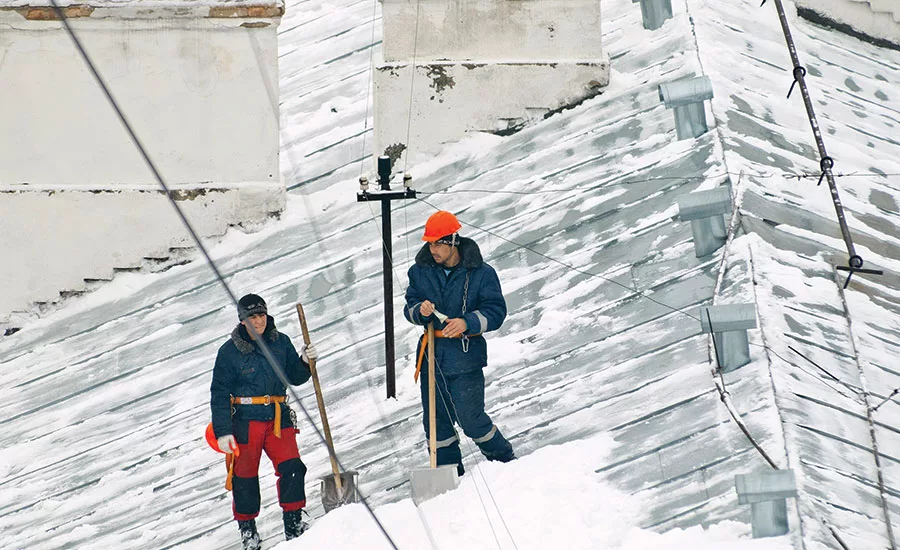
During the winter months, there are few workplaces more dangerous than the roof of a house. Those ill-prepared for the challenges of winter roofing projects risk both injury and death. Here are six things to keep in mind when roofing during the winter:

1. Hypothermia

Hypothermia occurs when a person’s core body temperature falls below the level required to keep the critical organs functioning. The two factors that promote hypothermia are low temperatures and moisture. Human perspiration in combination with winter cold conspire to conduct body heat away from a worker’s body when working on roofs.

The signs that a person has hypothermia include sudden drowsiness, shallow breathing and clumsiness. If you or anyone on your crew thinks someone has hypothermia, call immediately for emergency help, remove any wet clothing and get the individual to a heated area as quickly as possible. If a heated area isn’t close, cover the person with a dry blanket (wool or emergency Mylar blankets are the best).

When doing roof work in the winter, donning three layers of clothing is the best way to help a person’s body combat the dangers of hypothermia:

  • An Inner Layer. The inner layer’s purpose is to take away body moisture.
  • An Insulation Layer. Wool or goose down are the best material for insulation layers.
  • An Exterior Layer. The final layer should be water resistant.

Also, be sure to always bring a change of clothes and a Mylar or wool blanket in the work truck, just in case you or someone on your crew catches hypothermia. 

2. Frostbite

When your skin is not properly protected from the wind and freezing temperatures, frostbite can occur. The areas of the body most susceptible to frostbite for roofers are the ears, nose, fingers and toes. You will know when you have contracted frostbite because the affected part of your body will suddenly lose feeling and ultimately turn white, yellow, and, eventually, blue or black. 

If you or a member of your crew gets frostbite, immediately raise the temperature of the body extremity in tepid water and call for emergency help.

3. Falls

Every roof job requires a protection plan. Use temporary rooftop guardrails to protect your crew from falls. Be aware, however, that fall-in-place accidents are more common, and typically happen when workers change direction or change a method of access (from a ladder onto a roof, for example).

Be sure to check your work ladder for ice. Sometimes a roofer will slip on an icy ladder rung and injure themselves before they even make it to the roof.

Also, when using a ladder, always employ the “three-point rule.” This rule simply states that a roofer should have at least three points of contact with the ladder at all times. Two feet and one hand or two hands and one foot are both acceptable configurations when using a ladder in winter.

4. Winter Driving

Don’t forget to consider work-related travel hazards. Providing roofers with a defensive driving course is always a good idea. You will get an insurance break, and will know with confidence that your crew will be trained in winter driving techniques. If at all possible, don’t do roof work in temperatures below 40 degrees. This will help to avoid material failure, wasted labor and potential injury.

5. De-Icing and Snow Removal

Always use a trained crew for removing ice and snow before your team accesses the roof. If the people repairing the roof also do the snow and ice removal, they may overlook their own safety and focus on completing the repairs. 

When it comes to removing ice from the roof, de-ice with salt. Be positively certain all snow is also removed, since stepping on snow, even on a flat roof, can rapidly make a worker lose their center of gravity and slide. 

Another snow danger is its capacity to conceal roof parts from your work team. For example, even a light snow drift can hide a skylight or other roof opening, which can result in a worker falling through and damaging both themselves and the roof.

6. Dehydration

Roofers need a rehydration plan, yet few incorporate one into their daily routine. Some of the key elements of this plan will be the following:

  • A morning stretch before working, which includes at least 16 ounces of bottled water. Anything less than 16 ounces of water risks possible dehydration.
  • Monitoring urine color. If your urine is darker than normal, that indicates a person has low kidney filtration and needs to hydrate.
  • Eat more fruit and vegetable snacks. The added moisture in fruits and vegetables will help stave off dehydration.
  • Have a thermos full of hot chicken or tomato soup during a break. Unlike a sandwich, these liquids are not only tasty, they will keep you and your crew hydrated.
  • If you plan to have a few beers after work, chase each beer with a glass of water. It’s okay to grab some brews with your team, just be sure to hydrate as you go.
  • After you have your two cups of coffee in the morning, avoid it for the rest of the day. Coffee is a notorious diuretic.  Steer clear of it while doing outdoor winter work.

Staying safe on rooftops at any time of the year should always be a top priority. In winter, however, its importance becomes much more critical. Follow these tips, and you’ll cut your risk considerably.

Share This Story

Looking for a reprint of this article?
From high-res PDFs to custom plaques, order your copy today!

Connie Menard works for Greenawalt Roofing Company, a leader in residential and commercial roofing located in Landisville, Penn. since 2004.

Recommended Content

JOIN TODAY
to unlock your recommendations.

Already have an account? Sign In

  • two-roofers-in-harnesses-on-tile-roof

    How AI Is (and Isn’t) Impacting Roofing Jobs

    A new study from Microsoft shows artificial intelligence...
    Roofing News
    By: Chris Gray
  • Baker-Roofing-Company-employees-on-flat-roof-examinining-paperwork

    Exclusive: 2025’s Top 100 Roofing Contractors

    Roofing Contractor's 2025 Top 100 list reveals revenue...
    Top 100 Roofing Contractors
    By: Chris Gray
  • A before and after heat measurement comparison

    How Hot is Too Hot in the Attic?

    If the ventilation is working, how hot should the attic...
    Steep Slope Roofing
    By: Paul Scelsi
You must login or register in order to post a comment.

Report Abusive Comment

Manage My Account
  • eMagazine Subscription
  • Sign Up for the Newsletter
  • Online Registration
  • Manage My Preferences
  • Subscription Customer Service

More Videos

Sponsored Content

Sponsored Content is a special paid section where industry companies provide high quality, objective, non-commercial content around topics of interest to the Roofing Contractor audience. All Sponsored Content is supplied by the advertising company and any opinions expressed in this article are those of the author and not necessarily reflect the views of Roofing Contractor or its parent company, BNP Media. Interested in participating in our Sponsored Content section? Contact your local rep!

close
  • A finished commercial roof, including flashings
    Sponsored byFlashCo

    It’s All in the Details – How to Avoid 4 Common Mistakes with Roofing Accessories

  • Happy mature couple using phone holding credit card making payments. Middle aged older man and woman doing ecommerce shopping on smartphone booking or buying online on mobile sitting at home table.
    Sponsored byWatercress Financial

    Meeting Modern Expectations: Why Offering Financing Is Essential for Roofers Today

  • A roofing contractor stands on a roof behind an American flag
    Sponsored byTAMKO®

    Building Roofs, Building Community: TAMKO’s Lasting Commitment to Veterans and the Military

Popular Stories

TWS Remodeling team

Private Equity Fallout Rocks Roofing; Pros Step In

Infinity Exteriors has experienced significant growth and remains the largest brand among Infinity Home Services’ 25 companies.

2025 Residential Contractor of the Year: Infinity Exteriors

Brad Jacobs

Brad Jacobs to Step Down as Chairman at XPO, GXO Logistics

2026 Commercial Roofing Trends Reort

Related Articles

  • Holcim Article_Heat_7.26.23_TOF Image.png

    Beat the Heat: Summer Tips for Roofing Contractors

    See More
  • Top 3 Hiring Tips from Matt DiBara

    VIDEO: Top 3 Hiring Tips for Roofing Contractors

    See More
  • social media

    10 Social Media Tips for Roofing Contractors

    See More

Related Products

See More Products
  • cfc.png

    Construction Forms for Contractors Book+CD, PDF & Software Download

  • contractorlaw.jpg

    Construction Law: An Introduction for Engineers, Architects, and Contractors

See More Products
×

Be in the forefront of the roofing industry!

Join thousands of professionals today. Shouldn’t you know what they know?

JOIN NOW!
  • RESOURCES
    • Advertise
    • Contact Us
    • Directories
    • Store
    • Want More
  • SIGN UP TODAY
    • Create Account
    • eMagazine
    • Newsletters
    • Customer Service
    • Manage Preferences
  • SERVICES
    • Marketing Services
    • Reprints
    • Market Research
    • List Rental
    • Survey/Respondent Access
  • STAY CONNECTED
    • LinkedIn
    • Facebook
    • Instagram
    • YouTube
    • X
  • PRIVACY
    • PRIVACY POLICY
    • TERMS & CONDITIONS
    • DO NOT SELL MY PERSONAL INFORMATION
    • PRIVACY REQUEST
    • ACCESSIBILITY

Copyright ©2025. All Rights Reserved BNP Media.

Design, CMS, Hosting & Web Development :: ePublishing