Technical Details: Flashings and Penetrations for Metal Roofs
Flashings and penetrations account for nearly 80 percent of all reported roof leaks. Therefore these areas are perhaps the most critical components of any roof system, but they are particularly important when it comes to low-slope standing seam metal roof systems.
Flashings and penetrations account for nearly 80 percent of all reported roof leaks. Therefore these areas are perhaps the most critical components of any roof system, but they are particularly important when it comes to low-slope standing seam metal roof systems. In contrast to waterproof roofs, which are intended to function under occasional standing water, metal roofs are not designed to be completely leak-free under long-term water immersion because the metal relies on its slope to rapidly shed the water. Therefore, proper waterproofing must be provided at all critical junctures, especially flashings and penetrations.
Flashings
Most metal roof systems are installed on stand-alone buildings that are designed in a rectangular shape. Typical flashings occur at the ridge vent, gable and eaves. The manufacturer’s specific requirements should be followed at these locations. Flashing installation on metal roof systems is critical due to the amount of movement that occurs at these areas. Most flashing details include spacer blocks or continuous cleats to accommodate movement. Butyl tape or sealant is typically applied in these areas.
If properly completed, the typical flashing areas can provide long-term waterproofing protection and trouble at these points will be minimal. Atypical flashing applications, such as those at adjoining walls, create more concern. Problems at these types of transitions typically occur because of the differential movement created by the joining of different types of materials. Because these situations are rarely handled by most contractors, they can be even more difficult when they do arise.
Roof-to-wall joints are designed to allow for thermal movement that is independent of the structural wall. Flashing metal is fabricated that is independent of the metal roof surface and the wall panel. The flashing is applied over the metal surface - extending approximately 4 inches over the surface - which is fastened to the metal surface with an appropriate fastener in accordance with the manufacturer’s required fastening pattern. The flashing is fabricated with a continuous cleat at the mid-point to allow for thermal movement and the subsequent expansion and contraction.
The flashing metal is set behind the wall panel and secured to the wall substrate with an appropriate fastener in accordance with the manufacturer’s required fastening pattern. Waterproofing of the flashing-to-metal transition can be accomplished with specially formulated adhesive and membrane, a self-adhered membrane, or any other method deemed acceptable by the metal system manufacturer.
Penetrations
Proper roof design on low-slope standing seam metal systems should limit the amount of pipes, ducts and openings for rooftop-mounted equipment. Every roof penetration or opening results in cuts in the field of the metal panels. These cuts can restrict expansion due to temperature changes, expose the metal to corrosion, and lead to leaks. Eliminating these types of penetrations may not be feasible, and when requires penetrations and openings should be carefully detailed to allow for panel movement and prevent moisture intrusion. In architectural panels with underlayment it is critical that all penetrations through the felt are detailed as extensively as penetrations through the metal. These are additional points where moisture can enter into the facility. The manufacturer’s criteria should always be reviewed prior to any application procedures.
A typical pipe penetration in the field of a metal panel is completed with a flexible bellows-type boot. The boot should be set over the penetration and installed onto the metal surface. Sealant is applied between the metal panel surface and the metal flange of the pipe boot before fastening the flange to the surface. This application detail is acceptable on all penetrations that are located within the flat part of the panel and can be completed on new and remedial roofing applications. In situations where the existing penetration is in place and the metal panels cannot be set over it, the new panels may lap around the penetration and a specially designed retrofit pipe boot shall be installed over the existing penetration. The pipe boot installation procedures are similar to the other details; sealant is applied between the boot flange and the metal surface prior to fastener attachment.
In remedial construction installations penetrations may occur at or near metal ribs. At these locations factory-fabricated, doublewide metal panels are seamed into the adjacent metal panels. The new seamed metal panel is field-notched at the location of the penetration and end-lapped. The lower part of the seamed panel must also be field-notched to secure around the rib of the adjacent lower panel. Additional structural supports are required to span between the purlins on each side of the penetration. Pipe boot installation is similar to typical penetration details.
Penetrations larger than 18 inches in diameter require special installation procedures. At these locations the penetrations are sealed with a two-piece collar. The sides of the collar are attached to flashing that is seamed into the panels. Additional structural supports are required to span the purlins at each side of the penetrations. At all applications where new panels are fastened over the existing panels proper waterproofing of the seams is required. This can be accomplished with specially formulated adhesive and membrane, self-adhered membrane or any other method deemed acceptable by the metal system manufacturer.
Curb installation details are similar to large penetrations. Factory fabricated panels are seamed into the adjacent panels and field-notched at the curb penetration and end lapped. The lower part of the panel is field-notched to secure around the ribs of the lower adjacent panel and is sealed over the back up flashing. Additional structural supports are required to span between each side of the curb penetrations.
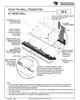
This detail shows a roof-to-wall transition at a headwall. Detail courtesy of the Western States Roofing Contractors Association.
Flashings and penetrations account for nearly 80 percent of all reported roof leaks. Therefore these areas are perhaps the most critical components of any roof system, but they are particularly important when it comes to low-slope standing seam metal roof systems. In contrast to waterproof roofs, which are intended to function under occasional standing water, metal roofs are not designed to be completely leak-free under long-term water immersion because the metal relies on its slope to rapidly shed the water. Therefore, proper waterproofing must be provided at all critical junctures, especially flashings and penetrations.
Flashings
Most metal roof systems are installed on stand-alone buildings that are designed in a rectangular shape. Typical flashings occur at the ridge vent, gable and eaves. The manufacturer’s specific requirements should be followed at these locations. Flashing installation on metal roof systems is critical due to the amount of movement that occurs at these areas. Most flashing details include spacer blocks or continuous cleats to accommodate movement. Butyl tape or sealant is typically applied in these areas.
If properly completed, the typical flashing areas can provide long-term waterproofing protection and trouble at these points will be minimal. Atypical flashing applications, such as those at adjoining walls, create more concern. Problems at these types of transitions typically occur because of the differential movement created by the joining of different types of materials. Because these situations are rarely handled by most contractors, they can be even more difficult when they do arise.
Roof-to-wall joints are designed to allow for thermal movement that is independent of the structural wall. Flashing metal is fabricated that is independent of the metal roof surface and the wall panel. The flashing is applied over the metal surface - extending approximately 4 inches over the surface - which is fastened to the metal surface with an appropriate fastener in accordance with the manufacturer’s required fastening pattern. The flashing is fabricated with a continuous cleat at the mid-point to allow for thermal movement and the subsequent expansion and contraction.
The flashing metal is set behind the wall panel and secured to the wall substrate with an appropriate fastener in accordance with the manufacturer’s required fastening pattern. Waterproofing of the flashing-to-metal transition can be accomplished with specially formulated adhesive and membrane, a self-adhered membrane, or any other method deemed acceptable by the metal system manufacturer.
Penetrations
Proper roof design on low-slope standing seam metal systems should limit the amount of pipes, ducts and openings for rooftop-mounted equipment. Every roof penetration or opening results in cuts in the field of the metal panels. These cuts can restrict expansion due to temperature changes, expose the metal to corrosion, and lead to leaks. Eliminating these types of penetrations may not be feasible, and when requires penetrations and openings should be carefully detailed to allow for panel movement and prevent moisture intrusion. In architectural panels with underlayment it is critical that all penetrations through the felt are detailed as extensively as penetrations through the metal. These are additional points where moisture can enter into the facility. The manufacturer’s criteria should always be reviewed prior to any application procedures.
A typical pipe penetration in the field of a metal panel is completed with a flexible bellows-type boot. The boot should be set over the penetration and installed onto the metal surface. Sealant is applied between the metal panel surface and the metal flange of the pipe boot before fastening the flange to the surface. This application detail is acceptable on all penetrations that are located within the flat part of the panel and can be completed on new and remedial roofing applications. In situations where the existing penetration is in place and the metal panels cannot be set over it, the new panels may lap around the penetration and a specially designed retrofit pipe boot shall be installed over the existing penetration. The pipe boot installation procedures are similar to the other details; sealant is applied between the boot flange and the metal surface prior to fastener attachment.
In remedial construction installations penetrations may occur at or near metal ribs. At these locations factory-fabricated, doublewide metal panels are seamed into the adjacent metal panels. The new seamed metal panel is field-notched at the location of the penetration and end-lapped. The lower part of the seamed panel must also be field-notched to secure around the rib of the adjacent lower panel. Additional structural supports are required to span between the purlins on each side of the penetration. Pipe boot installation is similar to typical penetration details.
Penetrations larger than 18 inches in diameter require special installation procedures. At these locations the penetrations are sealed with a two-piece collar. The sides of the collar are attached to flashing that is seamed into the panels. Additional structural supports are required to span the purlins at each side of the penetrations. At all applications where new panels are fastened over the existing panels proper waterproofing of the seams is required. This can be accomplished with specially formulated adhesive and membrane, self-adhered membrane or any other method deemed acceptable by the metal system manufacturer.
Curb installation details are similar to large penetrations. Factory fabricated panels are seamed into the adjacent panels and field-notched at the curb penetration and end lapped. The lower part of the panel is field-notched to secure around the ribs of the lower adjacent panel and is sealed over the back up flashing. Additional structural supports are required to span between each side of the curb penetrations.
Looking for a reprint of this article?
From high-res PDFs to custom plaques, order your copy today!